


Iris-based verification arrives in mainstream dating—what Tinder is really testing
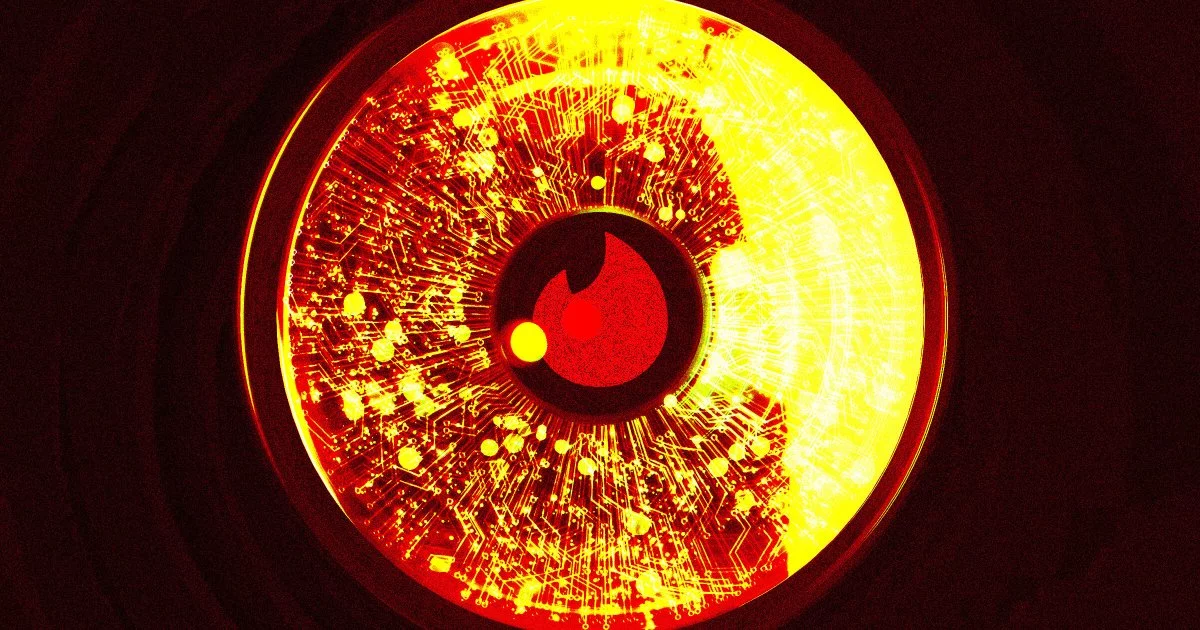
Tinder’s partnership with Tools for Humanity—the biometric verification company founded by Sam Altman—marks a notable escalation in how consumer platforms are responding to the modern authenticity crisis. The initiative introduces iris scanning to create a “World ID,” positioning biometric uniqueness as a counterweight to the accelerating spread of bots, scammers, and AI-generated dating profiles.
At face value, the proposition is straightforward: prove you are a real, unique human, and the platform becomes safer and more trustworthy. Yet the strategic significance runs deeper. Tinder is not merely adding another verification badge; it is experimenting with a hardware-rooted identity layer at a time when software-only defenses—image analysis, behavioral detection, and content moderation—are increasingly strained by generative AI.
The move also signals a broader shift in platform governance: as synthetic media becomes cheaper and more convincing, platforms are being pushed toward stronger identity assurances that can withstand adversarial manipulation. Iris scanning, while controversial, is among the most robust uniqueness signals available—precisely why it triggers heightened scrutiny.
How the “World ID” model works—and why zero-knowledge claims matter
The operational mechanics described hinge on a device often characterized as an orb-like scanner. Users scan their irises, and the system produces a zero-knowledge proof intended to confirm uniqueness without exposing raw biometric data. In principle, this is designed to separate the *fact* of being a unique person from the *details* of one’s biometric identity.
Key elements of the approach include:
- Iris scan as a uniqueness anchor: A biometric trait is used to reduce the likelihood of duplicate or automated accounts.
- Zero-knowledge proof architecture: The system claims it can verify “one human, one ID” while minimizing disclosure of underlying biometric information.
- AI-fraud countermeasures as a secondary layer: Biometric verification is positioned as a complement to machine-learning systems that detect bot behavior, synthetic images, and scripted engagement patterns.
For Tinder, the appeal is clear: a verified uniqueness layer could reduce the volume of fraudulent accounts that slip past conventional checks. For users, the promise is equally direct: fewer scams, fewer impersonations, and potentially fewer interactions with AI-driven profiles designed to manipulate attention.
Still, the distinction between *not storing raw biometric images* and *not creating biometric risk* is not merely semantic. Regulators and privacy advocates often focus on the full lifecycle: collection, processing, retention, third-party access, auditability, and the possibility of re-identification. Even privacy-preserving cryptography does not automatically settle questions about consent quality, purpose limitation, and data minimization, particularly when biometrics are involved.
Incentives, monetization, and the emerging “trust premium” in dating platforms
Tinder’s incentive design—offering five free 30-minute profile boosts (valued up to roughly $10) to users who opt in—reveals a pragmatic business logic. It replaces the earlier crypto-era playbook of token rewards with platform-native credits that directly reinforce engagement and monetization.
This matters because Tools for Humanity’s ecosystem has been associated with the volatility of the WLD token, which reportedly fell dramatically from prior highs. Tinder’s approach appears to sidestep that instability by anchoring the reward to something Tinder already sells: visibility.
From a business and technology perspective, the partnership tests whether biometric verification can generate a measurable trust premium:
- Reduced fraud-related churn: Fewer scams can translate into higher retention and improved lifetime value (LTV).
- Lower operational costs: Less fraud can reduce customer support burden, chargebacks, and moderation overhead.
- New segmentation opportunities: Verified status could become a differentiator for premium tiers, enhanced matching, or prioritized discovery—though that raises fairness and access questions.
- Brand positioning: In a crowded dating-app market, “safer by design” can be a competitive narrative—if users believe it.
The strategic bet is that trust is no longer just a safety feature; it is a monetizable product attribute. In maturing consumer markets where user acquisition is expensive and growth is harder to sustain, platforms increasingly look to retention, upsell, and differentiation. Verification—especially if it is difficult to spoof—can become a lever.
The regulatory and reputational fault lines: biometrics, governance, and adoption friction
The most consequential risks sit outside the technology stack. Tools for Humanity has faced data-privacy controversies and regulatory pushback, including reported actions in the EU and Kenya. Whether or not the current implementation materially differs from earlier practices, the historical context amplifies scrutiny and raises the cost of missteps for Tinder.
Several fault lines stand out:
- Biometrics as sensitive data: Many jurisdictions treat iris data as highly sensitive, triggering stringent consent, security, and purpose requirements (e.g., GDPR principles; similar sensitivities under CCPA/CPRA and other emerging regimes).
- Regulatory uncertainty across borders: A verification system that scales globally must navigate inconsistent interpretations of biometric processing, cross-border data transfer rules, and deletion obligations.
- Brand and liability exposure: If users associate the initiative with surveillance risk or coercive consent—especially when incentives are offered—Tinder could face reputational backlash even absent a breach.
- Adoption friction and network effects: The more intrusive the verification step, the greater the chance that privacy-sensitive or less tech-confident users opt out, potentially creating uneven participation and limiting safety gains.
The strategic dilemma is that the strongest anti-fraud tools often carry the highest adoption and governance costs. Tinder’s challenge will be to demonstrate that the system is not only effective, but also legible—auditable, explainable, and aligned with user expectations of control.
If this experiment succeeds, it could foreshadow a wider platform shift toward hardware-backed identity in sectors beyond dating—gig work, financial services, telehealth, and marketplaces. If it stumbles, it may harden regulatory skepticism around biometric identity schemes and make “proof of personhood” a harder sell for consumer platforms. Either way, Tinder’s move places digital identity—once a background infrastructure topic—squarely at the center of the online trust economy.
 By
By
 By
By
 By
By


 By
By
 By
By








