
Generative AI coding assistants move from “autocomplete” to full-stack co-workers
Advanced generative AI coding assistants—often cited in the market alongside tools like Claude Code and Codex—are no longer confined to speeding up syntax or suggesting snippets. The underlying shift is architectural and behavioral: modern transformer models, strengthened by reinforcement-learning fine-tuning, increasingly behave like end-to-end software collaborators. They can refactor legacy modules, propose system designs, translate product requirements into prototypes, and draft tests and documentation with a level of coherence that makes them usable inside real delivery pipelines.
That evolution matters because it changes what “software engineering productivity” means. The productivity gain is not only measured in lines of code or faster pull requests; it is measured in cycle-time compression—shorter paths from idea to deployable artifact. When AI can interpret a requirements doc, generate a working scaffold, and iterate through bug fixes with human oversight, the bottleneck shifts away from typing and toward judgment, verification, and product intent.
For enterprises, this is also a platform story. AI is being embedded into the tools that govern modern software delivery—IDEs, CI/CD systems, code review workflows, and security controls—creating an integrated “developer platform” layer. The pattern echoes earlier consolidation waves (ERP in the 1990s, cloud in the 2010s): a small number of vendors can end up controlling not just compute, but the workflow substrate through which software is produced, audited, and shipped.
Key technical and operational implications emerging from this maturation include:
- Higher leverage per developer through automated refactoring, test generation, and design suggestions
- Greater dependency on model quality and governance, because errors can scale as quickly as output
- Rising importance of evaluation and observability, including model monitoring, secure prompt handling, and provenance tracking for AI-generated code
The “hybrid practitioner” era reshapes org charts—and redefines who ships software
As AI coding tools become more capable, the most visible organizational change is role fluidity. Product managers and designers can now generate functional code paths and deployable prototypes without being traditional engineers. At the same time, engineers are increasingly stepping into adjacent domains—UX, product strategy, stakeholder communications—using AI to draft user flows, create marketing assets, and translate technical constraints into business narratives.
This is not simply a democratization story; it is a reallocation of scarce attention. When AI reduces the cost of producing a first version, the premium shifts to:
- Problem framing (what should be built and why)
- Risk management (security, privacy, compliance, reliability)
- Integration discipline (how changes interact with existing systems and customers)
- Quality thresholds (what “done” means in regulated or mission-critical environments)
The result is a growing demand for adaptive generalists—people who can orchestrate AI workflows, collaborate across functions, and enforce standards. Organizations that historically optimized for narrow specialization may find that the new competitive advantage lies in cross-functional throughput: smaller teams shipping more, faster, with tighter feedback loops.
Yet this hybridization also introduces governance strain. When non-engineers can generate deployable artifacts, companies must revisit:
- Access controls (who can ship, merge, or trigger production changes)
- Security review (AI-generated dependencies, secrets handling, supply-chain risk)
- Accountability (clear ownership when AI contributes materially to deliverables)
In practice, the winners are likely to be firms that treat AI coding assistants as part of a socio-technical system—not a plug-in. The tool may write code, but the organization must still decide how code is validated, audited, and maintained over time.
Automation exposure rises, but software hiring stays resilient—revealing a two-speed labor market
The labor-market signal in the provided material is deliberately nuanced. On one hand, an OpenAI report flags that 18% of occupations face elevated automation risk, particularly roles characterized by routine tasks and low human involvement—often cited examples include executive assistance and help-desk support. AI agents can absorb structured workflows: triage, scheduling, templated communication, knowledge-base retrieval, and repetitive ticket resolution.
On the other hand, software-development job demand remains near three-year highs, even as AI boosts individual output. This apparent contradiction becomes easier to interpret when viewed through the lens of elastic demand. If AI reduces the cost and time required to build software, many organizations will simply attempt to build more—more internal tools, more customer-facing features, more automation, more data products. In that scenario, productivity gains do not automatically translate into fewer jobs; they can translate into expanded ambition.
Still, the employment impact is unlikely to be uniform. The material points to sectoral divergence:
- In stagnating or mature markets (e.g., parts of travel), AI may accelerate displacement because there is limited growth to absorb efficiency gains.
- In high-momentum sectors (enterprise software, sales platforms, cybersecurity, cloud services), AI-enhanced productivity can fuel expansion, new product lines, and faster go-to-market—conditions that often support hiring.
A second-order effect is compensation and career structure. If AI enables more output per person, wage inflation could moderate in some segments, while simultaneously increasing the premium for roles that combine technical competence with systems thinking, governance fluency, and domain expertise. The labor market may not shrink so much as reprice around new forms of leverage.
What business leaders should do now: governance, portability, and an AI-literate workforce
For executives, the strategic question is not whether to adopt generative AI coding assistants, but how to adopt without creating fragility—technical, legal, or organizational. The material highlights three practical imperatives.
First, talent strategy must evolve from hiring narrow specialists toward building teams of AI-capable operators. That means investing in:
- AI literacy (prompting, evaluation, failure modes)
- Secure development practices for AI-generated code
- Cross-functional collaboration and change management
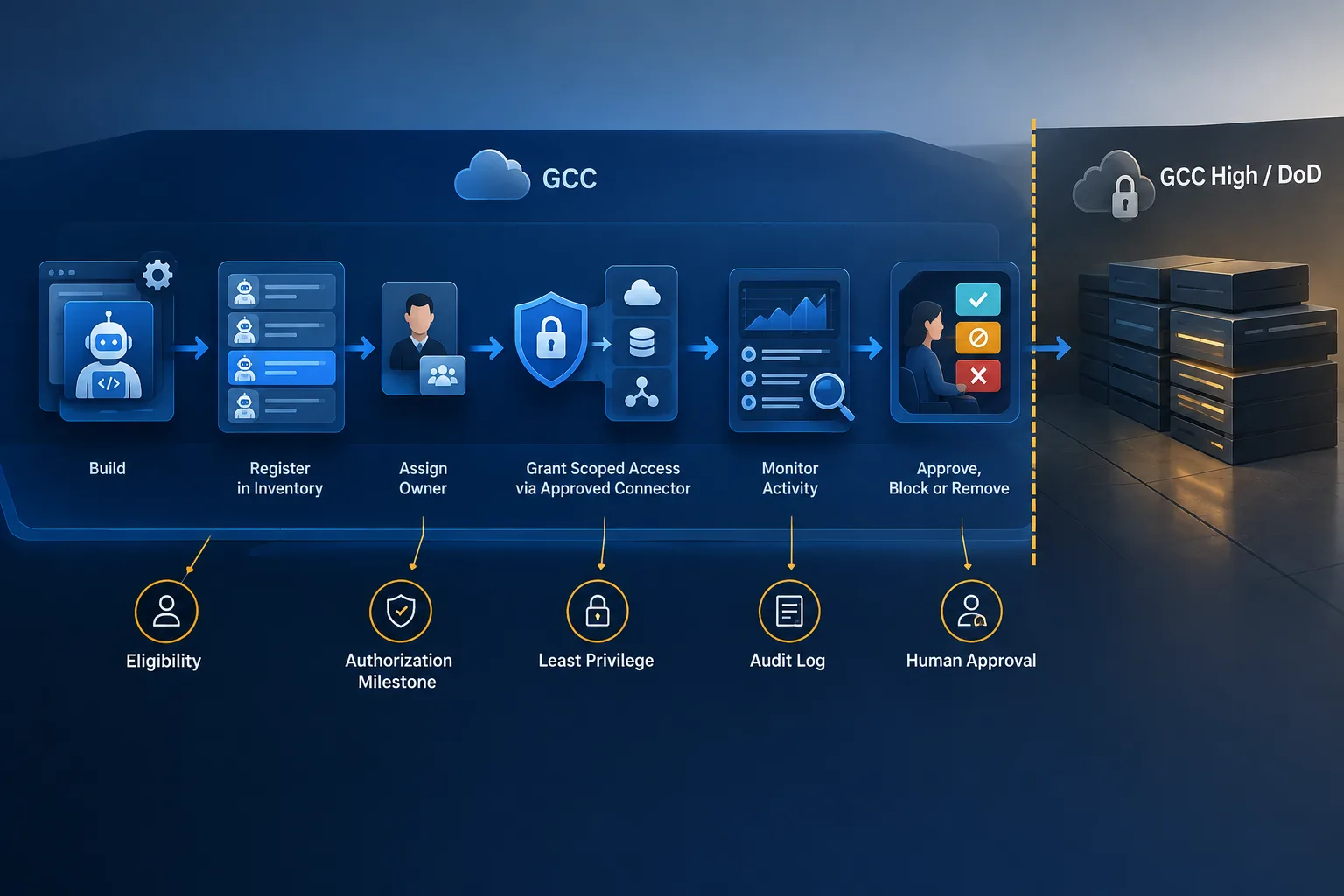
Second, organizational governance must be explicit. As AI becomes embedded in the software supply chain, firms will need durable mechanisms—ethics and risk review, data stewardship, continuous monitoring—to ensure reliability and compliance. This is especially critical where AI-generated assets raise questions about intellectual property, auditability, and accountability.
Third, leaders should treat vendor ecosystems with the same rigor applied to cloud strategy. Platformization can deliver speed, but it can also create lock-in. Negotiating for interoperability and model portability, and building internal capability to evaluate tools, becomes a competitive necessity rather than an IT preference.
The companies most likely to thrive in this transition will be those that resist framing AI purely as a cost-saver. Used strategically, generative AI in software engineering becomes a compounding advantage: faster experimentation, tighter customer feedback loops, and the ability to translate intent into product at a pace that competitors—still organized around older silos—will struggle to match.

 By
By
 By
By

 By
By
 By
By


 By
By