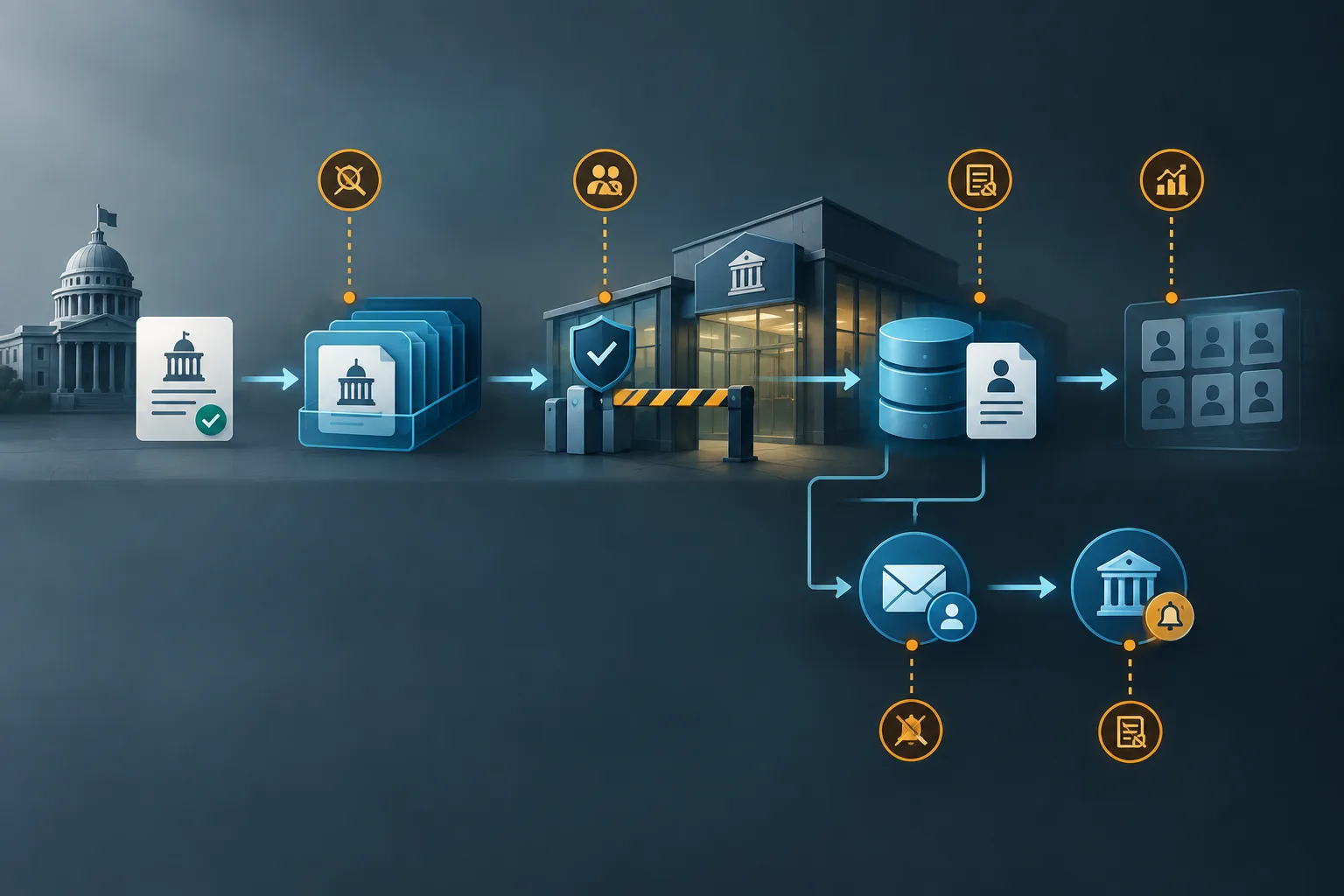

A cookware price tag becomes a real-time readout of U.S. tariff policy
A 12-piece Henckels stainless steel cookware set sold at Costco has become an unusually clear case study in how trade policy travels from customs paperwork to household budgets. The numbers are stark: a promotional purchase at $144.99 in November 2024 sat atop a base price of $184.99, only for that base price to climb to $249.99 by April 2025—a $105 jump that tracks with layered duties tied to Chinese-sourced stainless steel. Even after a partial retreat to $219.99 in June 2025, the set remains materially above its pre-tariff baseline, and the promotional discounting that once softened the blow has largely disappeared.
What makes this episode analytically useful is its ordinariness. Cookware is not a niche industrial input; it is a durable good purchased by middle-income households, wedding registries, and first-time renters alike. When a mainstream item swings this sharply, it signals more than a one-off pricing decision—it reflects a broader system where tariff schedules, classification rules, and sourcing dependencies can reprice everyday life with little warning. Costco leadership’s acknowledgment of the opacity of overlapping tariff regimes underscores a key point: even sophisticated retailers can struggle to forecast the final landed cost when multiple duty layers apply and enforcement interpretations evolve.
The result is a consumer-facing manifestation of macroeconomics: tariffs that were designed as strategic leverage in global trade negotiations are showing up as higher shelf prices, thinner promotions, and more volatile pricing cycles.
The mechanics of tariff pass-through: why promotions vanish before prices fall
The cookware set’s trajectory illustrates a common pattern in tariff pass-through. Retailers and brands rarely move immediately to full price increases; they often begin by adjusting the levers that are least visible to consumers—especially promotional cadence and discount depth. In this case, the disappearance of promotions is not incidental; it is a margin-protection strategy.
Several forces are likely interacting:
- Layered duties and classification uncertainty: Stainless steel products can trigger multiple tariff lines depending on composition, origin, and how components are categorized. Small changes in declared metal content or manufacturing steps can shift duty exposure.
- Inventory timing effects: Retail pricing often reflects a blend of older, lower-cost inventory and newly arrived, higher-cost shipments. That can create stepwise increases rather than smooth inflation.
- Partial absorption by retailers: Costco’s model relies on value perception and membership loyalty, which can motivate the company to absorb some cost increases—temporarily—until the economics become untenable.
- Reduced promotional elasticity: When costs rise quickly, promotions become harder to justify because discounts compress margins precisely when input costs are least predictable.
From a consumer-inflation standpoint, this is a textbook example of how tariffs can feed core goods inflation. Even if the final price increase is “only” partial relative to the duty burden, the household impact is real: cookware is a planned purchase, and a $70–$100 swing can delay replacement cycles, push consumers down-market, or redirect spending toward services and experiences.
Technology and supply-chain redesign: tariffs as an accelerant, not just a tax
The more consequential story may be what tariffs do to industrial decision-making. When stainless steel becomes structurally more expensive, firms don’t merely raise prices—they begin redesigning products, supplier networks, and compliance systems. The cookware example points to three technology-driven adaptations that are increasingly becoming standard operating procedure across consumer goods.
- Materials substitution and product engineering: Tariffs on stainless steel can incentivize exploration of alternative constructions—such as clad designs with aluminum cores, composite substrates, or modified alloy mixes that preserve performance while reducing tariff exposure. This is not purely cost-cutting; it can drive metallurgical R&D and new performance trade-offs (heat distribution, durability, induction compatibility).
- Digital trade compliance and real-time cost analytics: Overlapping tariff schedules increase the value of trade compliance platforms that can model landed cost in near real time, flag classification risks, and simulate “what-if” scenarios for sourcing and product specs. For large retailers and OEMs, the competitive edge increasingly comes from knowing the true marginal cost before a purchase order is placed.
- Provenance and traceability tooling: As scrutiny rises around origin and content, blockchain-enabled provenance tracking and tighter supplier documentation can reduce disputes, support accurate tariff classification, and speed customs clearance—especially when enforcement becomes more stringent.
Tariffs, in other words, function as a forcing mechanism: they reward organizations that can rapidly reconfigure sourcing, redesign products, and operationalize compliance through software rather than spreadsheets.
Strategic signals for retailers, brands, and policymakers watching the kitchenware aisle
For retailers like Costco and for cookware brands competing in the mid-tier segment, the strategic implications are less about a single SKU and more about the new operating environment—one defined by trade fragmentation, policy volatility, and consumer sensitivity to durable-goods inflation.
Key strategic considerations emerging from this episode include:
- Hedging and contracting discipline: Larger buyers can reduce exposure through forward contracts and selective hedges (e.g., nickel and chromium inputs), while negotiating supplier agreements that cap pass-through or share tariff risk.
- Manufacturing footprint diversification: Persistent pressure on China-based production can accelerate shifts toward Mexico, Southeast Asia, or other regional hubs, with automation and advanced manufacturing helping offset labor and logistics costs.
- Private label and channel leverage: As branded goods become more expensive, retailers may lean harder into private-label cookware and e-commerce optimization, using proprietary lines to manage margin and price perception more tightly.
- Consumer trust through transparency: When prices rise abruptly, clear communication about origin, materials, and cost drivers can preserve brand equity—especially for premium segments where willingness to pay depends on perceived authenticity and durability.
At the macro level, this cookware story sits at the intersection of trade policy and monetary policy. Import duties that lift goods prices complicate the inflation picture and can indirectly influence interest-rate expectations, even as households adapt by postponing purchases or trading down. The kitchenware aisle is not where trade strategy is debated, but it is where trade strategy is ultimately felt—and where the next phase of supply-chain reinvention is already underway.

 By
By
 By
By

 By
By
 By
By

 By
By
 By
By