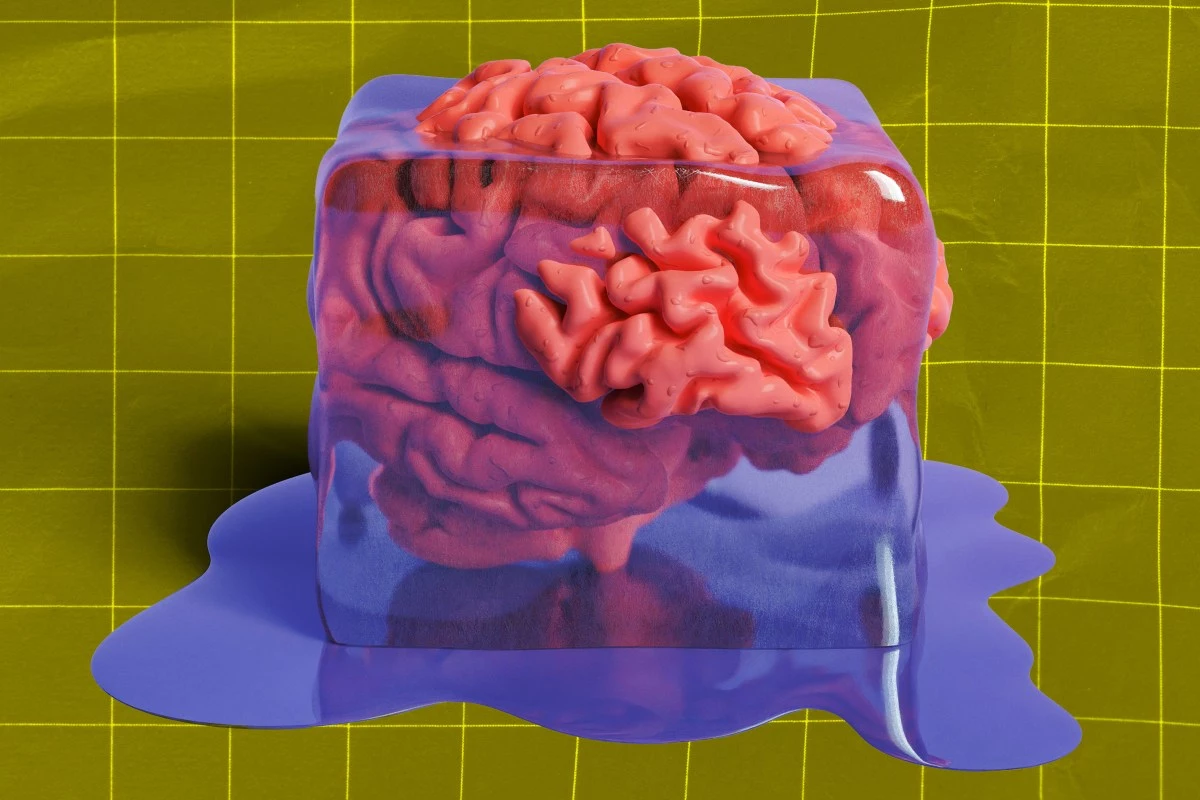

A decade-long experiment that reframes cryonics as applied cryobiology
When biogerontologist L. Stephen Coles underwent “neuropreservation” in 2014—his brain cryogenically preserved at –146 °C immediately after legal death in Arizona—the act was widely interpreted through the cultural lens of cryonics: a speculative wager on future revival. More than ten years later, cryobiologist Greg Fahy’s extraction and examination of tissue samples, described as “astonishingly well preserved,” shifts the conversation toward a more technically grounded question: how far has modern cryobiology progressed in preserving the *physical substrates* of the brain, and what does that imply for medicine, markets, and governance?
The most consequential detail is not the headline-grabbing prospect of “reanimation,” but the reported preservation of cytoarchitecture—the cellular and synaptic structure that underpins neural connectivity. If those microstructures can be reliably preserved, measured, and eventually restored to function, the implications extend well beyond end-of-life services. They touch organ banking, regenerative medicine supply chains, and even the emerging interface between biology and computation.
At the same time, the scientific community’s caution remains central. Structural preservation is not synonymous with functional recovery, and the gap between the two is where both the technical risk and the ethical controversy reside.
Vitrification chemistry meets the hard physics of cooling a human brain
The Coles case highlights a core technical pivot in cryopreservation: the move from freezing toward vitrification, where advanced cryoprotectant formulations aim to prevent destructive ice crystal formation by transitioning tissue into a glass-like state. In practical terms, this is a molecular engineering problem with direct relevance to whole-organ storage—one of the most valuable unsolved challenges in modern healthcare logistics.
Key technical signals embedded in Fahy’s report include:
- Progress in cryoprotective chemistry
– Vitrification-grade cryoprotectants appear to reduce ice crystallization, historically the primary cause of cellular rupture and tissue distortion.
– Reported preservation at the cellular and synaptic level suggests methods that may scale from single cells to complex multicellular tissues.
- Persistent engineering constraints
– Mechanical stress and “cracking” during cooling and rewarming remain a major failure mode, underscoring the need for precision thermal control and improved perfusion.
– Current “viability” assessments are largely indirect; meaningful progress will require functional assays—electrophysiology, molecular integrity metrics, and reproducible indicators of recoverable neural activity.
This is where the story becomes less about futurism and more about instrumentation and process control. The next phase of cryobiology will likely be defined by automated thermal management, embedded sensing, and robotics-enabled handling—capabilities familiar to advanced manufacturing, semiconductor-style quality assurance, and high-reliability cold chain operations.
The business case: from niche cryonics to a longevity infrastructure layer
Economically, neuropreservation sits at an unusual intersection: part consumer service, part research platform, and part speculative asset. Yet the broader market opportunity may not be “revival” at all. The more immediate value lies in the tools and protocols that make complex tissue preservation more reliable—tools that can be repurposed across biomedicine.
Several strategic implications stand out:
- A potential “cryobanking” vertical within the longevity economy
– Neuropreservation blurs the boundary between boutique cryonics and mainstream biomedical R&D, inviting hybrid models that combine fee-for-service preservation with research partnerships.
– Funding dynamics could mirror other frontier domains: high-net-worth clients, philanthropic capital, and institutional grants underwriting platform development.
- Organ transplant and cell therapy logistics as nearer-term winners
– Techniques developed for brain vitrification can inform preservation and shipping of solid organs and cellular therapies, potentially reducing waste and expanding geographic reach.
– Scaling would likely require alliances among cryopreservation providers, cold chain logistics firms, and hospital networks, with standardized protocols and auditable quality controls.
- Intellectual property and cross-sector licensing
– Cryoprotectant formulations, perfusion methods, and thermal-control systems represent defensible IP assets with licensing potential beyond human medicine—spanning agricultural biotech, conservation, and biorepository services.
For executives, the actionable takeaway is that cryobiology may become an enabling layer for regenerative medicine—much like cloud infrastructure enabled software scale—by stabilizing, transporting, and warehousing high-value biological materials.
Regulation, identity, and the coming governance test for preserved human tissue
The ethical and regulatory stakes intensify precisely because the technology is becoming more credible at preserving structure. As soon as preservation quality improves, legal systems face pressure to define what cryopreserved human tissue *is* in practice: property, remains, a patient-in-waiting, or something entirely new.
Policy questions that will increasingly demand formal answers include:
- Custody and consent: who controls preserved tissue over decades, and how are consent terms enforced as institutions, laws, and family circumstances change?
- Permissible research use: what testing is allowed on preserved brains, and under what oversight, especially if future revival is hypothesized?
- Liability and consumer protection: how should insurers and regulators treat degradation, mishandling, or failed revival attempts—particularly when marketing narratives can outpace scientific validation?
Just as important are the societal questions that cannot be solved by engineering: continuity of identity, post-mortem rights, and the moral status of a preserved brain if future technologies could reconstruct aspects of cognition. In this environment, organizations that treat independent ethics review, transparent reporting, and peer-reviewed validation as core operating principles may find that governance is not merely compliance—it is competitive differentiation.
The Coles neuropreservation case ultimately functions as a stress test for multiple systems at once: the limits of vitrification science, the scalability of precision cold-chain engineering, the investability of longevity-adjacent platforms, and the readiness of regulators to govern technologies that challenge long-standing definitions of life, death, and medical duty. Whether or not “revival” ever becomes feasible, the race to preserve biology with higher fidelity is already reshaping the infrastructure of modern biotech—and the institutions that adapt early will help define the rules of the next era.

 By
By
 By
By

 By
By
 By
By

 By
By
 By
By