
Generative AI music moves from novelty to infrastructure—and a flashpoint for rights
Generative AI is no longer a fringe experiment in music production; it is rapidly becoming a structural force across creation, distribution, and monetization. The latest wave of tools can generate stylistically convincing tracks in seconds, including voice and style “clones” that blur the boundary between tribute and unauthorized imitation. That capability is expanding the supply of music at a pace the industry has never had to govern—while simultaneously challenging long-standing assumptions about authorship, originality, and the economic value of recorded sound.
What makes this moment uniquely volatile is the collision of three realities:
- Technical plausibility: AI outputs can be “good enough” to pass casual listening tests, undermining the idea that human craft is always audibly distinct.
- Industrial scale: Prompt-based composition makes volume cheap, shifting competition from talent discovery to model access, training data, and distribution leverage.
- Legal uncertainty: Copyright and publicity rights frameworks were not designed for models trained on vast catalogs or for synthetic performances that evoke recognizable artists without sampling a single master recording.
The result is a debate that is not merely cultural—about authenticity—but deeply commercial: who gets paid, who controls the pipeline, and what counts as a legitimate input to an AI model.
Streaming platforms turn to detection, labeling, and metadata as the new trust layer
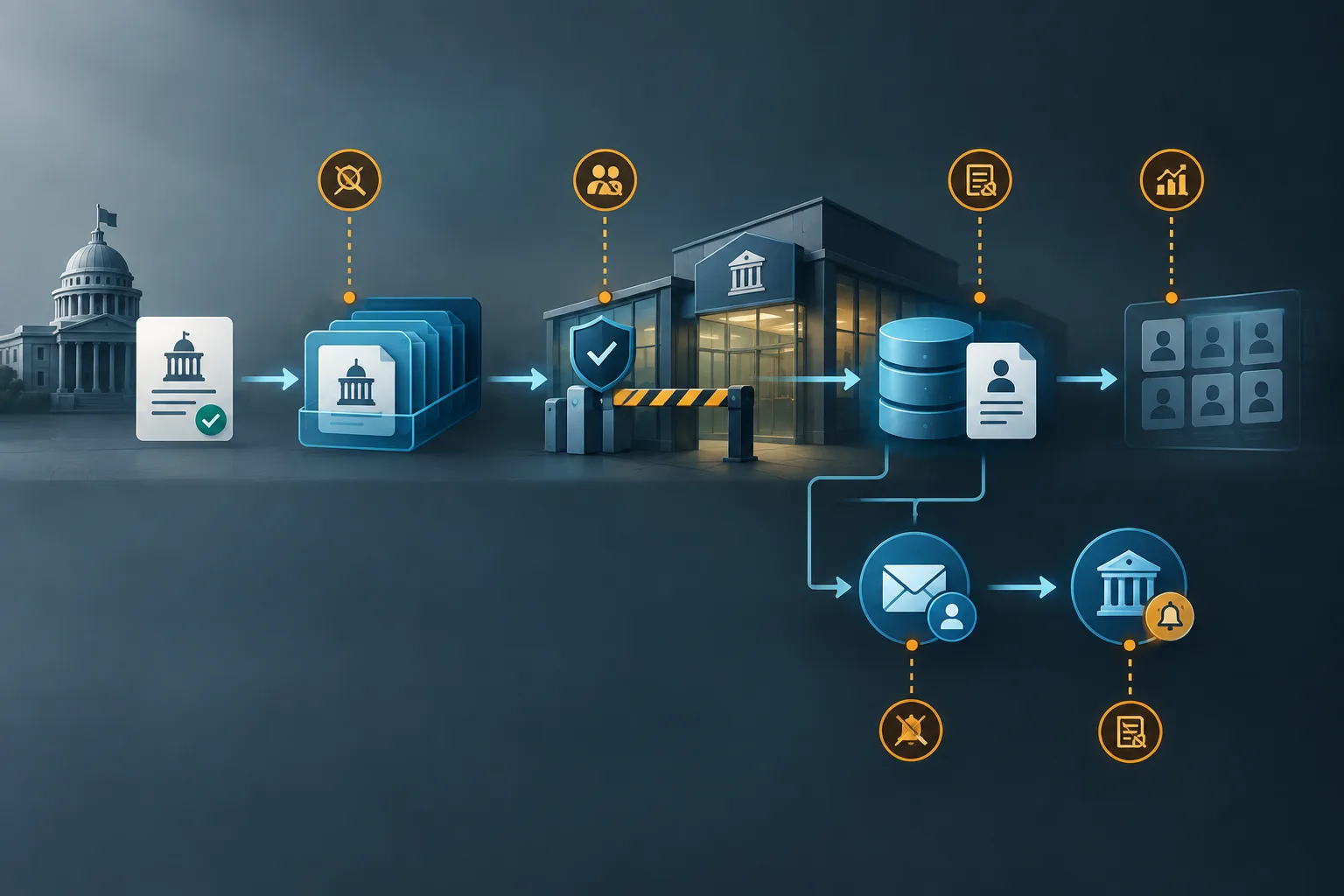
As AI-generated tracks proliferate, streaming services and digital storefronts are being pushed into a role they historically resisted: active gatekeeping. Moves by Apple Music and Qobuz to label AI-generated content, and Deezer’s decision to release an open-source AI music detector, signal an emerging consensus that provenance must become machine-readable and enforceable—not just a policy statement buried in terms of service.
This is where the industry’s technical response begins to resemble cybersecurity: detection is necessary, but insufficient. The more durable solution is likely to be authentication by design, including watermarking and standardized metadata that can travel across platforms.
Key technical and operational implications are taking shape:
- Forensic detection as a platform primitive: Audio fingerprinting and model-output detection tools are becoming part of the streaming stack, with potential spillover into piracy control, rights auditing, and royalty dispute resolution.
- Watermarking as the next metadata battleground: Robust, model-level watermarking could evolve into a de facto requirement for distribution—similar to how ISRC codes and rights metadata became essential for modern streaming economics.
- Provenance as a consumer trust signal: Labeling is not only about compliance; it is about preserving confidence in catalogs and editorial surfaces such as playlists, where listeners assume a baseline of legitimacy.
Bandcamp’s outright ban on AI-generated music illustrates the other end of the spectrum: a marketplace choosing differentiation through curation rigor and “artist-first” positioning, even at the cost of excluding a fast-growing category of content. That stance highlights a strategic split: some platforms will compete on scale and automation, while others compete on human verification and community trust.
The royalty economy faces a “Napster-style” stress test—this time driven by abundance
The most destabilizing impact of generative AI may not be the sound of the music, but the economics of attention. If listeners cannot reliably distinguish AI tracks from human-made recordings, then the play-based royalty model risks becoming increasingly misaligned with creative labor. In a world of near-infinite supply, the scarcest asset is no longer production capacity—it is distribution, recommendation, and brand credibility.
Several market dynamics are emerging simultaneously:
- Commoditization pressure on functional music: Background, mood, and utility listening (study beats, sleep soundscapes, ambient playlists) is especially vulnerable to AI substitution, because the value proposition is often consistency rather than distinct authorship.
- A bifurcated catalog market: The industry may drift toward two tiers—premium “human-verified” repertoires that command higher licensing and synchronization rates, and low-cost AI-generated pools optimized for volume and engagement.
- Labor reconfiguration inside labels and agencies: Cost pressures and slower subscriber growth incentivize automation in music supervision, trailer scoring, and content localization—shifting spend away from external creators and toward in-house AI operations, compliance, and data governance.
This is also where the “Napster-style” analogy becomes less rhetorical and more structural. Napster disrupted distribution economics by making copying frictionless. Generative AI disrupts creation economics by making production frictionless. Both force the same question: what is the enforceable unit of value—files, performances, stems, styles, or identities?
Warner–Suno and the strategic hedge: partnering with AI while litigating its foundations
Major labels appear to be pursuing a dual-track strategy: litigate to define boundaries, partner to capture upside. Warner Music’s partnership with Suno—an AI music company reportedly fresh from a $2.45 billion raise—signals that at least some incumbents see generative AI not only as a threat, but as a potential new line of business. The logic is straightforward: if AI is going to reshape music, rights holders want leverage over the models, the datasets, and the licensing rails.
Yet the contradiction is real. AI music startups face ongoing infringement claims and unresolved questions about training data consent. Partnerships in this environment function as strategic options: a way to learn, influence standards, and secure future revenue streams—while the courts and regulators decide what is permissible.
For executives and policymakers, the most actionable themes are increasingly clear:
- Governance becomes a core competency: AI councils spanning A&R, legal, data science, and artist relations are moving from “nice to have” to operational necessity.
- Open standards may matter more than proprietary advantage: Interoperable detection and watermarking protocols could reduce fraud, simplify licensing, and stabilize royalties across platforms.
- Music AI is a gateway to broader media localization: Voice cloning, adaptive scoring, and style transfer are directly transferable to film, gaming, advertising, and immersive experiences—making music a testbed for a wider synthetic media economy.
The industry is now negotiating a new social contract between technology and creativity—one that will be written as much in metadata standards, licensing terms, and platform policies as in court rulings. The winners are unlikely to be those who simply embrace or reject AI, but those who can prove provenance, price authenticity, and scale trust in an era where sound itself is no longer scarce.

 By
By
 By
By

 By
By
 By
By
 By
By

 By
By