
A new design grammar for robots: from monoliths to reconfigurable “metamachines”
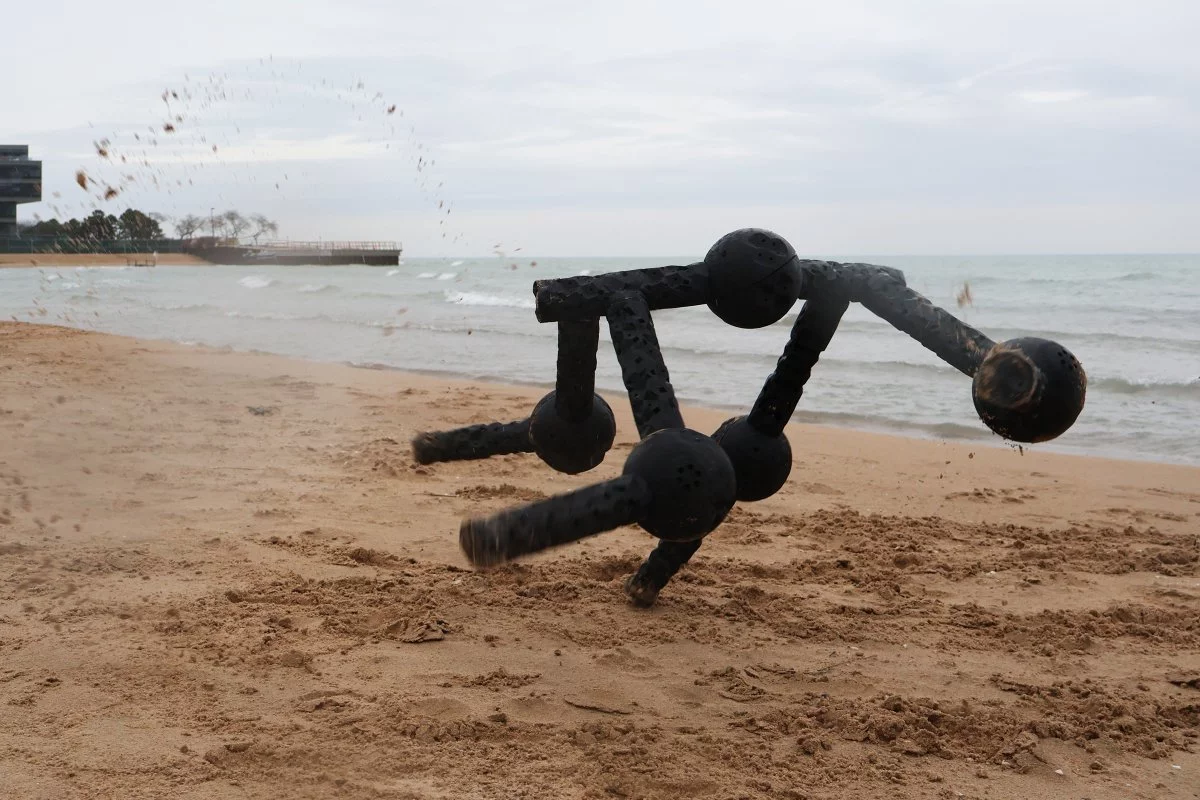
Northwestern University’s newly presented “metamachines” point to a subtle but consequential shift in robotics: away from single-purpose bodies—humanoid, quadruped, wheeled—toward modular, reconfigurable architectures that can change their physical strategy as conditions change. Built from half-meter leg modules connected by spherical elbow joints, these robots don’t merely walk; they reshape their locomotion. In demonstrations described in the research coverage, metamachines can undulate like a seal, bound like a lizard or kangaroo, and even pirouette to self-right after being flipped.
What makes this noteworthy is not the novelty of any one gait, but the design premise behind it: the robot’s “body plan” is no longer fixed. Instead, it becomes a dynamic variable—a controllable parameter—allowing the machine to trade stability for speed, clearance for traction, or symmetry for recovery, depending on terrain and damage state. That is a meaningful departure from the prevailing paradigm where most robots are optimized around a narrow set of assumptions (flat floors, predictable obstacles, intact actuators), and then struggle when those assumptions break.
Parallel work reinforces that this is not an isolated experiment. Columbia University’s Truss Link prototype and NASA’s snake-like explorer concept for Enceladus both underscore a broader industry direction: terrain-agnostic robotics designed for environments that are too remote, chaotic, or high-stakes for brittle hardware.
Modularity as resilience engineering: why “stick-like” robots may outperform athletic humanoids
The most strategically important claim embedded in metamachines is resilience through decentralization. Traditional robots—especially those with tightly integrated frames and centralized actuation—often suffer from a harsh reality: a single failed joint, motor, or structural element can cascade into mission failure. Metamachines invert that risk profile by treating each limb as a semi-autonomous subunit within a larger mechanical collective.
Key technical implications stand out:
- Decentralized mechanics reduce single points of failure: If one module is damaged, the system can potentially compensate by redistributing load, altering gait, or reconfiguring posture.
- High degrees of freedom enable morphological adaptation: The spherical elbow joints expand the reachable motion space, making it feasible to “find” new movement solutions when the environment—or the robot’s own body—changes.
- Bio-inspired gait diversity becomes a control asset: Emulating multiple animal locomotion patterns is not just mimicry; it creates a library of movement primitives that can be selected or blended for traction, speed, or stability.
- Self-righting and acrobatics signal advanced coordination: A robot that can pirouette to recover implies tight coupling between sensing, state estimation, and multi-actuator control—bridging the gap between soft-robotics-like adaptability and hard-robotics robustness.
This is where the story becomes as much about software and systems design as it is about hardware. The modular body invites a modular control stack: each limb can generate telemetry, predict its own degradation, and contribute to a global policy that decides how the whole machine should move next. The analogy to microservices in software architecture is apt: decoupling components can increase fault tolerance and scalability, but it also demands strong interface definitions, orchestration logic, and observability.
Just as importantly, modularity changes the economics of iteration. With additive manufacturing and standardized subunits, teams can prototype faster, swap parts in the field, and evolve designs without rebuilding an entire chassis. Over time, that can compress development cycles and push robotics closer to a platform model—where value accrues not only to the machine, but to the ecosystem of modules, tools, and control software around it.
Where the market pulls hardest: disaster response, industrial inspection, and off-world mobility
The commercial and public-sector pull for modular robotics is clearest in domains where uncertainty is the baseline and failure is expensive.
High-ROI application areas include:
- Search and rescue robotics: Collapsed structures, unstable debris fields, and constrained voids punish rigid designs. A reconfigurable robot that can keep operating after partial damage directly reduces responder risk and can shorten mission timelines.
- Industrial inspection and maintenance: Energy infrastructure, offshore installations, and confined industrial spaces often require robots that can adapt their form factor to the job—crawling, climbing, squeezing, or stabilizing on irregular surfaces.
- Space and planetary exploration: NASA’s interest in snake-like mobility for Enceladus reflects a premium on survivability and adaptability in unknown terrain. In such settings, modular robots offer a compelling proposition: if you cannot predict the environment, design a machine that can change itself to meet it.
From an investment standpoint, modularity can be framed as risk management. While per-module costs may be higher initially, the platform can amortize R&D across multiple missions and customers. That makes the approach attractive to:
- Venture investors seeking scalable robotics platforms rather than single-purpose products
- Corporate R&D groups looking for reusable hardware building blocks
- Government agencies (e.g., NASA, DARPA) prioritizing robustness in remote or contested environments
The strategic tension for incumbents is clear. Companies heavily invested in humanoids or specialized wheeled platforms may still dominate controlled environments, but modular systems threaten to win the segments where resilience and adaptability are the deciding factors. That, in turn, could accelerate a shift toward ecosystem competition—alliances between module suppliers, AI control vendors, simulation/digital-twin providers, and field operators—rather than standalone robot brands.
Standards, safety, and the next competitive moat: choreography software for reconfigurable bodies
As robots become more athletic and autonomous, regulators and operators will demand clearer answers on safety certification for machines that can change their geometry and behavior in real time. A robot that reconfigures is harder to certify than a robot that repeats a fixed motion envelope. Expect growing emphasis on:
- Interface standards for mechanical and electrical interoperability
- Verification frameworks for dynamic reconfiguration and damage-tolerant behaviors
- Data governance rules for the large operational datasets generated by distributed sensors and learning systems
The most durable competitive advantage may not be the leg module itself, but the control intelligence—the “choreography layer” that decides how dozens of actuators coordinate under uncertainty. In modular robotics, hardware can become commoditized faster than expected; the differentiator becomes the ability to translate sensing and partial failures into stable, efficient motion—especially when the robot’s body is no longer a constant.
Metamachines, Truss Link, and NASA’s exploratory concepts collectively suggest that robotics is entering a phase where form is programmable. For industries that operate in the messy real world—disasters, infrastructure, and distant moons—that may prove more transformative than any single breakthrough in speed, strength, or battery life.

 By
By
 By
By




 By
By
 By
By