
A veteran eBay seller’s turnaround signals a structural shift in digital retail
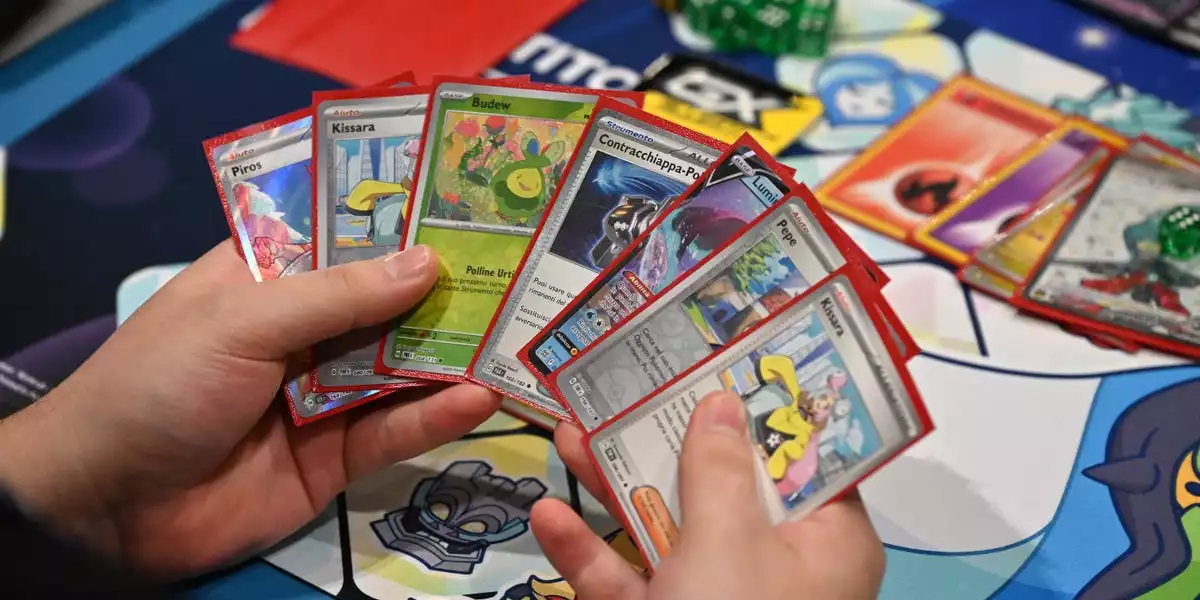
Scott Wool’s recent resurgence is less a feel-good story about a seasoned merchant finding his footing and more a clear indicator that live commerce is maturing into a primary revenue engine for high-consideration categories. Between January 2025 and January 2026, Wool—known to many collectors through his long-running eBay store *pfootballpete4dhx*—reported a 200% increase in eBay revenues, reversing years of uneven performance. The catalyst was not a new product line or a pricing hack, but a deliberate operational pivot: appointment-style livestream selling focused on high-end Pokémon trading cards.
Wool’s trajectory mirrors the broader evolution of marketplaces. After building scale in the early eBay era—over 100,000 followers and roughly 2 million items sold—he encountered the same headwinds many legacy sellers face: algorithmic discovery constraints, intensifying competition, and the limits of static listings for goods that require explanation, reassurance, and narrative. A pivotal moment arrived in 2021, when a livestream pilot reportedly generated $225,000 in a single session, demonstrating what real-time engagement can unlock when the product is scarce, emotionally resonant, and socially validated.
What’s notable is the operational seriousness behind the shift. Wool’s investment in multi-studio setups and consistent Friday-night programming suggests that live commerce is no longer “content” bolted onto commerce—it is commerce redesigned around content, with production discipline, repeatable scheduling, and community management treated as core infrastructure.
—
Live commerce is becoming a platform feature—and a seller capability stack
The business lesson from Wool’s playbook is that livestreaming is not simply a new surface area for sales; it changes the mechanics of discovery and conversion. In traditional marketplace selling, merchants often compete inside a narrow funnel shaped by search rank, listing quality, and price. Live commerce introduces a parallel funnel where attention is earned through personality, expertise, and interaction, then converted through immediacy.
Key technological implications are emerging for both platforms like eBay and the sellers who depend on them:
- Real-time discovery bypasses static bottlenecks
Livestreams can outperform listings by creating “event gravity”—a moment where buyers show up at the same time, see the same items, and react collectively. This reduces reliance on algorithmic placement and can compress the path from interest to purchase.
- Mobile-first access, studio-grade expectations
Entry is democratized—an iPhone can launch a channel—but scaling requires a capability stack:
– multi-camera production and switching
– low-latency streaming and chat moderation
– real-time inventory syncing to prevent oversells
– frictionless checkout and payment reliability under peak load
- Commerce UX becomes conversational
The interface shifts from browsing to dialogue: questions about condition, provenance, grading, and pricing are answered live. For collectibles, that interaction is not ancillary—it is the product experience.
For marketplaces, embedding livestreaming is also defensive strategy. As social platforms and specialized apps compete for seller attention, legacy marketplaces need to offer native tools that keep high-volume sellers from migrating. For sellers, the implication is equally clear: livestreaming is becoming a repeatable operational channel, not a one-off promotional tactic.
—
Pokémon cards as an alternative asset: opportunity, volatility, and the trust premium
Wool’s focus on high-end Pokémon cards underscores a market transformation that business leaders can’t ignore: collectibles are increasingly treated as an asset class. What began as childhood nostalgia has evolved into a global market shaped by scarcity narratives, grading hierarchies, and “blue-chip” language more commonly associated with art, wine, or watches.
This financialization brings liquidity—and risk. Prices can move sharply on sentiment, influencer attention, macro conditions, and supply shocks. Yet the same volatility that deters cautious buyers attracts others, including institutional participants seeking uncorrelated returns, from hedge funds to family offices. In that environment, the seller who can consistently source, authenticate, and explain inventory gains leverage.
The central economic variable is trust. High-value collectibles intensify the threat of counterfeits, altered cards, and misrepresented condition. Livestreaming can build confidence through transparency—showing pulls, opening sealed product, or discussing grading in real time—but it also raises the bar for verifiable proof.
Expect the next phase of growth to be shaped by trust and authentication technologies, including:
- Digitally verifiable grading and certification workflows
- AI-driven image authentication to flag anomalies or known counterfeit patterns
- Provenance tracking, potentially including blockchain-backed records where appropriate
- Platform-side moderation, dispute resolution, and seller enforcement that can keep pace with higher transaction values
In practical terms, trust becomes a measurable premium: sellers who can reduce buyer uncertainty can often sell faster, at higher prices, with fewer post-transaction disputes.
—
The new moat is community—and the strategic risk is platform dependence
Wool’s “Friday night” cadence is a reminder that the most durable advantage in live commerce is not production quality alone; it is habitual community. Predictable scheduling turns commerce into appointment viewing. Over time, that consistency can reduce customer acquisition costs, stabilize demand, and create a feedback loop where the audience itself becomes a marketing engine.
Several strategic patterns stand out for executives evaluating live commerce strategy—whether in collectibles, luxury resale, limited-edition drops, or other high-consideration verticals:
- Community stewardship beats price competition
As live selling becomes saturated, differentiation shifts toward expertise, transparency, and the social experience of buying.
- Sourcing networks become competitive infrastructure
Fragmented secondary markets create arbitrage opportunities for operators with superior access to factory-sealed inventory, estate collections, or early supply.
- Hybrid distribution reduces existential risk
eBay’s livestreaming tools can accelerate growth, but sellers remain exposed to algorithm changes, fee adjustments, and policy shifts. The resilient model is hybrid:
– leverage marketplaces for reach and trust scaffolding
– build owned channels for direct access (email lists, memberships, apps, subscription tiers)
For business and technology leaders, the takeaway is not that every category needs a livestream. It’s that where trust, scarcity, and storytelling drive conversion, live commerce is increasingly the most efficient interface—and the sellers who operationalize it as a system, not a stunt, are rewriting the competitive map in real time.

 By
By
 By
By
 By
By

 By
By


 By
By