
A landmark DOJ case exposes the mechanics of AI-powered streaming fraud
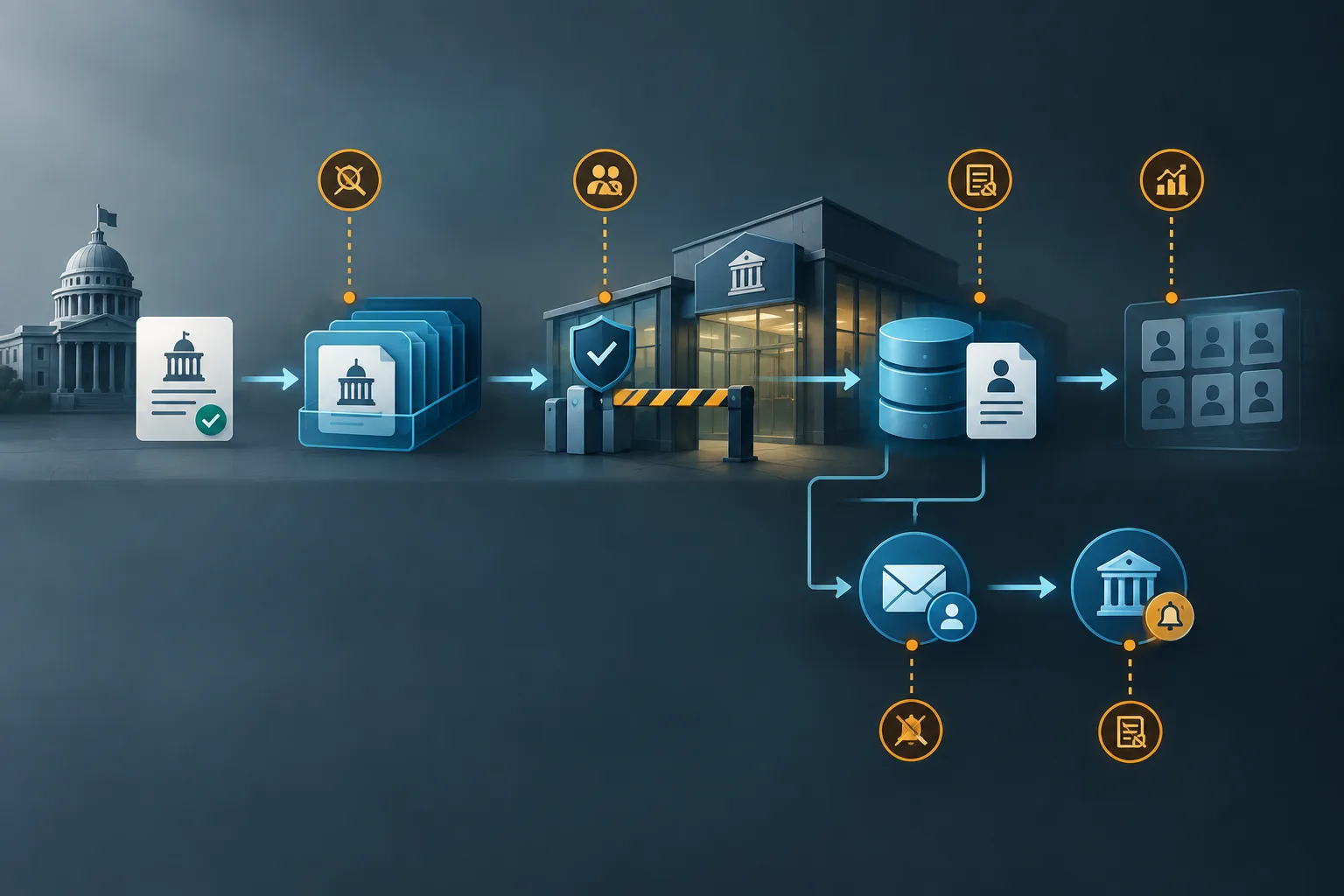
The U.S. Department of Justice’s case against Michael Smith of North Carolina reads less like a conventional royalty dispute and more like a stress test of the modern digital music economy. Prosecutors say Smith built an industrialized operation: over 100,000 AI-generated tracks, more than 1,000 streaming accounts, and automated systems designed to simulate authentic listener behavior at massive scale. The alleged result—roughly $8 million in illicit royalties drawn from major platforms including Spotify, Apple Music, Amazon Music, and YouTube Music—highlights a structural vulnerability in streaming: when payouts are tied to engagement metrics, the integrity of those metrics becomes the integrity of the market.
Smith’s guilty plea, coupled with an agreement to forfeit the proceeds ahead of a July sentencing (with potential exposure of up to five years in prison), signals that U.S. authorities are prepared to treat synthetic engagement not as a platform nuisance, but as a form of financial crime with real victims. As U.S. Attorney Jay Clayton emphasized, the “streams” may have been fabricated, but the economic harm to legitimate artists and rights holders is tangible—especially in a system where royalty pools are finite and distribution is algorithmically mediated.
This is not simply a story about one defendant. It is a case study in how generative AI and automation can be fused into a scalable fraud engine—and how quickly the incentives of the streaming model can be exploited when verification lags behind innovation.
The technology stack behind synthetic listeners—and why detection is hard
At the core of the scheme is a convergence of two mature capabilities: generative content production and bot-based traffic simulation. Generative AI lowers the marginal cost of producing “new” music to near zero, while bot networks can manufacture the appearance of demand. The sophistication described—bots designed to mimic real listening sessions—mirrors patterns long familiar in ad fraud, click-spam, and affiliate manipulation, where attackers continuously refine behavioral realism to evade detection.
Key technological implications for streaming platforms and the broader creator economy include:
- Generative AI as a scale multiplier: Models can produce vast catalogs quickly, enabling bad actors to flood distribution channels with low-value or purely instrumental content optimized for playtime rather than artistry. This is less about “AI music” as a genre and more about AI as a production pipeline for monetizable inventory.
- An arms race in behavioral analytics: If bots can emulate session length, device diversity, time-of-day patterns, and even skip behavior, platforms must move beyond simple threshold rules. The next phase is likely to rely on real-time anomaly detection, graph-based account linkage, and AI-driven forensics that can identify coordinated inauthentic behavior across accounts, IP ranges, and device fingerprints.
- Provenance, watermarking, and auditability: The case underscores growing demand for cryptographic provenance markers and embedded watermarking in AI-generated media. While provenance does not stop fraud by itself, it can support enforcement, transparency, and downstream accountability—particularly when paired with platform policies that require disclosure or verification for certain monetization tiers.
The deeper challenge is that streaming platforms are not merely hosting content; they are operating measurement systems. When measurement becomes adversarial, the platform’s risk profile begins to resemble that of financial exchanges and digital advertising networks—domains where fraud prevention is a core operational competency, not a peripheral trust-and-safety function.
Royalty dilution, platform trust, and the emerging compliance burden
Economically, streaming fraud is not victimless. Most major services distribute royalties through pooled models in which total payouts are allocated based on share of streams. In that environment, fabricated plays function like a siphon: they reallocate money away from legitimate creators, particularly emerging artists who already face thin margins and limited negotiating leverage.
Several market-level consequences are now coming into sharper focus:
- Revenue erosion and inequality in the creator economy: Artificially inflated play counts can divert millions from human musicians and rights holders, intensifying concerns that streaming already concentrates earnings among a small cohort of top performers.
- Rising platform liability and reputational exposure: As fraud becomes more visible, platforms face pressure to demonstrate robust controls. Persistent failures could invite regulatory scrutiny, consumer backlash, or demands for new rules governing digital royalty integrity and platform accountability.
- A new vendor ecosystem around “stream integrity”: The incentives are forming for specialized providers offering bot detection, AI-content auditing, rights verification, and fraud analytics. Expect increased interest in certification layers—tools that validate legitimate streams, authenticated artists, and compliant catalogs.
For platforms, the strategic question is not whether fraud exists—it is whether enforcement can be made credible without undermining user experience, creator onboarding, or innovation in generative tools. Overly aggressive policing risks false positives that penalize legitimate artists; insufficient policing risks a trust collapse among creators and regulators.
Where the industry goes next: standards, verification, and governance for AI media
The Smith case is likely to accelerate an industry shift toward shared standards and interoperable verification. No single platform can fully solve coordinated fraud in isolation when attackers can distribute activity across services, accounts, and content aggregators. The most durable response will likely combine technical controls, policy alignment, and cross-industry cooperation.
Forward-looking developments to watch include:
- Collaborative frameworks among streaming services, labels, rights organizations, distributors, and AI companies to align on content verification, bot detection signals, and consistent enforcement thresholds.
- Institutional-grade rights infrastructure, potentially including decentralized ledger approaches or similar systems that improve traceability of ownership, usage, and revenue flows—less as a buzzword, more as an operational audit layer.
- AI governance and model auditing becoming standard enterprise practice, with clearer logging of model outputs, training data provenance expectations, and compliance reporting for monetized content pipelines.
- New artist-platform compacts, such as “verified artist” channels, protected monetization tiers, or contractual safeguards that reduce exposure to AI-driven dilution and synthetic engagement.
The DOJ’s action does more than punish an alleged scheme; it reframes streaming integrity as a matter of market fairness and measurable harm. In an era where AI can manufacture both content and consumption, the platforms that thrive will be those that can prove—technically, transparently, and repeatedly—that attention is real, attribution is accurate, and compensation still reaches the people who actually create.
 By
By
 By
By
 By
By
 By
By

 By
By

 By
By