
Nicotine’s quiet return to the modern office economy
A curious dual narrative is taking shape around nicotine—one that spans Silicon Valley-style productivity culture and avian survival strategies in the wild. On one side, reports of nicotine products being made available through office vending machines at major technology firms point to a subtle but meaningful shift in workplace norms: nicotine is reappearing not as a cessation tool, but as an on-demand cognitive and emotional regulator for overstretched teams.
For business leaders, the signal is less about any single product—pouches, vapes, or other delivery formats—and more about what the behavior implies. In high-output engineering and product environments, nicotine can function as a self-administered stimulant and stress modulator, a workaround for chronic workload intensity, fragmented attention, and performance pressure. This creates a tension with the sector’s long-standing emphasis on holistic wellness, mental health benefits, and “human-centered” culture narratives.
Key workplace implications emerging from this trend include:
- Duty-of-care contradictions: When a company facilitates access—directly or indirectly—it risks appearing to trade long-term employee health for short-term throughput.
- Regulatory and reputational exposure: As nicotine delivery products evolve faster than policy, employers may find themselves operating in a gray zone that later attracts scrutiny.
- A market shift in coping tools: The movement away from regulated cessation aids toward discreet, consumer-grade stimulants suggests that stress-management systems are failing to meet real needs at the pace of modern work.
From an operational perspective, nicotine’s re-entry is best read as a workforce telemetry signal: where it rises, it may indicate sustained strain, insufficient recovery time, and a culture that rewards endurance over sustainability.
When birds use cigarette waste as parasite control: a surprising biological “product demo”
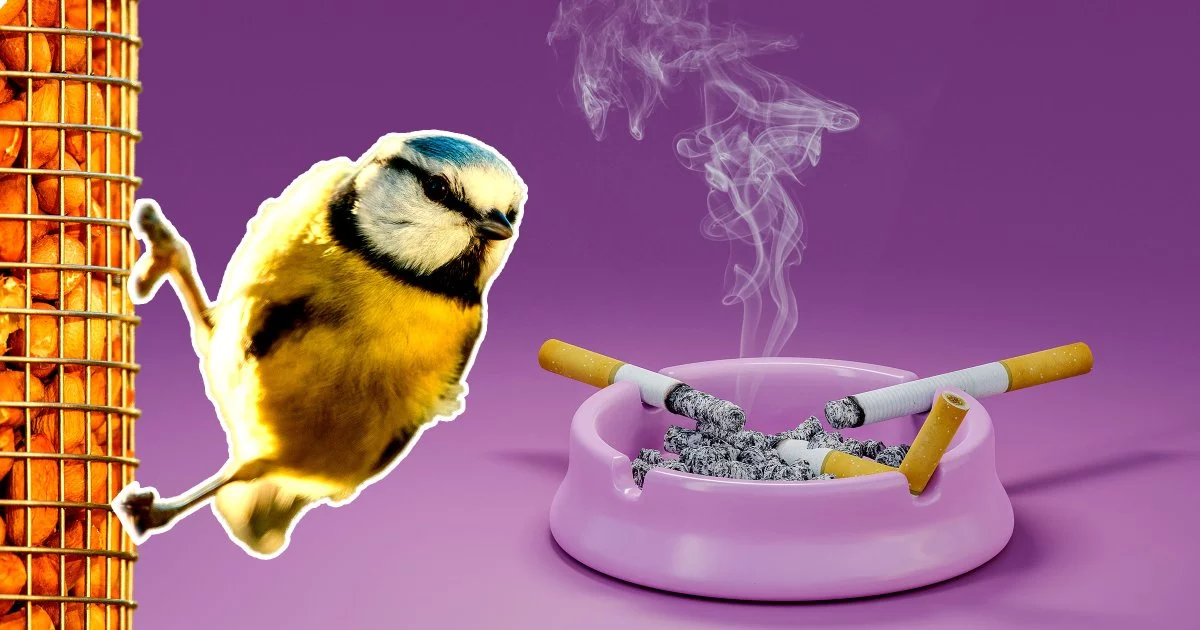
In parallel, nicotine is resurfacing in an entirely different arena—ecology—where certain bird species are incorporating discarded cigarette butts into their nests. Research published in *Animal Behavior* by the University of Lodz highlights a striking outcome: nests containing cigarette remnants showed improved brood health indicators, including higher hemoglobin levels and red-blood-cell concentrations, while nests without such material carried higher parasite loads.
This behavior has been observed across geographies and species, suggesting convergent adaptation rather than isolated novelty:
- Blue tits in Europe
- Finches and sparrows in Mexico
- Darwin’s finches in the Galápagos, where invasive parasites such as vampire flies have exerted intense evolutionary pressure
Mechanistically, the evidence points to volatile compounds—including nicotine and related chemicals—acting as biocides or repellents against ticks, mites, fleas, and other nest parasites. Notably, experimental comparisons between nests containing raw versus sterilized cigarette material still showed benefits, reinforcing the idea that chemical action, not microbial contamination, is driving the effect.
For technology and innovation audiences, this is more than a quirky natural-history anecdote. It is a real-world demonstration of how organisms rapidly exploit human-made materials to solve survival problems—an uncomfortable reminder that pollution becomes part of the adaptive landscape.
The ESG and environmental bill: trillions of filters, persistent toxins, long-tail liability
The ecological “benefit” birds derive from cigarette remnants sits inside a far larger crisis: trillions of cigarette butts enter ecosystems each year, and most filters are plastic-based and non-degradable. The same material that may repel parasites in a nest also leaches toxins into soil and waterways, creating long-term harm that outlasts any short-term biological advantage.
For companies and investors tracking environmental risk, cigarette filter waste is increasingly relevant to:
- Cleanup costs and municipal burden, which can translate into policy pressure and new levies
- Extended Producer Responsibility (EPR) frameworks, which may expand to include nicotine product waste streams
- Credibility of ESG commitments, especially where corporate campuses or supply chains normalize on-site distribution without robust end-of-life controls
This matters for tech firms in particular because their brand equity often rests on future-facing responsibility. If nicotine access becomes embedded in workplace infrastructure while filter pollution and disposal remain externalized, stakeholders may view the gap as a form of values arbitrage—public wellness messaging paired with private enablement.
Strategic pathways: from workplace design to biomimicry-driven R&D
The most durable response is not moral panic or performative bans, but systems design—in both human organizations and product ecosystems.
For employers navigating nicotine’s workplace resurgence, the competitive differentiator is likely to be evidence-based alternatives that reduce the demand for chemical coping:
- AI-driven workload forecasting and staffing models to prevent chronic overload cycles
- Personalized mental-health support that is accessible, stigma-resistant, and measurable
- Recovery-oriented performance design, where output targets incorporate sustainable pacing rather than perpetual sprinting
Meanwhile, the avian use of cigarette remnants opens a more unconventional frontier: biomimicry and safer pest-control innovation. If specific volatile compounds can be isolated and reformulated responsibly, they could inspire:
- Low-toxicity antiparasitic agents for agriculture and animal health
- Cross-sector R&D partnerships spanning ecology labs, agritech, and pharmaceutical development
- Targeted pest management tools that reduce reliance on broad-spectrum synthetic pesticides
Yet any innovation agenda must contend with the central paradox: nicotine’s utility—whether as a human stimulant or an avian parasite deterrent—does not erase its externalities. The next phase of leadership will be defined by who can reduce the underlying drivers of dependency, capture legitimate scientific insight from nature’s adaptations, and still confront the mounting environmental cost of a product whose waste was never designed to belong anywhere at all.

 By
By
 By
By

 By
By


 By
By
 By
By