
Flight Story’s “vibe coding” bet: hiring for AI fluency over formal pedigree
Steven Bartlett’s media venture, Flight Story, is placing a high-stakes wager on a new hiring philosophy: “vibe coding”—a term popularized by former OpenAI executive Andrej Karpathy to describe building software by leaning heavily on AI coding assistants and rapid iteration rather than traditional, credential-driven engineering pathways. In practice, the approach elevates a candidate’s ability to orchestrate AI tools, craft effective prompts, and adapt quickly above conventional signals such as computer science degrees, years of experience, or mastery of specific programming languages.
For business leaders, the appeal is obvious. AI-assisted development promises a faster route from idea to prototype, and from prototype to product. For a media company operating in a digital attention economy—where speed, experimentation, and platform shifts are constant—vibe coding reads less like a novelty and more like an attempt to institutionalize agility.
Yet the early evidence described alongside this strategy also points to a familiar pattern in technology adoption: capability expands faster than control systems. Reports of unstable “spaghetti code,” database integrity failures, and outages tied to cloud-service dependencies highlight the core tension of AI-driven development: democratized creation can also democratize risk when governance, testing, and accountability lag behind.
—
The engineering reality: productivity gains collide with reliability, security, and technical debt
Vibe coding’s promise is not merely that more people can write code—it’s that more people can assemble working software systems by delegating complexity to generative AI platforms. That shift changes what “skill” means in software creation. It also changes where failures originate.
Key technological implications emerging from this model include:
- Democratization of development
– Generative AI lowers barriers, enabling non-traditional builders to ship functional applications.
– The talent pool widens, but the organization becomes more dependent on model behavior, tool availability, and platform governance.
- Quality and security trade-offs
– AI-generated code can be syntactically correct yet structurally fragile—especially when stitched together across features without coherent architecture.
– The most costly failures are rarely cosmetic bugs; they are data loss, broken access controls, and silent integrity errors that surface late.
- Toolchain and process gaps
– If AI assistance accelerates coding, then testing, review, and observability must accelerate too.
– Without AI-aware DevOps practices—automated code review, dependency scanning, reproducible builds, and robust CI/CD gates—speed becomes a multiplier for defects.
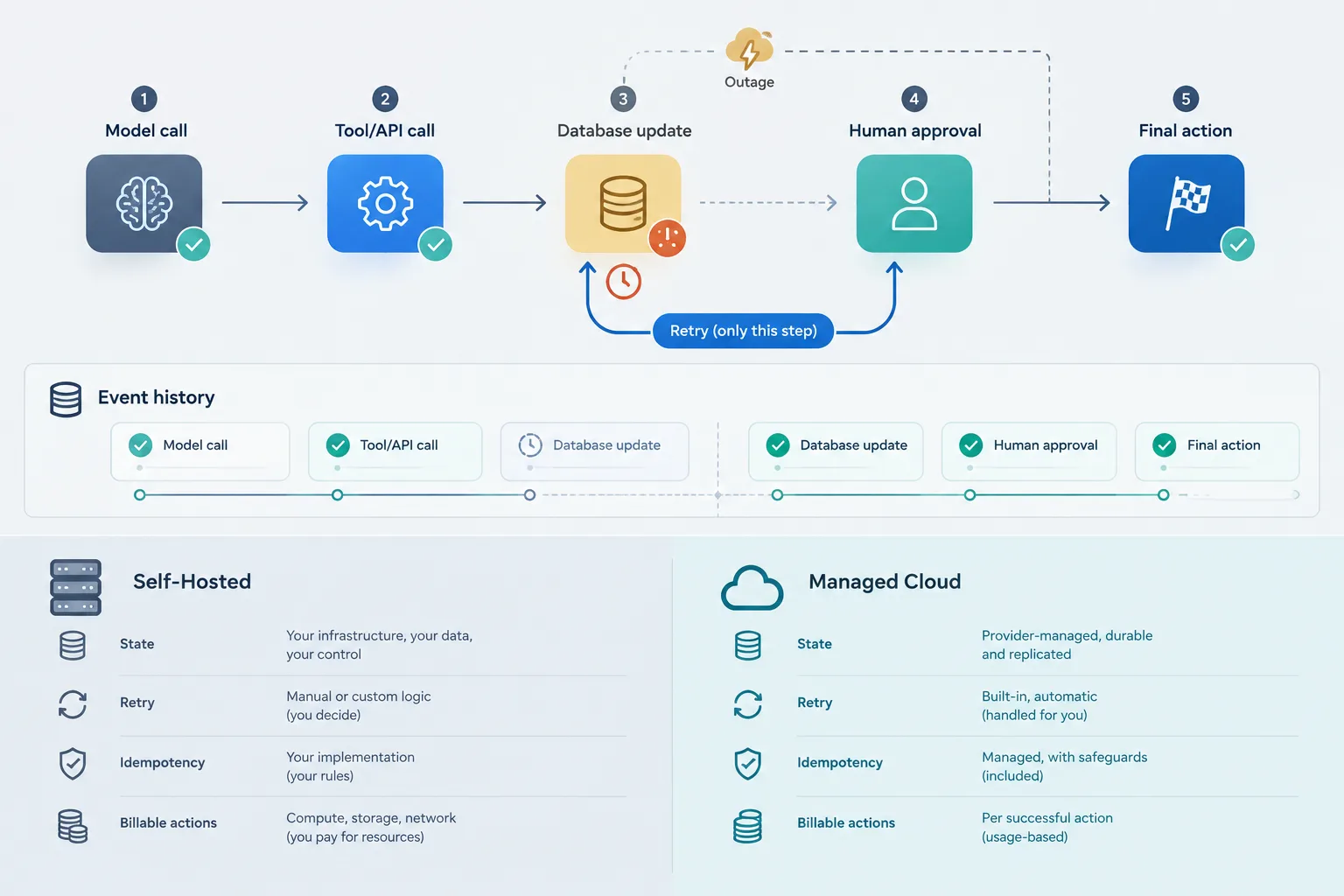
The mention of database integrity issues and cloud-service outages is particularly instructive. Modern software is less a single codebase than a network of dependencies: managed databases, third-party APIs, identity providers, and cloud infrastructure. When vibe coding emphasizes rapid assembly, it can unintentionally encourage integration-first engineering—where systems are connected before they are fully understood. That is not inherently wrong, but it demands disciplined safeguards: schema migrations, backups, rollback plans, and incident response playbooks that are often learned through hard experience.
—
A new labor signal: from credentials to adaptability—and the organizational cost of oversight
Flight Story’s approach reflects a broader recalibration underway in the labor market. If AI tools can compress the time needed to produce working software, then employers may increasingly prioritize adaptability, product intuition, and tool fluency over formal credentials. That shift could ease hiring bottlenecks and reduce recruitment costs, but it also reshapes where companies must invest.
Organizational and economic implications include:
- Talent acquisition paradigm shift
– De-emphasizing degrees and traditional technical filters can unlock candidates with diverse backgrounds.
– The trade-off is a likely increase in oversight costs: code auditing, QA, security review, and architectural stewardship to prevent hidden technical debt.
- Changing employment models
– Vibe coding aligns naturally with project-based, gig-style delivery, where output is measured by shipped features rather than long-term maintainability.
– This could compress entry-level wages in some segments while creating premium demand for specialists who can govern AI-assisted development.
- Cultural transformation and risk appetite
– A “vibe” culture can foster experimentation and speed, but it implicitly requires tolerance for iterative failure.
– Leadership must define what failure is acceptable (prototype instability) versus unacceptable (data loss, compliance breaches, customer harm).
This is where the strategy intersects with dynamic capabilities theory: organizations win not only by having resources, but by sensing opportunities early and reconfiguring quickly. Vibe coding is a mechanism for sensing and seizing—yet it must be paired with a capability for stabilizing and scaling, or the organization risks becoming a perpetual prototype factory.
—
What sustainable AI-driven software delivery will require: governance, new roles, and regulatory readiness
If vibe coding is to mature from an experimental hiring philosophy into a durable operating model, the next phase will be defined less by prompt cleverness and more by institutional controls that make AI-assisted output trustworthy.
Several forward-looking moves stand out as pragmatic:
- Hybrid governance models
– Pair AI-enabled builders with veteran engineers who act as code custodians—responsible for architecture, security, performance, and reliability.
– Embed AI-code review gates into CI/CD pipelines, treating AI-generated contributions as first-class artifacts requiring traceability.
- Internal credentialing for AI tool fluency
– Establish training and certification in prompt engineering, toolchain orchestration, and AI-aware debugging.
– The goal is not to recreate old credentialism, but to ensure a baseline competency that reduces systemic risk.
- Outcome-based performance metrics
– Replace proxy metrics like lines of code with measures that reflect real value: stability, incident rates, user satisfaction, and time-to-market.
– This aligns incentives with maintainability rather than mere velocity.
- Regulatory and compliance preparedness
– As AI-generated code enters systems that touch consumer data and critical workflows, regulators will demand audit trails and accountability.
– Firms that proactively build documentation, provenance tracking, and security controls will be better positioned as standards emerge.
The deeper story behind Flight Story’s vibe coding is not whether AI can write code—it clearly can. The question is whether organizations can redesign hiring, culture, and governance so that AI-accelerated creation produces not just more software, but more dependable software. The winners in this cycle are unlikely to be those who move fastest alone, but those who pair speed with the operational discipline to make rapid innovation safe to scale.

 By
By
 By
By

 By
By
 By
By
 By
By