
A 1930s Antitrust Tool Returns to a 2020s Pricing Battlefield
Sen. Chris Murphy’s Fair Prices for Local Businesses Act is best understood as an attempt to retrofit U.S. competition policy for an economy where pricing power is increasingly exercised through data, algorithms, and platform gatekeeping. The proposal would expand and modernize the reach of the Robinson-Patman Act of 1936, a long-dormant statute originally aimed at preventing wholesalers and large buyers from using discriminatory pricing to crush smaller rivals.
For decades, Robinson-Patman has been narrowed by courts and sidelined by enforcement priorities that often favored consumer-facing price reductions over structural concerns about market power. Murphy’s bill signals a different posture: a willingness to treat “sweetheart” pricing arrangements—and the information-sharing that can accompany them—as potential threats to competitive markets, not merely aggressive bargaining.
The political context matters. Antitrust has become one of the rare areas where bipartisan skepticism of concentration is real, even if motivations differ. In a GOP-controlled Senate, Murphy’s path is not assured, but the bill is calibrated to resonate beyond traditional progressive antitrust circles by framing the issue as small-business survival, local economic resilience, and fair dealing in essential consumer markets like groceries and food delivery.
The Walmart–PepsiCo Allegations and the New Anatomy of “Sweetheart Deals”
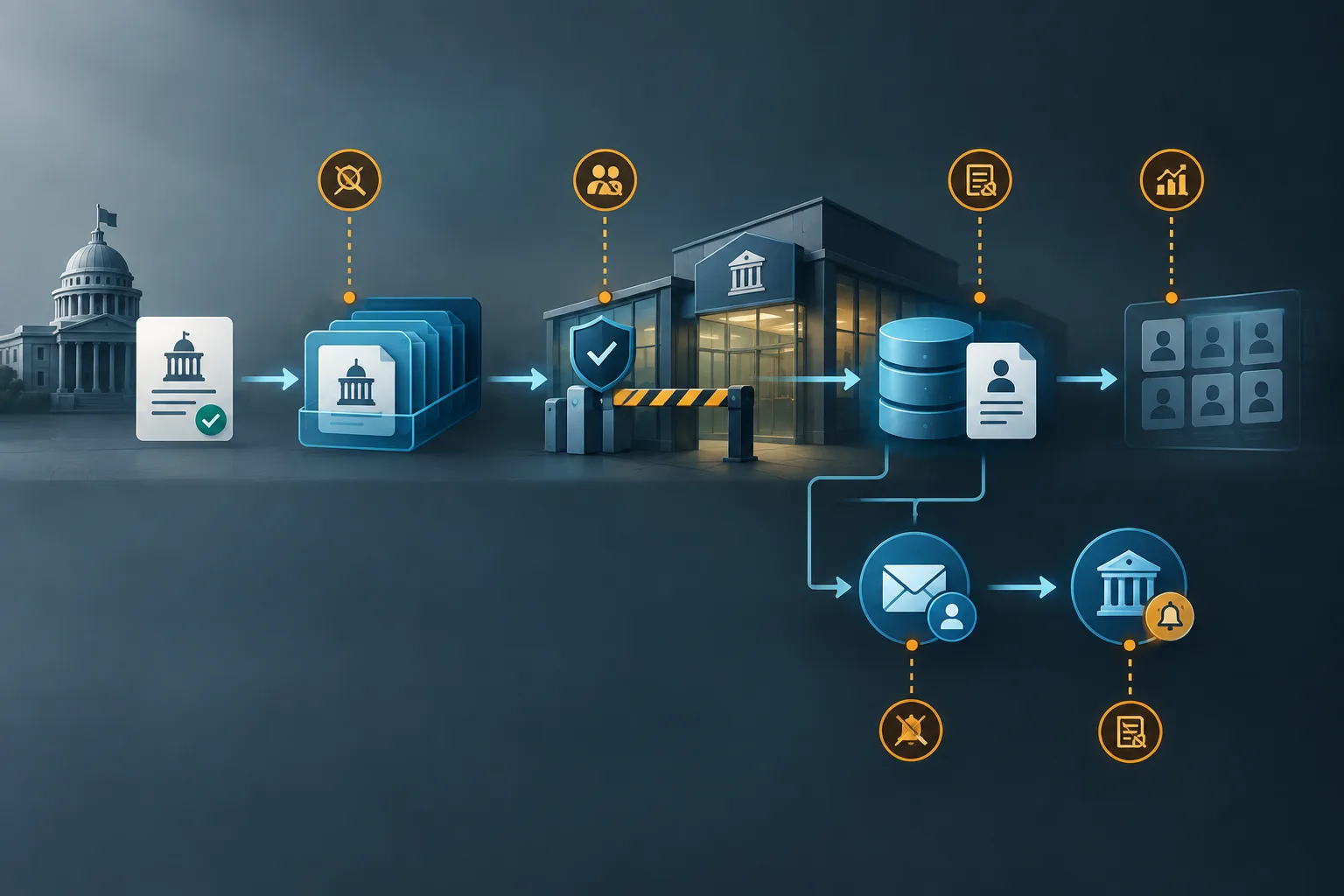
The legislative push is closely tied to an FTC lawsuit alleging Walmart–PepsiCo collusion, centered on claims that pricing and promotional arrangements enabled Walmart to monitor rivals’ prices and strategically undercut or sideline competitors. Both companies maintain their conduct was lawful and beneficial to consumers—an argument that has historically carried weight in antitrust debates.
What makes this episode a bellwether is not simply the size of the firms involved, but the mechanics of modern price advantage. In today’s retail and consumer packaged goods (CPG) ecosystem, favorable pricing can be paired with:
- Real-time competitive price visibility, enabled by data feeds and analytics tools
- Promotion optimization, where discounts and placement are tuned dynamically by region, store, or customer segment
- Inventory and demand signals, allowing dominant buyers to anticipate market moves faster than smaller competitors
- Contractual complexity, where rebates, marketing funds, and performance terms can function like hidden price discrimination
This is where the bill’s ambition becomes clearer: it is not only about the sticker price of a case of soda or a pallet of snacks. It is about whether data-enabled bargaining power—especially when concentrated among a few large retailers and suppliers—creates a durable competitive moat that smaller firms cannot cross.
In practical terms, the legislation aims to give local businesses more leverage to challenge arrangements that allegedly allow large firms to track, undercut, or even raise competitors’ prices through coordinated market visibility and preferential terms. That is a notable shift from traditional antitrust’s focus on overt price-fixing toward the subtler terrain of algorithmic price tracking and information asymmetry.
Delivery Platforms, Commission Economics, and the Fight Over Local Margins
Murphy’s proposal also reaches beyond big-box retail into the platform economy—explicitly touching the realities of restaurants, local retailers, and delivery services such as Uber Eats and DoorDash. This is where the bill’s political coalition—support from groups like Small Business Rising and the Independent Restaurant Coalition—finds its sharpest economic narrative.
For many restaurants and small retailers, delivery platforms are not merely marketing channels; they are increasingly critical infrastructure for demand generation. Yet the economics can be punishing. As the summary notes, platform fees can reach 30% per order, a figure that collides head-on with the thin net margins—often 3–5%—that define independent food and retail operations.
From a competition perspective, the concern is not simply that fees are high, but that fee structures and pricing rules can become discriminatory or strategically manipulative, especially when platforms can:
- Steer consumer attention through ranking and recommendation algorithms
- Incentivize “preferred” partners via tiered commission structures
- Influence menu pricing behavior through parity clauses or de facto pressure
- Aggregate transaction data that small businesses cannot replicate or audit
The bill’s framing suggests a broader regulatory thesis: when a platform becomes a dominant route to market, pricing and access terms start to resemble a quasi-utility function, raising the question of what “fair dealing” should mean in digital marketplaces.
This is also where consumer welfare trade-offs become more complex. Consumers may benefit from convenience and promotional pricing in the short run, but policymakers are increasingly weighing whether those gains come at the expense of local business churn, reduced neighborhood variety, and a long-run drift toward fewer independent operators.
What Businesses Should Watch as Antitrust Shifts Toward Data, Fees, and Ex Ante Rules
Even if Murphy’s bill faces a difficult legislative path, it reflects a durable direction of travel: antitrust and competition policy are moving closer to the operational layer of commerce—contracts, algorithms, data-sharing, and platform fee design—rather than relying solely on after-the-fact enforcement.
For executives, legal teams, and product leaders, several implications stand out:
- Pricing algorithm governance becomes a compliance issue, not just a revenue lever. Firms may need clearer documentation of how pricing systems use competitor data and what guardrails prevent coordination-like outcomes.
- Supplier and platform contracts will face higher scrutiny, particularly where rebates, promotional funds, or data-sharing provisions could be interpreted as exclusionary or discriminatory.
- Transparency may become strategic. Companies that can explain fee structures, ranking logic, and discount programs in plain terms may reduce regulatory risk and build partner trust.
- Small-business collective strategies may accelerate, including cooperative buying groups, shared logistics, and alternative digital storefronts designed to reduce dependency on a handful of dominant intermediaries.
The deeper story is that competition is no longer only about who offers the lowest price—it is about who controls the information systems that set, target, and enforce prices at scale. Murphy’s Fair Prices for Local Businesses Act is an attempt to make that control legible to law, and contestable in court, at a moment when the rules of pricing are increasingly written in code and negotiated in contracts few outsiders ever see.

 By
By
 By
By
 By
By
 By
By

 By
By