


A Houston overpass crash that sharpens the spotlight on Tesla Full Self-Driving claims
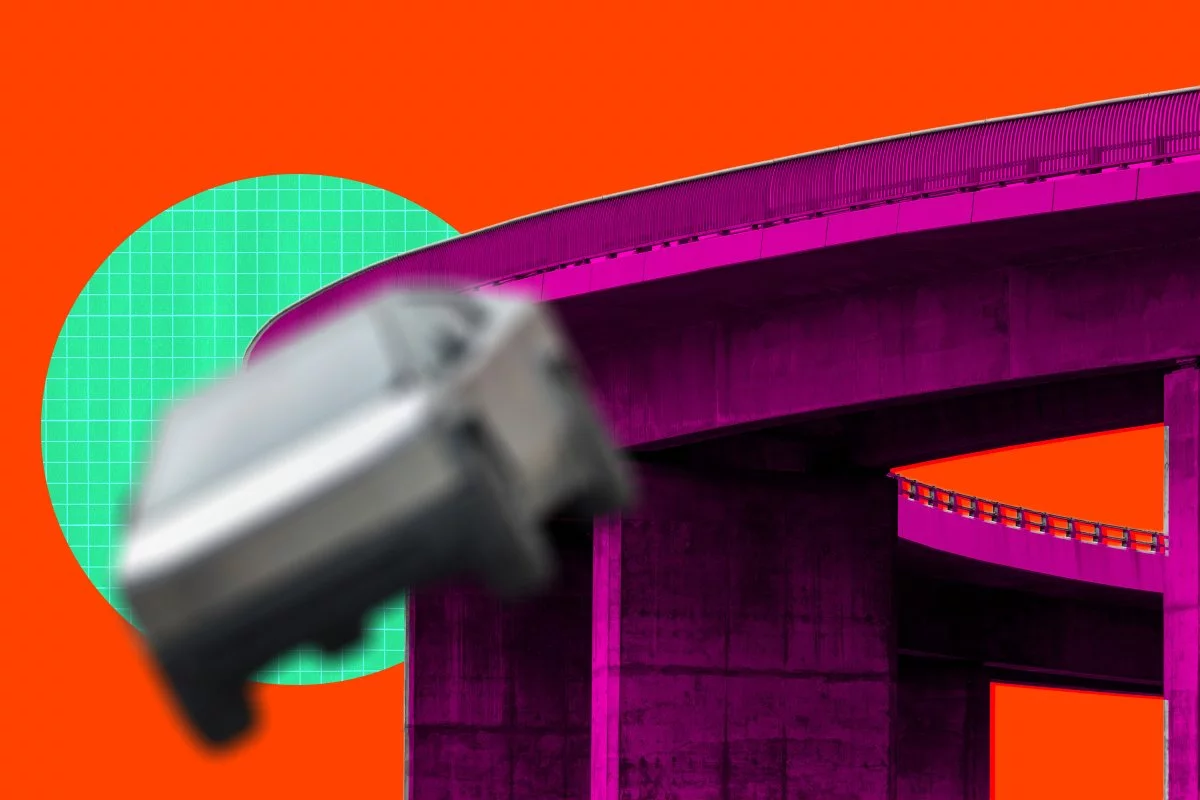
A newly filed lawsuit by Justine Saint Amour adds fresh urgency to the debate over Tesla Cybertruck safety and the real-world performance of Full Self-Driving (FSD). The complaint alleges that in August 2025, her Cybertruck—operating in FSD—accelerated unexpectedly up an overpass ramp, failed to follow a curve, and struck a barrier, causing serious spinal injuries. Dashcam footage is said to capture behavior the plaintiff characterizes as erratic and unanticipated.
The case lands in a landscape already shaped by regulatory investigations, prior civil judgments, and heightened scrutiny of advanced driver-assistance systems (ADAS). For Tesla, the legal stakes extend beyond a single crash narrative: the lawsuit presses on a recurring fault line—whether Tesla’s branding, customer messaging, and product design choices have created misaligned expectations about what FSD can reliably do, and under what conditions.
For the broader mobility sector, the incident is another reminder that the most consequential risks in autonomy are often not the headline-grabbing “robotaxi” promises, but the edge-case realities of ramps, curves, merges, construction artifacts, and human unpredictability—the mundane geometry where software must be quietly correct, every time.
Vision-only autonomy under pressure: engineering trade-offs and edge-case fragility
At the center of the controversy is Tesla’s strategic bet on vision-only autonomy, a design philosophy that relies primarily on camera-based perception and neural-network inference rather than a more redundant sensor-fusion stack that includes LiDAR and radar. Elon Musk has long argued that vision scales better economically and can approximate how humans drive. Critics counter that human-like perception is not the same as machine-verifiable safety, especially when the system must operate with consistent performance across lighting, weather, and roadway variability.
From a technical standpoint, the alleged ramp failure highlights several systemic challenges:
- Single-modality vulnerability: Camera-centric systems can be sensitive to glare, shadows, occlusion, low contrast lane markings, and complex curvature—conditions common on ramps and elevated interchanges.
- Edge-case generalization: Neural networks excel at patterns represented in training data, but rare roadway geometries and unusual barrier placements can expose gaps in learned behavior.
- Control-loop surprises: The allegation of “uncontrolled acceleration” points to the hardest class of failures—those involving planning and actuation, where perception uncertainty, path planning, and speed control interact in ways that can produce abrupt, unintuitive outcomes.
- Operational design domain ambiguity: If drivers believe FSD meaningfully “handles” a scenario, but the system’s true competence is conditional, the mismatch becomes a safety risk even before any sensor or model limitation is considered.
Tesla’s advantage—rapid iteration through over-the-air (OTA) updates and fleet-scale data collection—also creates a paradox: each update can improve performance broadly while still introducing new failure modes in narrow conditions. In safety-critical software, speed of deployment is not inherently a virtue unless paired with rigorous validation, traceability, and controlled rollout strategies that resemble aviation-style discipline more than consumer app development.
Litigation, regulation, and the economics of trust in advanced driver assistance
The Saint Amour lawsuit arrives as regulators in the U.S. and abroad increasingly treat ADAS not as a novelty, but as a category requiring formal safety governance. With multiple investigations and legal findings already shaping public perception, the next phase is likely to be defined by how agencies translate recurring incident patterns into enforceable standards.
Several economic and regulatory vectors stand out:
- Liability and insurance pricing: As litigation risk rises, insurers may reassess premiums for vehicles marketed with high-profile automation features. For automakers, increased claims exposure can translate into higher reserves, legal costs, and reputational drag.
- Standard-setting momentum: Policymakers in the U.S., Europe, and Asia are converging on tougher expectations for fail-safe behavior, driver monitoring, and potentially sensor redundancy. If rules begin to require multi-modal sensing or third-party certification, Tesla’s vision-only approach could face structural headwinds.
- Marketing and consumer expectation risk: Plaintiffs increasingly argue that terminology and promotional framing can imply autonomy beyond what the system consistently delivers. The legal question is not only what the software can do, but what a reasonable consumer was led to believe it would do.
- Brand equity spillover: High-profile crashes can depress confidence not just in Tesla, but in the broader self-driving narrative—slowing adoption, complicating fleet partnerships, and raising the bar for public acceptance.
For investors and industry analysts, the key signal is whether these cases remain episodic—or begin to form a coherent pattern that regulators and courts interpret as a systemic product-risk issue rather than isolated driver misuse.
Competitive repositioning: why redundancy, validation, and governance may define the next winners
The autonomy market is increasingly split between two philosophies: rapid, data-driven iteration versus slower, certification-oriented engineering with layered redundancy. If regulators and enterprise customers (fleets, logistics, municipalities) prioritize provable safety, the competitive center of gravity may shift toward companies that can demonstrate structured validation and defense-in-depth design.
Strategic implications for stakeholders are already emerging:
- OEM differentiation through sensor fusion: Automakers investing in LiDAR + radar + camera stacks may use growing skepticism around vision-only systems to win commercial deployments and safety-conscious buyers.
- Supply chain tailwinds for redundancy: A regulatory pivot toward multi-sensor requirements would benefit LiDAR makers, radar suppliers, and compute platforms optimized for sensor fusion.
- Safety management as a core capability: Companies that institutionalize ISO-aligned safety processes, scenario-based testing, and auditable release gates will be better positioned to withstand legal scrutiny and procurement due diligence.
- Clearer consumer education: The industry may be forced—by courts, regulators, or market backlash—to draw sharper lines between driver assistance and true autonomy, reducing the ambiguity that often surrounds “hands-free” and “self-driving” claims.
The Saint Amour case is ultimately about one crash, one driver, and one vehicle—but it also functions as a stress test for the autonomy sector’s credibility. The companies that thrive in the next cycle will be those that treat trust as an engineered outcome: built through redundancy, validated through disciplined testing, and sustained through precise, defensible communication about what the technology is—and what it is not.

 By
By
 By
By

 By
By
 By
By
 By
By
 By
By
 By
By







