
Metamorphosis in Orbit: China’s Butterfly Experiment and the Dawn of Extraterrestrial Life-Support Systems
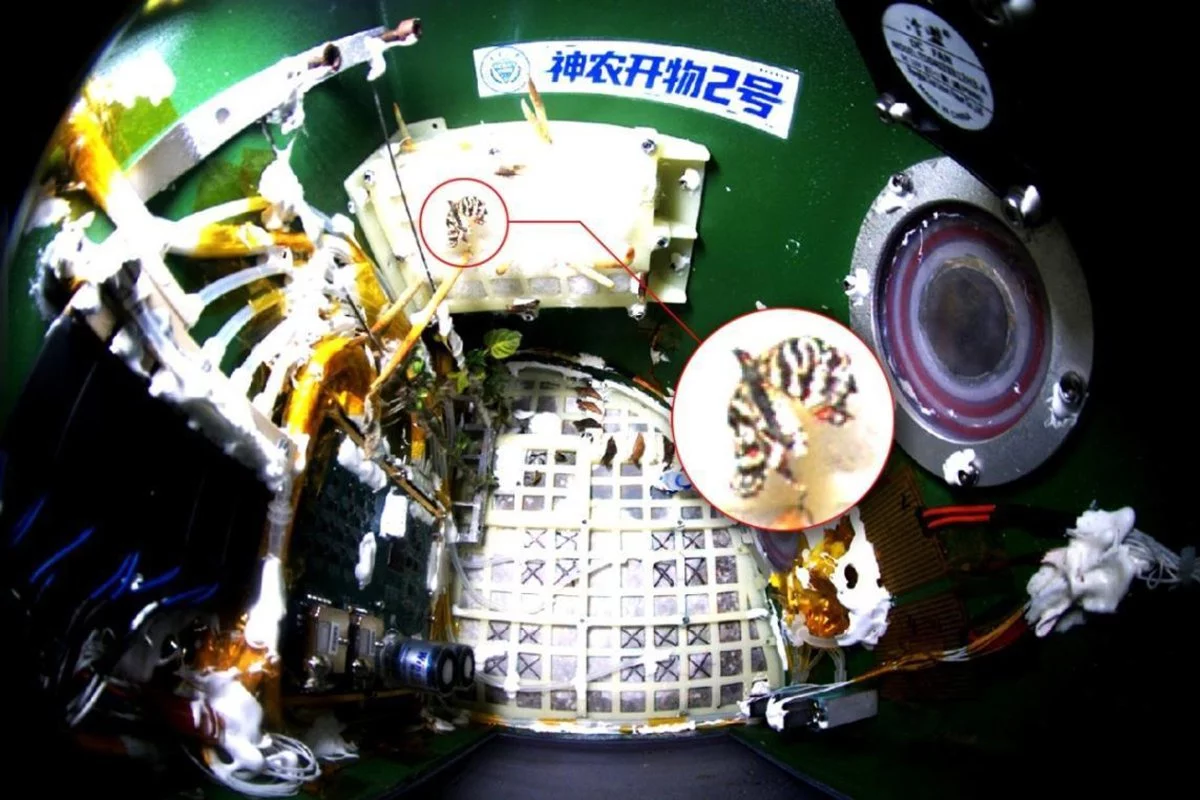
In a quietly transformative moment for space biology, China’s Tiangong space station has achieved a milestone that reads almost allegorical: the first complete, autonomous life-cycle of a butterfly in microgravity. Conducted by Chongqing University’s Space Science and Technology Research Institute, this experiment unfolded in a 14.2-liter, uncrewed habitat—remarkably, without active radiation shielding or temperature regulation. The implications are profound, not only for the science of life in space but for the economic and strategic architectures of future off-Earth industries.
Engineering Closed-Loop Life: The New Frontier in Space Habitats
At the heart of this experiment lies a miniature ecological loop, integrating plants, microorganisms, and insect life into a self-sustaining system. This is not merely a technical flourish—it is a prototype for the bioregenerative life-support systems that will underpin humanity’s deepest ventures into space. By forgoing active thermal control and shielding, researchers have stress-tested biological resilience, extracting vital data for the design margins of future habitats on the Moon and Mars.
The butterfly’s successful metamorphosis and locomotion in microgravity challenge prevailing neurosensory models, suggesting that complex proprioception and orientation can adapt more swiftly than previously thought. This insight could catalyze a shift away from heavy, centrifugal habitat modules toward lighter, more flexible partial-gravity solutions. The experiment’s autonomous protocol, managed entirely without human intervention, signals an inflection point for robotic laboratories in orbit. Embedding edge AI for real-time monitoring, these systems promise to reduce astronaut workload and enable high-throughput biotech screening—an emerging market that is drawing attention from both public agencies and private stations.
The Economic Logic of Space-Grown Life
The business case for extraterrestrial agriculture has never been clearer. The Tiangong experiment demonstrates that pollinator-enabled farming is not just possible but potentially scalable, strengthening the economic rationale for off-Earth food production. Euroconsult projects this sector could reach a cumulative $11 billion by 2040, supporting lunar outposts and private habitats. Proprietary germplasm and insect strains, adapted for microgravity, are poised to become high-margin, patentable assets—echoing the pharmaceutical industry’s lucrative microgravity crystallization IP.
Terrestrial agriculture stands to benefit as well. Insights from these resilient, low-energy micro-ecosystems feed directly into the controlled environment agriculture (CEA) sector, where energy costs and pollination remain stubborn bottlenecks. Expect a wave of cross-licensing as space-grade environmental control algorithms are adapted for Earth-based vertical farms, especially as climate volatility intensifies.
China’s allocation of precious payload mass to experimental biology—rather than prestige-driven science—signals a strategic pivot. This is a clear message to venture funds and ag-tech investors: space farming is transitioning from an “exploration budget” to an “industrial budget” line item, with capital allocation and portfolio diversification strategies set to follow.
Strategic Rivalries and the Shaping of Orbital Bio-Economies
China’s achievement, outside the International Space Station framework, is a soft-power coup. Tiangong is now positioned as a biologics research hub, with Beijing poised to set operational standards—much as it has with 5G and electric vehicle batteries. The dual-use nature of insect-mediated agriculture, with its implications for both food security and bio-defense, will likely prompt regulatory debates in Western capitals on genetic containment and planetary protection.
Competitive dynamics are shifting. While SpaceX and Axiom are lowering the cost of access to orbit, China’s integrated government-academia approach is accelerating the learning curve. This could well be a “biology Sputnik moment,” spurring U.S. and European consortia to fund analogous trials—perhaps with vertebrates or complex microbiomes.
Broader macro trends converge here:
- Climate-driven food insecurity is elevating the strategic value of space-based seed banks and stress-tolerant crop research.
- Decarbonization and circular economy imperatives find a template in closed-loop orbital ecosystems, aligning with ESG and carbon-credit frameworks.
- Workforce automation is accelerated by autonomous lab modules, compressing R&D cycles and shifting talent needs toward systems biology and robotics.
Strategic Guidance for Industry Leaders and Policymakers
The technical proof delivered by Tiangong’s butterfly compresses biological risk premiums, creating a window for early-stage investment in microgravity ag-biotech platforms. Agri-business multinationals should establish orbital testbeds within five years to maintain competitive parity and hedge against terrestrial shocks. Engagement with international standards bodies is urgent, lest Chinese protocols become the default. Cross-sector consortia—linking launch providers, CEA firms, and synthetic-biology labs—will be critical to scaling and interoperability.
For executive leadership, the message is clear: upskill teams in orbital systems and microgravity analytics. The emergent orbital bio-economy will reward those who move swiftly, allocate exploratory capital, and shape the standards that will govern the next era of life beyond Earth.
The Tiangong butterfly experiment is not a mere curiosity—it is a harbinger of the coming age, where biology, technology, and commerce intersect in the vacuum of space, reshaping the competitive landscape for decades to come.

 By
By
 By
By
 By
By

 By
By

 By
By