


Tesla’s Dual-Frontier Gamble: Cybercab and Optimus Set a New Bar for Industrial Ambition
In the annals of industrial innovation, few companies have attempted what Tesla is now poised to undertake: the simultaneous commercial launch of two radically distinct robotics platforms. The steering-wheel-less Cybercab robotaxi and the Optimus humanoid robot are not only technological marvels in their own right; they are also crucibles for the limits of modern manufacturing, supply-chain orchestration, and regulatory navigation. Elon Musk’s invocation of “production hell” is more than rhetorical flourish—it is a sober forecast of the operational gauntlet ahead.
Engineering the Impossible: Manufacturing at the Edge of Feasibility
Tesla’s audacious plan to reach a 2-million-unit annual run-rate for Cybercab and one million Optimus robots by 2026 is a logistical and technical Everest. The Cybercab, stripped of traditional driver controls, demands a full-stack reimagining of vehicle architecture. Redundant safety, compute, and actuation systems must not only meet the highest autonomous-vehicle safety standards but also do so at a unit cost of approximately $25,000—a price point that compresses the cost curve for sensors, batteries, and compute hardware to unprecedented levels.
The concurrent launch of Cybercab and Optimus forces Tesla to operate at the intersection of automotive and anthropomorphic robotics, orchestrating parallel supply chains, regulatory approvals, and quality assurance regimes. This is a feat few, if any, industrial titans have attempted. Manufacturing innovations such as “Gigacasting”—already stretched in the Model Y and Cybertruck—must now evolve further. The Cybercab’s lightweight, crash-worthy monocoques and Optimus’s low-cost, high-precision servo joints push Tesla into domains traditionally dominated by Tier-1 suppliers like NSK and Harmonic Drive, requiring breakthroughs in material science and precision gearing.
Economic Realities: Capital, Cost, and Supply-Chain Volatility
Tesla’s capital intensity collides headlong with a macroeconomic landscape defined by elevated interest rates and heightened execution risk. The company’s aggressive capex commitments, necessary to build an “entire supply chain from scratch,” raise the stakes for every delay or misstep. Yet, this strategy aligns with U.S. industrial policy, potentially unlocking incentives under the IRA and CHIPS Act if Tesla succeeds in localizing component manufacturing—a move that could mitigate geopolitical risk but also concentrates execution risk internally.
The drive to achieve a $25,000 build cost for a Level 4/5 robotaxi exerts deflationary pressure across the advanced driver-assistance systems (ADAS) supply base. Vendors in lidar, radar, and perception compute face a Darwinian squeeze, likely accelerating consolidation and reshaping the competitive landscape. Meanwhile, the reshoring of supply chains dovetails with national priorities but demands a level of vertical integration that few automakers have managed at scale.
Strategic Stakes: Platform Control, Brand Equity, and Market Disruption
Tesla’s integrated approach—owning hardware, software, and ride-hailing operations—contrasts sharply with asset-light rivals like Waymo and Cruise, who favor partnerships and narrowly defined domains. If successful, Tesla could lock in a powerful data flywheel, reinforcing its AI and robotics narrative and potentially justifying the “optionalities” embedded in its market valuation. However, the operational strain of dual ramp-ups could just as easily expose the limits of vertical integration, offering a vindication of more modular ecosystem strategies.
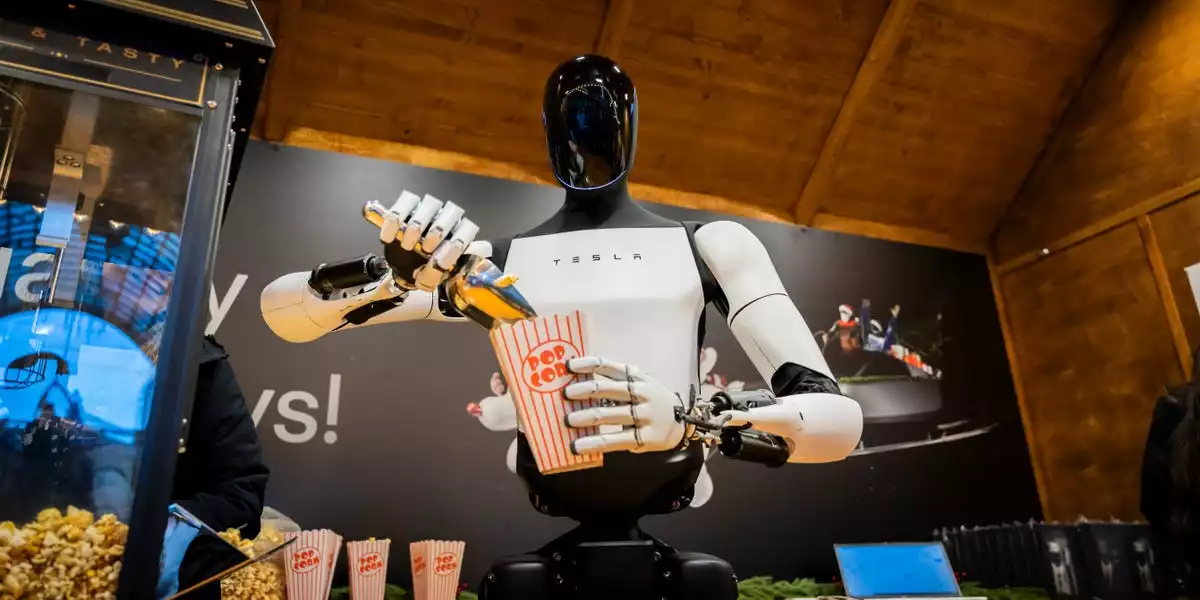
The Optimus humanoid robot, if scaled to meaningful volumes, positions Tesla as an instant contender in service robotics, challenging incumbents such as Toyota and fast-moving Chinese firms like UBTECH. The implications ripple beyond manufacturing—labor substitution economics become real for industries grappling with acute shortages, from warehousing to elder care. Urban real estate may be reimagined as cities adapt to fleets of autonomous Cybercabs, and the insurance industry will be forced to rewrite liability models as the locus of responsibility shifts from driver to manufacturer.
Navigating the Inflection: What Executives Need to Know Now
For suppliers, the message is clear: secure long-term capacity agreements in critical categories—precision gearboxes, high-density batteries, safety-critical compute—while diversifying customer portfolios to withstand Tesla’s inevitable pricing pressure. Policymakers should anticipate regulatory petitions for steering-wheel exemptions and position their jurisdictions as early adopters. Competing automakers face a narrowing window to accrue real-world autonomous vehicle miles before Tesla’s scale advantage compounds; the choice between vertical integration and ecosystem partnerships will define their competitive trajectory.
Corporate end-users in logistics, healthcare, and facilities management should not wait on the sidelines. Early pilots of humanoid robotics in controlled environments will yield invaluable data, informing total cost of ownership models and integration strategies, and positioning these firms to capitalize as Optimus-class units reach scale.
Tesla’s high-variance bet on Cybercab and Optimus is more than a test of manufacturing prowess—it is a crucible for the future of mobility, labor, and urban infrastructure. The next two years will determine whether Tesla’s vision becomes the new industrial paradigm or a cautionary tale of overreach in an era of capital scarcity and regulatory flux. For executives and strategists across sectors, the time to engage with this unfolding S-curve is now.

 By
By
 By
By

 By
By
 By
By
 By
By

 By
By







