
The Davos Runway: Private Aviation’s Paradox at the Heart of Global Leadership
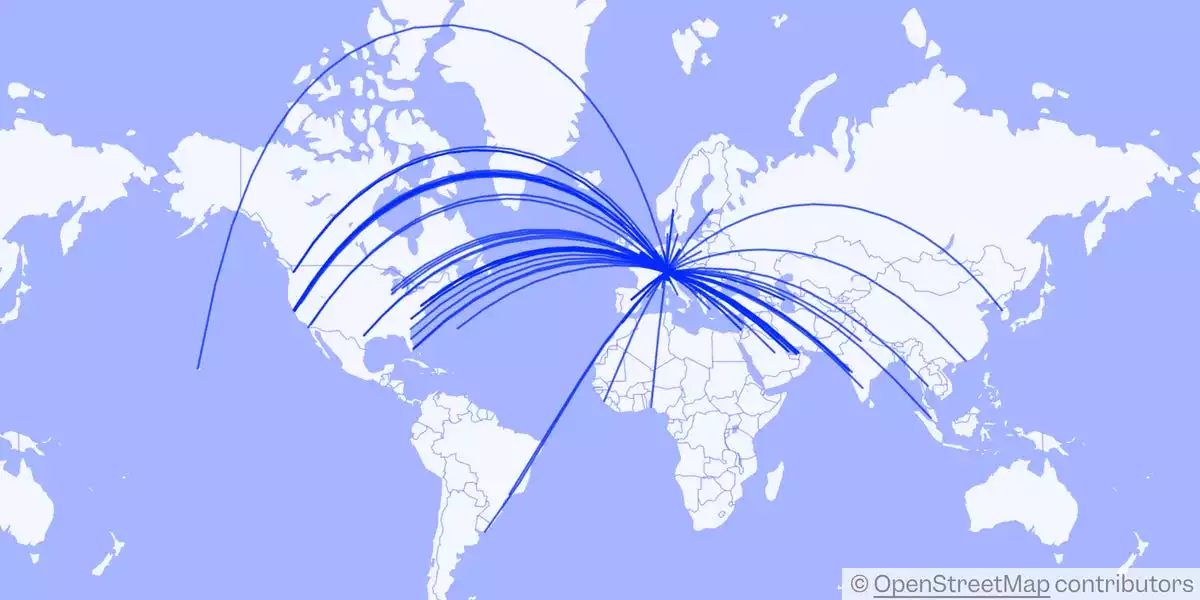
As the 2024 World Economic Forum unfurled its banners amid the snow-draped peaks of Davos, the skies above Switzerland bore silent witness to an altogether different kind of summitry. In just 24 hours, 157 private jets—sleek Gulfstreams, Bombardiers, and Dassaults—descended upon Zurich, Friedrichshafen, and a constellation of lesser-known airfields. The choreography of these arrivals, dominated by large-cabin Gulfstream G650s and the vanguard G800s, was as much a statement of intent as the panels convened below: the world’s decision-makers, converging at velocity, undeterred by distance or scrutiny.
Yet, the spectacle of so many jets—each a flying boardroom, each a symbol of untrammeled mobility—casts a long shadow over the Forum’s climate ambitions. The optics are as stark as the Alpine air: the gravitational pull of Davos is undiminished, but so too is the widening gap between elite travel habits and the regulatory, reputational, and environmental headwinds gathering force.
Ultra-Long-Range Jets: The New Boardroom in the Sky
The 2024 arrivals charted more than just flight paths; they mapped the evolving economics of executive mobility. The Gulfstream G700’s 7,600-mile, 14.5-hour journey from Hawai‘i to Zurich, for instance, was less a feat of endurance than a demonstration of a new paradigm: nonstop, transoceanic reach that collapses continents into a single, seamless itinerary. These aircraft, with their bespoke cabins—bedrooms, showers, and high-speed connectivity—transform travel time into productive, secure, and private enterprise space. The C-suite, quite literally, now operates at 40,000 feet.
This “range race” is not merely technological bravado. It is a response to the compounding demands of global business: time arbitrage, deal velocity, and the imperative to be everywhere, instantly. The persistent demand for ultra-long-range platforms has insulated manufacturers like Gulfstream, Bombardier, and Dassault from broader aerospace cyclicality. For suppliers, the implications are profound—carbon composites and advanced avionics developed for these jets ripple outward, influencing everything from EV battery casings to the predictive maintenance algorithms that will soon underpin commercial and defense fleets.
The Transparency Trap: ESG, Regulation, and the End of Anonymity
But the ascent of private aviation is not without turbulence. Each G650 landing in Davos leaves a carbon contrail—about 20 tons of CO₂, equivalent to an average EU citizen’s annual footprint. The juxtaposition of these emissions with the Forum’s climate panels is not lost on activists, investors, or regulators. Open-source flight-tracking platforms like ADS-B Exchange and JetSpy have democratized visibility, turning every executive itinerary into a de facto ESG disclosure. The era of anonymous, unaccountable mobility is over.
Regulatory responses are accelerating. The EU’s ReFuelEU Aviation mandates a 6% Sustainable Aviation Fuel (SAF) blend by 2030, scaling to 70% by mid-century, while France’s proposed surtax on short-haul business jets signals a broader European appetite for carbon pricing. For corporate flight departments, this means not only securing scarce SAF allocations but also integrating shadow carbon pricing—$100–150 per ton—into travel budgets. Proxy season may soon bring shareholder resolutions coupling executive compensation with travel emissions disclosure, raising the stakes for C-suites everywhere.
Strategic Ripples: Supply Chains, Urban Air Mobility, and the Next Wave
The Davos jet surge is also a barometer for macroeconomic confidence. Private aviation arrivals correlate tightly with corporate free cash flow and M&A activity; that traffic has rebounded to pre-pandemic highs, even as jet-fuel prices climb, speaks to a selective but resilient optimism at the premium end of global business.
Yet, the implications stretch further:
- Supply-Chain Dynamics: The aerospace-grade composites underpinning these jets are also critical to clean-tech sectors—EVs, wind turbines—creating cross-sector pricing and capacity pressures.
- Digital Aviation Ecosystems: Private fleets are testbeds for predictive maintenance and digital twin technologies, innovations poised to reshape commercial aviation economics.
- Urban Air Mobility (UAM): The visibility of elite jet travel, paradoxically, is fueling political momentum for zero-emission, short-haul eVTOL corridors. OEMs like Joby and Lilium are positioning UAM as the democratized, sustainable alternative.
For aerospace suppliers, this means hedging commercial exposure with robust biz-jet portfolios while investing in SAF-compatible and hydrogen-ready systems. For corporate CFOs, it’s time to lock in SAF supply, price carbon risk into travel, and consider hybrid participation models for high-profile events. For investors, flight-tracking data offers a novel, underexploited lens on strategic intent and deal flow.
The private jet traffic into Davos is more than an annual spectacle—it is a real-time case study in the friction between the imperatives of global capitalism and the demands of decarbonization. As regulatory, reputational, and technological forces converge, the organizations that align their mobility footprint with their public climate commitments will convert risk into competitive advantage. For those who do not, the skies above Davos may soon feel less like a runway and more like a reckoning.

 By
By
 By
By

 By
By
 By
By


 By
By