
Arctic Ambitions: The Geopolitics Beneath Greenland’s Melting Ice
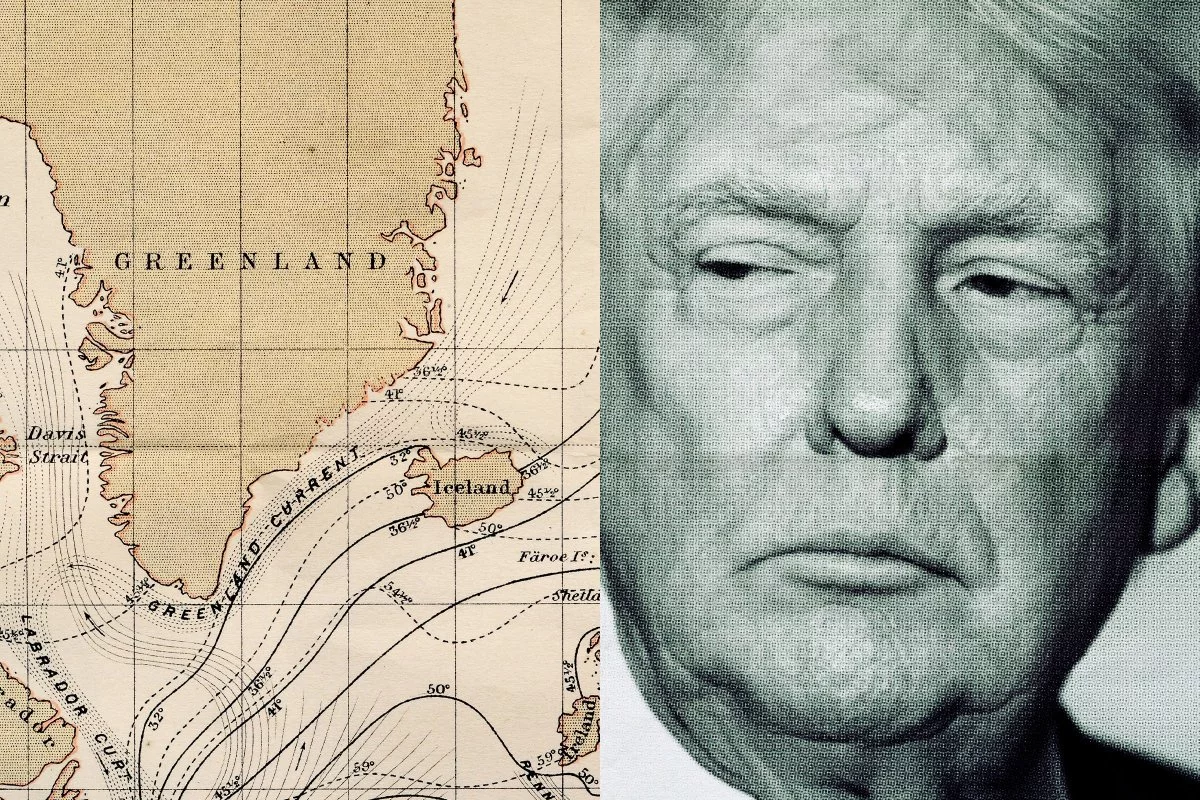
When Donald Trump revived his proposal to purchase Greenland as part of his 2024 campaign rhetoric, the world responded with a familiar blend of incredulity and bemusement. Yet beneath the surface of this seemingly quixotic overture lies a profound recalibration of global priorities—one that transcends campaign spectacle and penetrates the icy heart of 21st-century geopolitics. The accelerating thaw of the Arctic is not only exposing vast mineral riches but also redrawing the strategic map for the world’s great powers, with Greenland perched at the epicenter.
Melting Boundaries: Resource Nationalism in the Arctic Age
As Arctic ice recedes at unprecedented rates, the region’s mineral endowment—graphite, zinc, and especially rare-earth elements (REEs)—is emerging from geological obscurity into the crosshairs of global competition. The implications are seismic:
- Strategic Corridors Unlocked: Russia’s branding of the Northern Sea Route as a strategic corridor, and China’s self-designation as a “near-Arctic” stakeholder, are not mere rhetorical flourishes. They reflect a new reality: melting ice is collapsing geographic barriers, opening both navigable sea lanes and previously inaccessible resource tracts.
- Beyond Defense Agreements: The United States already enjoys military access to Greenland under a 1951 defense pact with Denmark. The renewed talk of outright acquisition signals a deeper ambition—control over the regulatory and subsurface regimes that determine who reaps the rewards of Greenland’s mineral bounty. This is less about security per se, and more about ensuring that environmental priorities in Copenhagen or Nuuk do not impede American access to critical resources.
- Alliance Strains: Any move toward territorial acquisition risks antagonizing Denmark, a NATO ally, and complicates the fragile governance frameworks emerging in the Arctic. The specter of resource nationalism looms large, threatening to fracture Western unity at a moment when coordinated responses to Russian and Chinese ambitions are most needed.
Critical Minerals, Fragile Ecosystems: The New Supply-Chain Frontier
The Arctic’s mineral promise is inextricably linked to the global race for supply-chain resilience—a race turbocharged by the clean energy transition.
- Supply Concentration Risks: The U.S. and EU each import over 80% of their REEs from China, with natural graphite facing similar vulnerabilities. Greenland’s deposits map directly onto the metals prioritized by the Inflation Reduction Act and the EU Critical Raw Materials Act, making the island a potential linchpin in Western efforts to reduce dependency on Beijing.
- Offtake Agreements and ESG Dilemmas: Multinational miners and advanced-materials firms are already exploring offtake agreements that bypass volatile spot markets, seeking to lock in supplies for electric vehicles, wind turbines, and defense systems. Yet Greenland’s evolving political status—and its 2021 moratorium on new oil licenses—has created a policy vacuum around large-scale mining, especially in ecologically sensitive Arctic environments.
- Climate Arbitrage: Greenland epitomizes a new and uncomfortable paradox: the monetization of climate change. As insurers, reinsurers, and sovereign funds begin to price Arctic exposure, the tension between exploiting minerals for the energy transition and amplifying local ecological footprints will only intensify scrutiny from ESG rating agencies and activist shareholders.
Technology and Infrastructure: The Cold-Climate Innovation Boom
The logistical and environmental challenges of Arctic extraction are catalyzing a wave of technological innovation:
- Autonomous and Remote Operations: The harshness of the Arctic is accelerating the adoption of autonomous haulage, drone surveying, and AI-driven ore-sorting. Edge-compute infrastructure, satellite broadband, and micro-nuclear or renewable microgrids are no longer futuristic concepts—they are prerequisites for viable operations.
- Data Center Synergies: Hyperscale cloud providers are already piloting colocation in the Nordic region, leveraging free-air cooling and green power. A secure U.S. territorial footprint in Greenland could extend this model, pairing renewable energy with low-latency satellite links to new polar trade routes.
Navigating the North: Strategic Imperatives for Business and Policy
The specter of Arctic competition is not a distant scenario—it is unfolding in real time, with implications that ripple across markets and boardrooms:
- Mineral Price Volatility: Even speculative political maneuvers can send forward prices for graphite and REEs soaring. Procurement leaders should consider locking in medium-term contracts before volatility migrates downstream.
- Infrastructure Investment: Expect a boom in specialized ice-class shipping, fiber-optic cabling, and satellite constellations targeting high-latitude bandwidth—an opportunity that infrastructure funds are already eyeing.
- Corporate Strategy: Boardrooms must stress-test supply chains for scenarios in which Arctic minerals break Chinese dominance, or conversely, in which geopolitical friction delays projects and tightens global supply. Early engagement with Greenlandic authorities and indigenous communities is essential for securing a social license to operate, while pilot programs in remote mining and cryogenic data centers could yield first-mover advantages.
As the Arctic’s ice retreats, the world’s strategic frontiers are advancing northward. The episode surrounding Trump’s Greenland proposal, while headline-grabbing, is less a political outlier than a harbinger of the resource-driven realignments to come. For companies and governments attuned to these shifts, the Arctic offers not just risk, but unprecedented strategic optionality—a new map of opportunity, redrawn by the thaw.

 By
By
 By
By
 By
By


 By
By
 By
By