
Atlas Ascendant: Humanoid Robotics Enter the Factory Floor
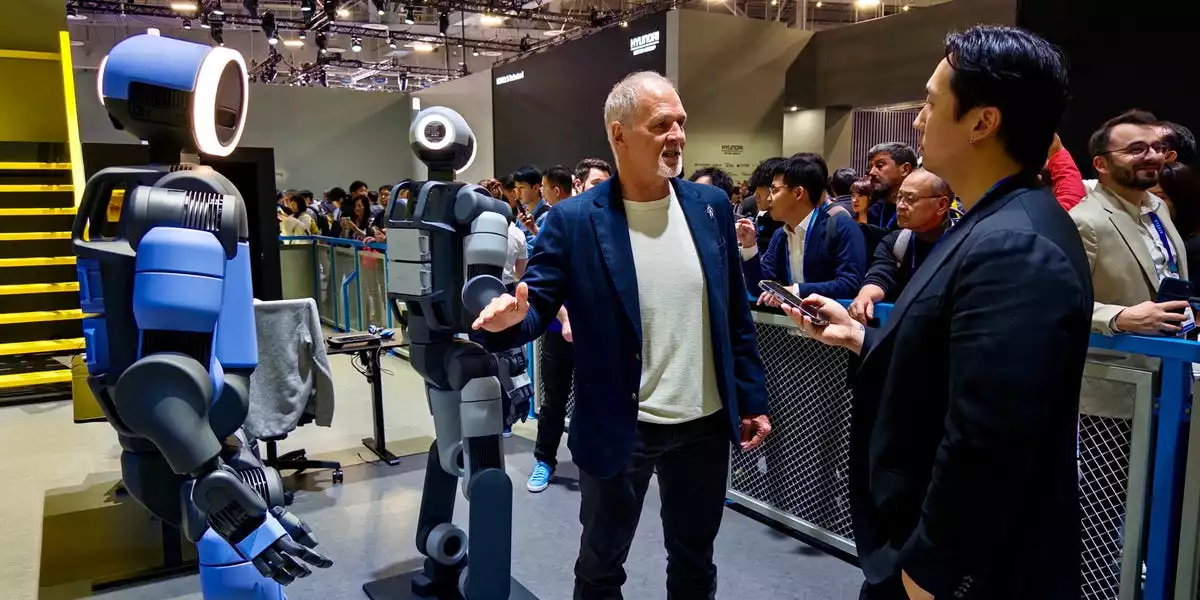
The unveiling of the latest generation of Atlas by Boston Dynamics signals a watershed moment for industrial automation. No longer a marvel of viral YouTube acrobatics, Atlas has been reimagined as a 6’2”, 200-pound, battery-powered humanoid—poised not for spectacle, but for the relentless cadence of factory logistics. Hyundai’s $5 billion Georgia electric-vehicle plant will serve as the proving ground, with a targeted production deployment by 2028. The implications ripple far beyond a single assembly line, hinting at a transformation in how labor, capital, and code will intertwine in the coming decade.
The Architectural Leap: Modularity, Mobility, and Embedded Intelligence
Atlas’s design choices are not merely aesthetic or academic—they are strategic wagers on the future of manufacturing. The decision to embrace a bipedal, anthropomorphic form is a calculated bet against the friction of legacy infrastructure. Where wheeled or fixed-base robots demand costly re-tooling, Atlas glides through brownfield sites, wielding tools and navigating workstations built for humans. This universality is not just a technical feat; it is a systems-integration masterstroke, sidestepping the need for wholesale facility redesign.
The pivot to modular hardware—interchangeable actuators, standardized drive electronics, and a swappable battery—marks a departure from Boston Dynamics’ bespoke heritage. This echoes the maturation of industrial cobots, where modularization unlocked volume pricing and democratized access beyond Tier-1 automakers. As the component library matures, expect cost curves to bend sharply downward, expanding the total addressable market.
Crucially, Atlas is not just a marvel of mechanics but a vessel for embedded AI. Foundation models for vision and manipulation are collapsing training times from months to days. The robot’s autonomy stack now learns on the job, leveraging cloud-mediated simulation loops—a shift from pure dynamics to data-centric self-improvement. This evolution positions Atlas as a “software-defined labor unit,” its capabilities upgradable via over-the-air updates, not unlike the transformation seen in cloud computing.
Labor Economics and Competitive Stakes: A New Paradigm for Productivity
Atlas arrives as the U.S. manufacturing sector faces a demographic reckoning: 800,000 positions unfilled, a median workforce age north of 45, and wage inflation pushing labor costs to $45 per hour in high-skill plants. In this context, Atlas is not a harbinger of mass displacement but a pragmatic response to scarcity. If the robot can deliver targeted task parity at $20–$25 per hour, the return on investment compresses to under three years—well within corporate hurdle rates.
Yet, the narrative is not one of simple substitution. Boston Dynamics frames Atlas as a productivity amplifier, spawning complementary roles in robot supervision, maintenance, and data labeling. The historical parallel is instructive: the CNC revolution of the 1980s eliminated manual machining jobs but catalyzed a fivefold surge in technician and programmer roles. The transition to human-robot hybrid teams is not just likely—it is already underway.
The competitive landscape is heating up. Figure AI, Tesla, and Agility Robotics have collectively raised over $3 billion for humanoid initiatives in just two years. Boston Dynamics’ first-mover advantage is real, but the window to convert credibility into delivered units is narrowing. The AI talent war is equally fierce, with robotics firms vying against large-language-model labs for top-tier engineers. The ability to offer impact—“code that moves atoms”—remains a cultural asset, but scaling machine learning infrastructure is now existential.
Strategic Playbook: Preparing for the Humanoid Era
For manufacturers, the roadmap is clear, if demanding. In the near term, leaders should:
- Audit workflows to identify repetitive, sub-three-minute tasks ripe for early humanoid adoption.
- Budget for facility retrofits that enable mixed human-robot collaboration, anticipating new OSHA and ISO standards within two years.
- Integrate humanoid amortization into digital-twin ROI models, accounting for battery logistics and cloud connectivity.
Looking further ahead, the rise of “robotic production associates”—workers trained in both mechatronics and data operations—will require partnerships with technical colleges and new certification pathways. The eventual convergence of industrial and consumer robotics, as costs fall below $50,000 per unit, hints at a future where the factory and the home are bridged by shared platforms and component supply chains.
Macro-level signals to monitor include:
- Battery density gains, which will expand task envelopes and shrink form factors.
- Regulatory clarity from the EU AI Act and U.S. NIST guidelines, which could accelerate or impede adoption.
- Geopolitical supply-chain shifts, where humanoid flexibility enables more resilient, domestically anchored production.
The non-obvious: Atlas, and its cohort, are laying the foundations for software-defined labor markets, proprietary data moats, and ESG-aligned “zero-carbon labor” narratives. For executives, the imperative is to launch cross-functional robotics councils, negotiate data-sharing IP rights, and pre-fund the shadow IT required for vision-AI and simulation infrastructure.
Atlas is not just a robot; it is a harbinger of a new labor paradigm, arriving at the intersection of demographic urgency, technological inflection, and strategic necessity. Those who recognize humanoid robotics as a five-year pillar—not a distant curiosity—will find themselves shaping the next chapter of industrial productivity, data-driven business models, and the very nature of work itself.

 By
By
 By
By
 By
By

 By
By
 By
By