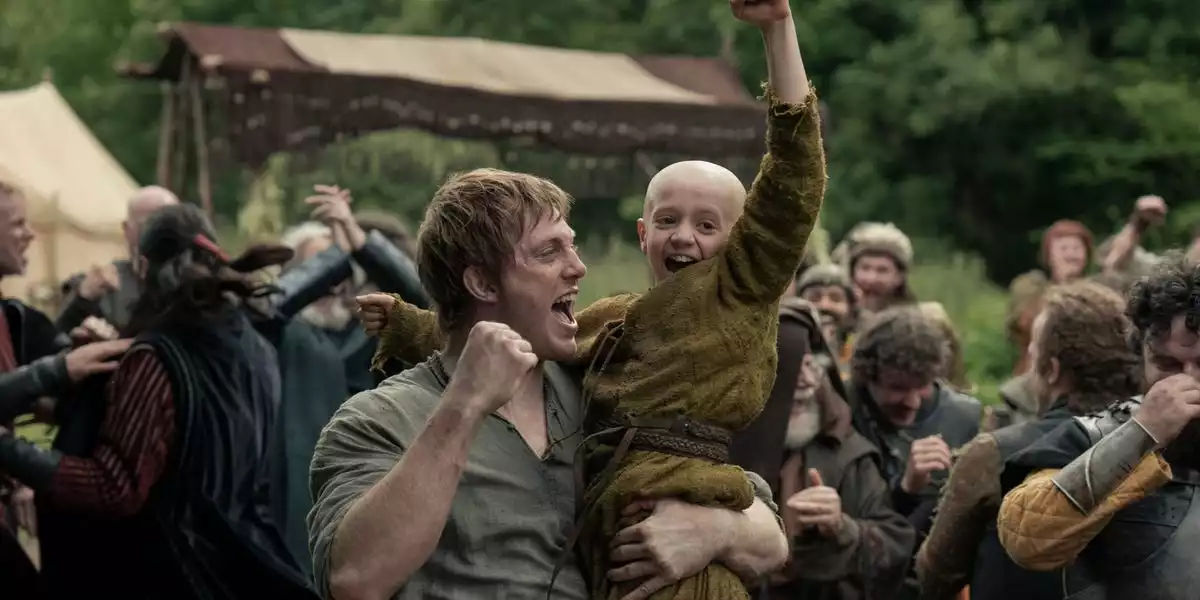

The Intimate Recasting of a Fantasy Giant: HBO’s Strategic Pivot with “A Knight of the Seven Kingdoms”
In a landscape crowded with ever-escalating spectacle, HBO’s latest foray into Westeros, “A Knight of the Seven Kingdoms,” signals a striking recalibration. Gone are the days of relentless, high-budget battles and dizzying political intrigue that defined the original “Game of Thrones.” Instead, Warner Bros. Discovery has chosen to anchor its next chapter in George R. R. Martin’s “Tales of Dunk and Egg”—a narrative that trades grandiosity for intimacy, and in doing so, quietly redefines the economics and creative calculus of franchise storytelling.
A New Economic Grammar for Franchise Storytelling
The decision to greenlight a six-episode, character-driven arc is not merely an artistic choice but a deliberate act of capital discipline. With interest rates elevated and a $45 billion debt load looming, Warner Bros. Discovery’s leadership is steering away from the streaming boom’s subscriber land-grab mentality. Instead, the focus has shifted to free-cash-flow optimization—a strategy that privileges financial resilience over headline-grabbing production budgets.
Key elements of this recalibration include:
- Shorter, Tighter Seasons: By limiting the order to six episodes and minimizing visual effects, per-minute costs drop well below the $20 million-per-episode watermark set by “House of the Dragon.”
- Lean-Set Production: Fewer sprawling battle scenes mean less reliance on expensive volume stages and practical builds, freeing resources for top-tier writing and acting talent.
- Modular, Novella-Based Cadence: The phased approach—already confirmed with a second season slated for 2027—allows for asset reuse and smoother cash flow across multi-year gaps, providing a hedge against the unpredictable economics of blockbuster production cycles.
Navigating Franchise Fatigue and Shifting Consumer Tastes
The industry’s data is unequivocal: the marginal returns on ever-larger sequels are diminishing. Audiences, it seems, are weary of relentless escalation. “A Knight of the Seven Kingdoms” offers a counterpoint—a human-scale narrative that foregrounds loyalty, honor, and personal stakes over the fate of empires. This pivot is not only a creative risk but also a form of risk mitigation, designed to preserve the vitality of the Game of Thrones IP while sidestepping the fatigue that has plagued other legacy franchises.
This strategic repositioning manifests in several ways:
- Engagement-Hour Efficiency: Shorter seasons concentrate viewer attention, reducing churn among “tourist” subscribers who might otherwise cancel after a single tentpole event.
- Broader Demographic Reach: By centering on an everyman hero, the series appeals to viewers drawn to values-based storytelling, expanding its resonance beyond traditional fantasy enthusiasts.
- Merchandise Evolution: The grounded, character-centric approach shifts merchandising from high-ticket collectibles to mid-priced, story-driven items—such as Ser Duncan’s shield replicas—enhancing margin variety and broadening consumer appeal.
Technology’s Quiet Hand: AI and Modular Production
While much of the production innovation remains behind the curtain, the influence of AI and lean-set methodologies is unmistakable. Warner Bros. Discovery’s internal R&D efforts around generative pre-visualization, though not widely publicized, are poised to accelerate storyboarding and compress production timelines—especially for episodes less reliant on high-stakes spectacle. This quiet integration of technology is emblematic of a broader industry trend: studios are seeking a delicate equilibrium between human creativity and AI-augmented workflows, mindful of both labor relations and reputational risk.
Production efficiencies are realized through:
- Asset Reuse: Modular, novella-based seasons enable the recycling of costumes and virtual environments, maximizing ROI on capital expenditures.
- AI-Augmented Workflows: Generative tools streamline pre- and post-production, allowing for rapid iteration without sacrificing quality—a model that, if managed transparently, could become standard practice across the industry.
The Broader Strategic Canvas: Industry-Wide Implications
HBO’s pivot is not occurring in a vacuum. Across the streaming ecosystem, major players are recalibrating their bets. Disney+ and Lucasfilm’s shift from the cinematic sprawl of “The Mandalorian” to the contained, character-driven “Acolyte” series mirrors this industry-wide retreat to cost-controlled, emotionally resonant storytelling. Windowing strategies—such as spacing “A Knight of the Seven Kingdoms” Season 2 to avoid overlap with other flagship properties—reflect a new discipline in IP portfolio management.
Perhaps most intriguing is the transmedia potential of the Dunk-and-Egg storyline. Its lighter, episodic structure translates seamlessly into mobile gaming, graphic novels, and audio dramas, opening new lanes for revenue at modest incremental cost. For business and technology leaders, the series stands as a prototype: a disciplined, modular approach to high-value IP that aligns creative ambition with the unforgiving economics of today’s streaming environment.
As the streaming era matures, the lesson is clear. Franchises that pivot from spectacle inflation to emotionally resonant, capital-light storytelling are poised not only to survive, but to thrive—delivering both audience loyalty and sustainable margin expansion in a landscape where both are in increasingly short supply.


 By
By
 By
By
 By
By
 By
By