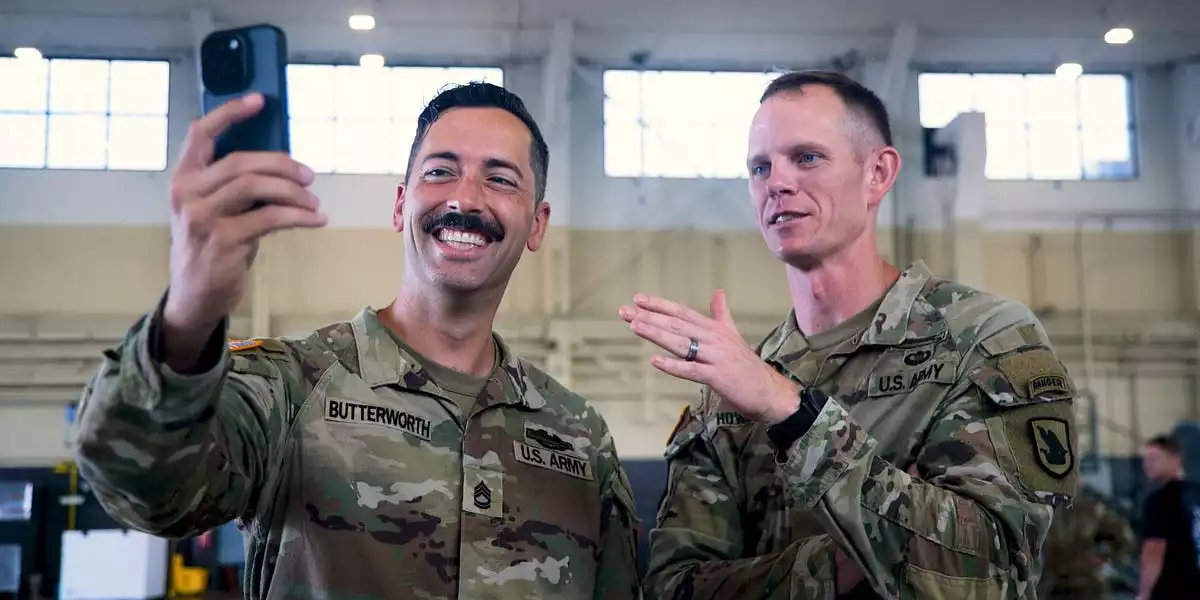

From Parade Grounds to For-You Pages: The Army’s Digital Reboot of Recruitment
The U.S. military, once synonymous with stoic recruitment posters and high-gloss TV ads, is quietly undergoing a metamorphosis. The catalyst? Not a new weapons system or a blockbuster Pentagon budget, but the irreverent, algorithm-friendly videos of two soldiers: Staff Sgt. Tyler Butterworth and Sgt. 1st Class John Howell. With a combined following in the millions, their short-form, self-produced content is not only demystifying Army life for Gen Z but also reengineering the very machinery of military recruitment.
The Algorithm as Drill Sergeant: How Social Platforms Are Shaping Enlistment
The rise of Butterworth and Howell as military “influencers” is more than a viral quirk—it’s a signal of a tectonic shift in how the armed forces approach talent acquisition. Traditional recruiting, battered by a tight labor market and declining high-school graduate pools, is ceding ground to a digital-first, peer-to-peer model. The Army’s embrace of TikTok, Instagram Reels, and YouTube Shorts is not mere trend-chasing. These platforms, powered by algorithmic discovery, elevate relatable micro-creators over faceless institutional accounts. The result: a new breed of soldier-advocate who, through humor and candor, builds trust at a scale no recruiter could match.
- Peer Networks Over Broadcast: The military’s pivot mirrors a broader corporate awakening—employee-advocates routinely outperform brand channels in engagement and conversion. The Army’s content now flows through authentic, insider voices, not top-down messaging.
- Efficiency and Reach: A single Butterworth video can outstrip the reach of a six-figure regional ad buy, slashing the cost of acquiring candidates and bypassing the privacy pitfalls of traditional ad-tech.
- Data-Driven Insights: Each post generates a wealth of engagement and sentiment data, feeding into experimental AI models that predict “propensity to serve.” The Army is quietly building a feedback loop between the digital front lines and its recruitment analytics.
The Creator Economy Meets the Chain of Command: Policy, Ethics, and Burnout
Yet this digital transformation is not without friction. The same platforms that amplify soldier voices also expose them—and the institution—to new risks.
- Recruiter Burnout and Workload: As traditional recruiters face mounting pressure to hit quotas, delegating awareness to voluntary influencers offers relief. But without clear guardrails, “shadow recruiting” risks becoming an unregulated burden.
- Monetization Dilemmas: Unlike their civilian counterparts, soldier-creators are barred from profiting directly from their content. This disconnect between platform incentives and military policy could spark gray-market sponsorships or disputes over the use of uniforms and insignia.
- Operational Security and Misinformation: The specter of deepfakes and viral misinformation looms large. As individual soldier brands grow, so does their vulnerability to adversarial manipulation—a threat for which the Department of Defense has yet to develop a robust playbook.
The Navy’s pilot program allowing sailors to stream on Twitch hints at a coming wave of formalization: expect the emergence of an “Influencer Corps,” complete with training in OPSEC, brand management, and mental health support. These developments are not lost on NATO partners—or adversaries—who are watching, and emulating, the U.S. model.
Strategic Horizons: AI, Advocacy, and the Future of Recruitment
The implications of this shift extend far beyond the barracks. In the near term, recruiting commands are recalibrating their KPIs, tracking not just leads and contracts but also share-of-voice among Gen Z and sentiment shifts post-campaign. Investments in federated social-listening tools and clear compliance frameworks are becoming as critical as traditional recruitment budgets.
Looking further ahead, the fusion of AI and human advocacy promises both opportunity and complexity:
- AI-Assisted Content Review: Machine-vision tools will soon pre-screen posts for operational security violations, echoing the classified pre-print reviews of defense R&D.
- Synthetic Soldiers: The line between human and AI avatars will blur, raising new questions about authenticity and engagement as “virtual soldiers” begin to populate the digital recruiting landscape.
- Cross-Sector Lessons: Private-sector HR leaders, especially those in STEM-constrained industries, are eyeing the military’s influencer playbook. Employee-generated storytelling could drive down recruiting costs, but only if paired with robust cultural and ethical frameworks.
Policy is scrambling to keep pace. Anticipate legislative moves to explicitly regulate digital recruiting, both in the U.S. and abroad, as the boundaries between personal expression, institutional messaging, and national security continue to erode.
The convergence of military objectives and creator-economy mechanics is rewriting the rules of engagement for both sectors. For decision-makers, the lesson is clear: authentic micro-creators are now indispensable assets in the war for talent. The institutions that master this hybrid model—balancing authenticity, governance, and innovation—will define the next era of recruitment, both on and off the battlefield.

 By
By
 By
By
 By
By
 By
By
 By
By

 By
By