
The Mirage of Middle-Class Prosperity: Labor Market Realities Beneath the Headlines
In the current economic tableau, the surface gleams with promise—headline labor numbers suggest resilience, and GDP growth remains robust. Yet, beneath this veneer, a more somber narrative unfolds. Net job creation for mid-skill roles is not merely stagnating but contracting, eroding the purchasing power and confidence of the median household. The middle class, long the engine of consumption and social stability, now finds itself squeezed by automation, offshoring, and the relentless march of AI augmentation.
This displacement is not an abstract phenomenon. As traditional pathways to economic security narrow, households increasingly gravitate toward high-variance, low-expected-value activities—day trading, sports betting, and now, the speculative allure of prediction markets. The parallels to the post-2008 surge in retail equity speculation are unmistakable, but the stakes have evolved: prediction markets transform not just stocks, but every facet of culture—awards shows, elections, even geopolitical flashpoints—into tradeable assets. The democratization of speculation, enabled by frictionless platforms, is both a symptom and an accelerant of middle-class precarity.
Entertainment, Speculation, and the New Economics of Engagement
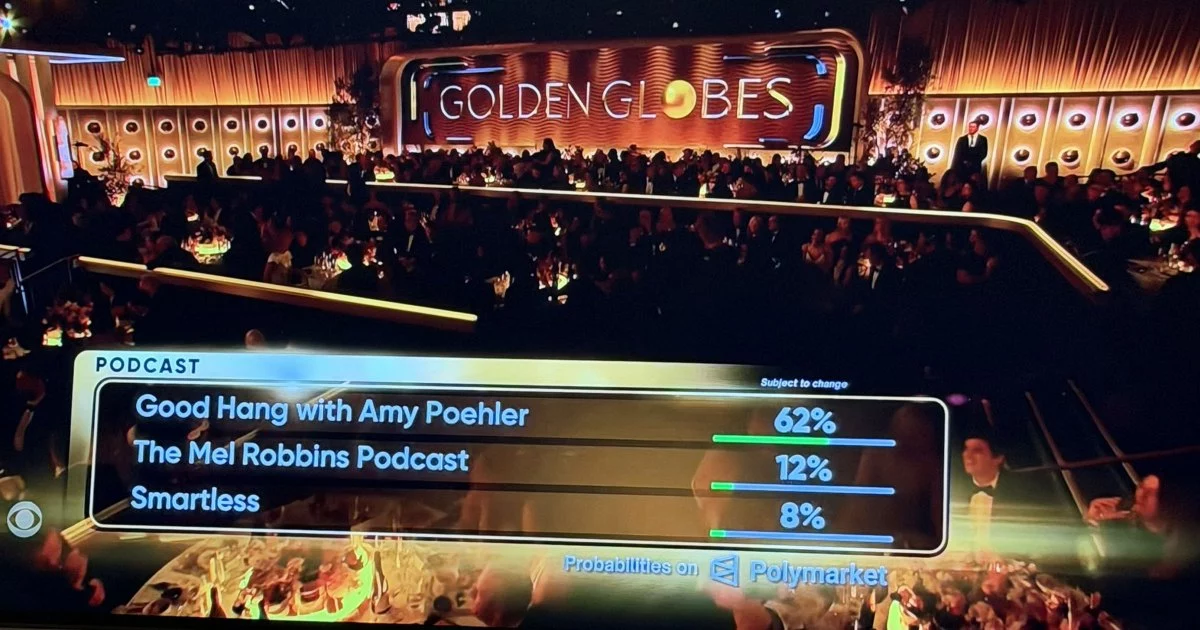
The recent Golden Globes–Polymarket partnership offers a vivid illustration of this convergence. For the first time, a marquee entertainment event deep-linked with a crypto-native prediction market, inviting millions to wager on outcomes in real time. This is not merely a novelty; it is an inflection point where user engagement, media monetization, and speculative trading coalesce in the full glare of mainstream attention.
- Platformization of Speculation:
Prediction markets like Polymarket and Kalshi leverage smart contracts and seamless user experiences, transforming any outcome—cultural, corporate, or political—into a liquid financial instrument. Tokenization and micro-wagering rails allow real-time pricing signals to permeate streaming overlays, second-screen apps, and social feeds, blurring the boundaries between information, entertainment, and brokerage.
- Engagement Economics:
Facing cord-cutting and advertising headwinds, legacy broadcasters are turning to participatory monetization. Prediction-market integrations promise higher dwell times and broader demographic reach, but they also shift risk onto users and reputational exposure onto brands. The data exhaust from millions of micro-bets becomes a high-margin analytics trove, positioning betting liquidity as the next frontier in media data monetization.
For media companies, the allure is clear: incremental revenue, deeper engagement, and a veneer of technological sophistication. Yet, the risks—compliance, brand dilution, and social externalities—are profound and only partially understood.
The Regulatory and Ethical Crossroads: Navigating Uncharted Terrain
The integration of lightly regulated wagering platforms into mainstream media arrives at a fraught moment. Allegations of insider trading swirl, and the gap between innovation and consumer protection widens. This is not simply a matter of regulatory lag; it is a systemic risk born of the fusion between entertainment, fintech, and crypto-native markets.
- Convergence Risk:
Media companies, by embedding speculative markets into their platforms, import compliance liabilities traditionally borne by financial institutions. Early adopters may enjoy a fleeting first-mover advantage, but they also face asymmetric downside as regulatory regimes inevitably harden.
- Trust Dilution:
Cultural institutions, in their rush to monetize immediacy, risk eroding the very integrity that underpins their brand equity. For organizations already navigating governance and DEI controversies, association with speculative wagering can further diminish long-term trust—a cost that is difficult to reverse and often underestimated by financial leadership.
- Social Externalities:
As the middle class seeks volatility in search of lost stability, the potential for social harm grows. Policymakers, attuned to the optics of addiction and consumer risk, are likely to scrutinize cross-platform betting more aggressively than traditional sports books, especially where cultural or geopolitical events are involved.
Strategic Imperatives for the Next Commercialization Wave
The Golden Globes–Polymarket tie-in is not a one-off experiment; it signals the dawn of a new era where financial engineering, media engagement, and socio-economic stress intersect. For executives, the challenge is to move beyond viewing these partnerships as mere marketing exercises and to recognize their systemic, regulatory, and reputational dimensions.
Key recommendations include:
- Embed compliance by design: Integrate KYC/AML, real-time surveillance, and addiction-mitigation features from inception, not as afterthoughts.
- Diversify monetization strategies: Explore immersive commerce, loyalty NFTs, and experiential subscriptions to balance revenue with regulatory risk.
- Plan for regulatory tightening: Stress-test business models against scenarios ranging from soft disclosure mandates to outright prohibitions.
- Prioritize ESG and governance: Map gambling exposure to ESG frameworks and ensure independent oversight of predictive-odds displays.
- Invest in labor reskilling: Redirect resources to accredited upskilling platforms, hedging against macroeconomic erosion and reinforcing brand purpose.
As this commercialization wave gathers momentum, the winners will be those who balance innovation with governance, capturing the upside of prediction-market dynamics while safeguarding against their most pernicious liabilities. The future of media, finance, and the middle class may depend on it.

 By
By
 By
By

 By
By

 By
By
 By
By