

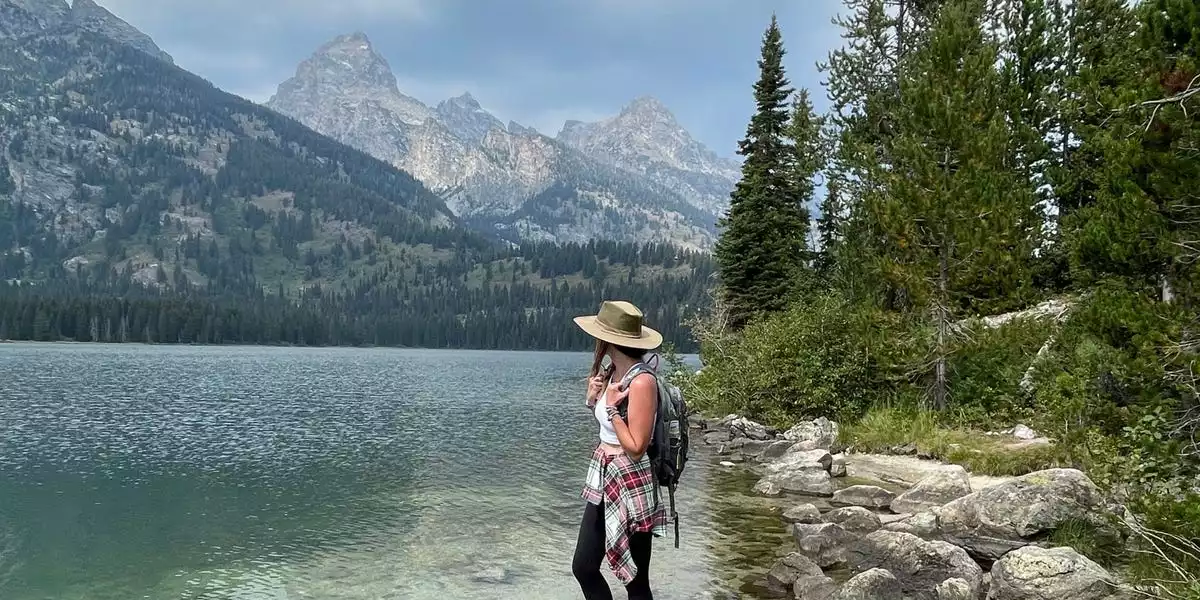

Grand Teton: Where Experience, Infrastructure, and Innovation Redefine Destination Value
Emily Hart’s affection for Grand Teton National Park is more than a personal narrative—it is a lens through which the seismic shifts in travel, technology, and regional economics can be observed. In an era when the experience economy is outpacing traditional leisure, Grand Teton emerges as a case study in how natural assets, digital tools, and strategic infrastructure are coalescing to transform not only visitor expectations but also the very calculus of regional prosperity.
The Experience Economy’s New North Star
The post-pandemic traveler is no longer content with passive sightseeing. Instead, demand is surging for immersive, nature-centric experiences that promise both emotional resonance and social cachet. National parks like Grand Teton have become, in effect, luxury goods—scarce, restorative, and imbued with status. Visitor spending in these marquee destinations now tracks at roughly 130% of pre-2019 levels, with a pronounced willingness to pay for premium add-ons: guided wildlife safaris, bespoke river floats, and curated culinary offerings.
This evolution is particularly pronounced among solo travelers, a segment growing at a double-digit compound annual rate. The intersection of rising female economic agency and a heightened desire for safety and logistical simplicity has made destinations with on-premise airports and multi-tier lodging—like Grand Teton—disproportionately attractive. The park’s unique combination of commercial runway access, abundant aquatic assets, and adjacency to both Yellowstone and the amenity-rich town of Jackson creates a seamless journey from discovery to arrival, reducing friction and amplifying appeal for high-spend demographics.
Infrastructure as a Competitive Moat and Catalyst
Jackson Hole Airport’s location within park boundaries is more than a convenience—it is a strategic asset that redefines accessibility. By eliminating the need for cumbersome intermodal transfers, the airport converts latent demand into realized visitation, a feat that eludes competitors such as Glacier and Olympic National Parks. This proximity also enhances operational resilience, enabling just-in-time supply chains for perishables and accelerating emergency response, factors increasingly weighted in concessionaire evaluations.
The ripple effects extend beyond the park’s borders. Jackson’s upscale service ecosystem, buoyed by affluent visitors, faces mounting challenges in housing affordability and workforce retention—pressures exacerbated by the influx of remote workers. Meanwhile, Idaho’s Teton Valley is capitalizing on spillover demand, attracting outdoor-industry startups and location-agnostic professionals drawn by lower land costs and untapped recreational opportunities. These dynamics underscore how protected landscapes can anchor regional economies, diffusing economic concentration and fostering innovation across state lines.
Technology’s Expanding Role in Sustainable Growth
Digital transformation is no longer optional for parks seeking to balance revenue growth with ecological stewardship. Advanced reservation platforms and AI-driven crowd-management algorithms—already piloted in places like Arches National Park—offer a blueprint for Grand Teton to optimize visitor throughput while respecting environmental thresholds. Immersive media, from AR trail guides to VR previews, is evolving from marketing novelty to a demand-shaping utility, dispersing visitors from over-trafficked hotspots to under-explored zones and preserving the wilderness experience.
On the operational front, sensor-equipped watercraft and drone-enabled wildlife counts provide real-time ecological telemetry, informing both conservation policy and predictive maintenance of recreational assets. The monetization of these data streams, coupled with dynamic pricing for amenities and concession-driven income, signals a broader tilt toward diversified, technology-enabled revenue models.
Policy, Investment, and the Future of Natural Capital
The convergence of public-private partnerships, outcome-based concession models, and ESG-driven investment is reshaping the financial architecture of protected areas. Contracts are increasingly tied to measurable outcomes—carbon sequestration, biodiversity indices, community employment—aligning the interests of institutional investors with those of local stakeholders and the environment. As aquatic recreation intensifies, expect the emergence of data-centric, blockchain-verified allocation frameworks to reconcile competing water-use priorities among tourism, agriculture, and tribal communities.
For airlines and mobility platforms, the opportunity lies in dynamic capacity allocation and the bundling of multimodal “park-to-park” itineraries, augmented by carbon-offset surcharges that directly fund local conservation. Hospitality operators are poised to capture outsized margins by developing tiered micro-experiences and investing in low-impact infrastructure, while technology vendors can position visitor-management SaaS platforms as essential tools for balancing growth with preservation.
Grand Teton’s magnetic pull is not merely sentimental; it is a harbinger of shifting consumer values and an evolving commercial landscape. As natural beauty, digital enablement, and infrastructural foresight converge, those who anticipate and adapt to these intertwined forces will shape the next chapter in sustainable, experience-driven tourism—where the rewards are as enduring as the landscapes themselves.

 By
By
 By
By
 By
By

 By
By

 By
By
 By
By







