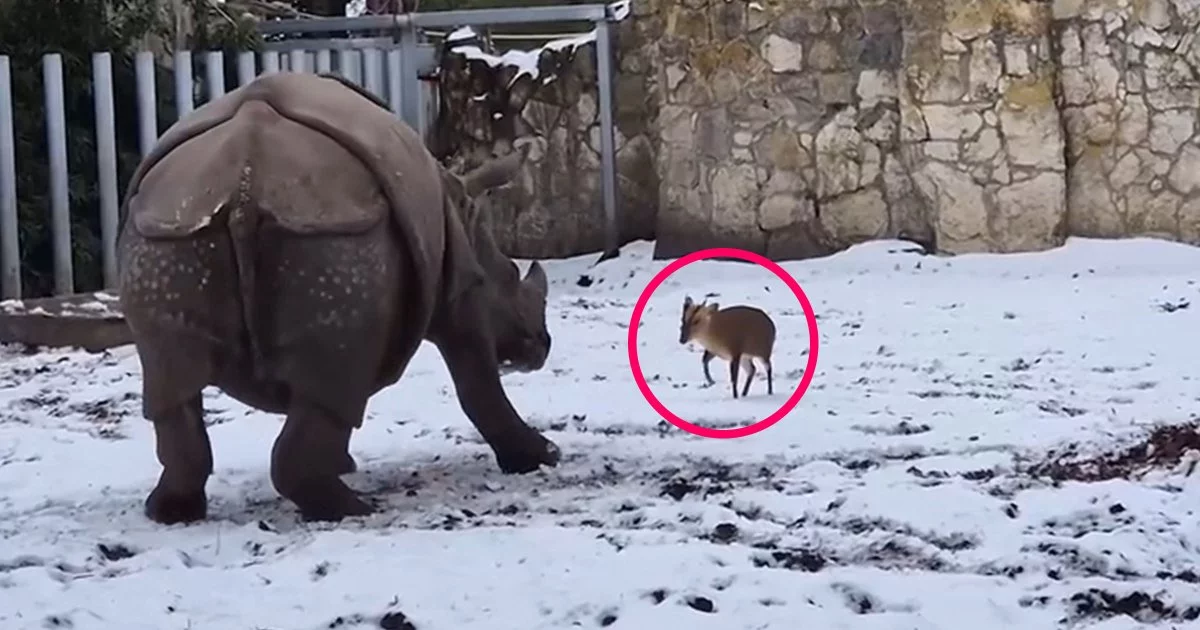

When a Muntjac Meets a Rhinoceros: The New Physics of Viral Experience
In the digital menagerie of 2024, a fleeting, unscripted encounter between a diminutive Reeves’s muntjac named Tata and a hulking rhinoceros, Maruśka, at Poland’s Wroclaw Zoo has become a global sensation. The 28-pound deer’s audacious “sparring” with her 1.7-ton neighbor—captured in a sub-minute clip—has ricocheted across Facebook, Reddit, and every algorithmic byway, transforming a local oddity into a masterclass in viral storytelling and digital engagement.
What makes this episode more than just a meme is the way it encapsulates the evolving mechanics of attention, the economics of the experience sector, and the subtle interplay between technology and narrative. The muntjac’s improbable bravado is more than animal hijinks; it is a living metaphor for how nimble, unexpected content can upend the established order—online and off.
—
The Algorithmic Alchemy of Unscripted Moments
The viral ascent of Tata and Maruśka’s encounter is no accident of fate—it is the result of a new physics governing digital virality. Unlike meticulously produced campaigns, this video was a product of pure serendipity: no script, no professional crew, no paid amplification. Yet, its organic reach dwarfed that of many high-budget productions. Why?
- Algorithmic Affinity: Platforms like TikTok and Facebook privilege content that delivers a rapid-fire cocktail of “cuteness,” surprise, and status reversal. Tata’s David-and-Goliath moment checked all three boxes, triggering the emotional heuristics that drive shares and engagement.
- Contextual Remixability: The zoo’s tongue-in-cheek caption (“someone probably forgot to look in the mirror”) primed viewers to become co-creators, spawning a cascade of remixes, memes, and comment threads that further propelled the clip.
- Zero-Cost, Exponential Impact: The absence of production overhead meant that every additional view was pure upside—an object lesson for marketers and institutions in the power of low-friction, high-velocity content.
This phenomenon is not confined to zoos. It is a template for any organization seeking to punch above its weight in a crowded attention marketplace. The lesson: in the era of algorithmic curation, authenticity and brevity are structural advantages.
—
Monetizing Wonder: New Revenue Streams in the Experience Economy
For zoos, aquaria, and other experience-driven institutions, the implications of such viral moments are profound. Traditionally, these venues have relied on regional foot traffic, with up to half of annual revenue coming from out-of-town visitors. Viral clips like Tata’s not only expand the top of the funnel but do so at a fraction of the cost of conventional advertising.
- Ancillary Monetization: Intellectual-property-light assets—digital stickers, NFTs, and micro-donations—can be spun out at speed. The Smithsonian’s “Panda Cam” NFT drop, which netted $180,000 in three days, is a harbinger of what’s possible for institutions willing to innovate.
- Brand Partnerships: The viral spotlight attracts brands seeking ESG (Environmental, Social, Governance) alignment. Co-branded AR filters or live streams can transform local attractions into global platforms for purpose-driven storytelling.
- Data as Asset: Behavioral footage, anonymized and licensed, becomes a valuable resource for researchers in fields as diverse as robotics and behavioral science—a by-product turned revenue stream.
The muntjac-rhino dynamic, in this context, is more than entertainment; it’s a catalyst for new business models and strategic partnerships.
—
From Animal Antics to Strategic Metaphor: Lessons for the Modern Enterprise
Beyond the immediate economic upside, the Tata-Marushka episode offers a rich seam of insight for leaders across industries. The asymmetric contest—small disruptor versus lumbering incumbent—mirrors the competitive dynamics playing out in sectors from SaaS to retail. Executives can deploy this story as a vivid metaphor in workshops on innovation, resilience, and agility.
- Technology Transfer: Edge-AI systems, originally designed for security, can now “moment-mine” for viral potential, auto-flagging high-value interactions for instant sharing—a capability with applications from sports to smart manufacturing.
- Behavioral Insights: Observing how two species negotiate shared space without escalation informs the design of collision-avoidance algorithms in robotics and autonomous vehicles.
- Governance in Real Time: As memeification accelerates via generative AI, institutions must balance permissive content policies with brand safety—ensuring authenticity without reputational risk.
The fleeting nature of digital attention demands a new playbook: codifying serendipity, layering monetization atop engagement, and institutionalizing creative governance. Those who master these disciplines will not only capture the next viral moment—they will shape the very contours of the experience economy.
In the end, what appears as a whimsical zoo-cam vignette is, in fact, a microcosm of the modern attention market: unpredictable, algorithmically amplified, and laden with strategic opportunity for those nimble enough to seize it.

 By
By
 By
By

 By
By
 By
By

 By
By
 By
By