
Lunar Ambitions Underground: China’s Cave-Based Astronaut Training as Strategic Inflection Point
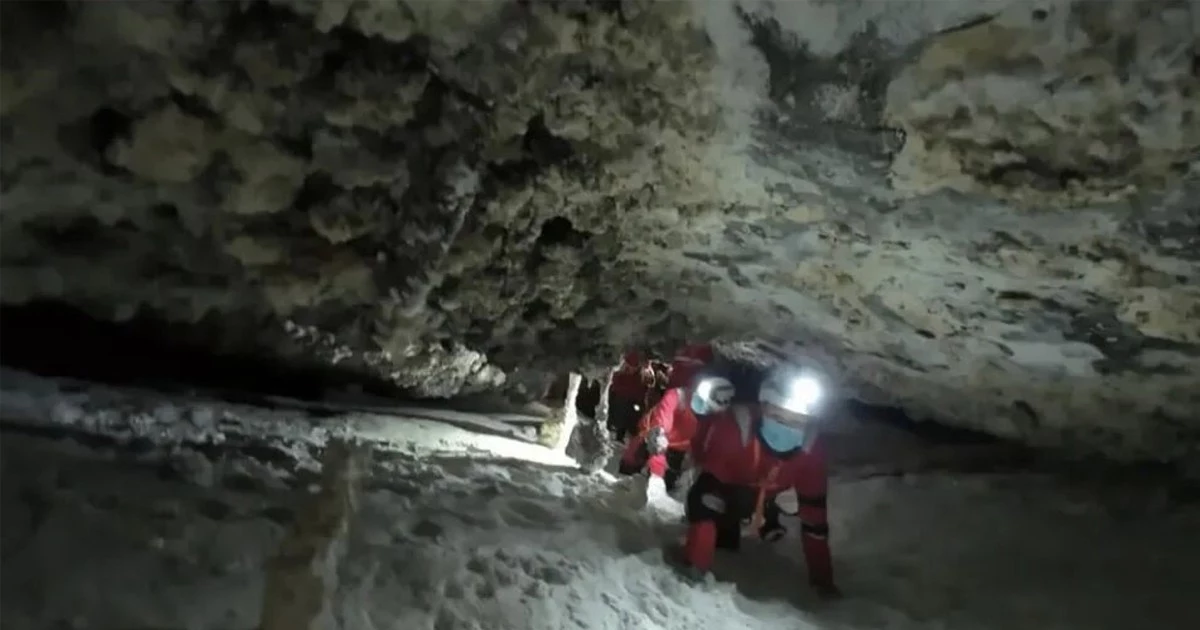
In an era where the celestial contest for the Moon’s surface is as much about terrestrial influence as extraterrestrial exploration, China’s recent subterranean astronaut training marks a profound recalibration of the global space race. Over the course of a discreet, month-long simulation, 28 Chinese astronauts—spanning seasoned veterans and the next generation—descended into the nation’s karst caves, immersing themselves in an environment that mirrors the Moon’s most unforgiving realities. This meticulously orchestrated exercise, modeled on but more expansive than the European Space Agency’s CAVES initiative, signals a new doctrine: the compression of the learning curve for deep-space operations, the elevation of human-factor research to a strategic asset, and the institutionalization of a dual-use approach that blurs the lines between military, scientific, and commercial objectives.
The Subterranean Laboratory: Engineering Lunar Realities on Earth
Beneath the surface, China’s cave-based simulation functioned as a crucible for the psychological, operational, and logistical challenges that await lunar explorers. The choice of a domestic cave—selected after surveying at least ten alternatives—served multiple purposes:
- Isolation and Communication Lags: The underground venue replicated the Moon’s communication delays and psychological stressors, allowing astronauts to rehearse autonomy in decision-making, a necessity given the two-to-eight-second transmission lag between Earth and the lunar surface.
- Data-Driven Human Performance: Continuous streams of biometric, neuro-cognitive, and behavioral data were likely captured and funneled into AI-powered analytics. This not only informs spacecraft habitability standards but also advances autonomous medical support algorithms—critical for missions where immediate ground intervention is impossible.
- Technological Synergies: The cave’s natural complexity provided a proving ground for cave-mapping, environmental sensing, and resource prospecting technologies. These capabilities dovetail with China’s ambitions in in-situ resource utilization (ISRU) on the Moon and Mars, while also feeding innovation in the nation’s burgeoning geospatial-data and robotics sectors.
The presence of veteran astronaut Ye Guangfu, overseeing operations with minimal ground control, signaled a doctrinal pivot toward decentralized crew autonomy—a subtle but significant shift that positions China to lead in the era of long-duration, deep-space missions.
Economic Ripples: Industrial Policy and Commercial Spillovers
China’s decision to anchor this training domestically is as much about safeguarding intellectual property as it is about accelerating industrial momentum. By keeping life-support and biometric R&D onshore, Beijing insulates sensitive advances from global export controls while catalyzing demand for:
- Ruggedized Sensors and Edge-AI Hardware: The extreme environment necessitates robust, low-power devices, giving domestic suppliers the scale and state contracts that commercial markets alone cannot yet provide.
- Advanced Habitat Materials: The unique stresses of lunar analog environments drive innovation in materials science, with spillover benefits for terrestrial industries.
This cross-pollination is not accidental. Technologies honed underground—autonomous navigation in GPS-denied zones, long-range communications, advanced psychometrics—are directly applicable to sectors prioritized in China’s 14th Five-Year Plan, including mining, oil and gas, and disaster response. The expectation is clear: public-private partnerships and preferential financing will flow to firms capable of dual-sourcing components for both space and Earth-bound applications, echoing the playbook that propelled China’s semiconductor and renewable energy sectors to global prominence.
Geopolitical Reverberations and the New Talent Arms Race
Beyond the technical and economic dimensions, China’s cave-based astronaut training is a masterstroke of soft-power signaling. By publicizing the psychological rigors faced by its astronauts, Beijing humanizes its space program, framing it as a scientific and humanitarian endeavor rather than a purely military one. This narrative is timed with precision, coinciding with delays in NASA’s Artemis program and budgetary debates in Washington, subtly positioning China as the more execution-focused actor in the lunar domain.
The implications for global stakeholders are manifold:
- Talent Competition Intensifies: As China amasses vast datasets on psychological resilience and cognitive performance, Western agencies and contractors must recalibrate recruitment pipelines, prioritizing behavioral scientists, neuro-engineers, and extreme-environment medical specialists.
- Data Governance and Standards: The biometric and psychometric standards emerging from China’s program may set the baseline for future multilateral missions, making early engagement in international forums essential to shape interoperability and privacy norms.
- Supply Chain and Industrial Resilience: Components qualified for lunar analog conditions will soon be in demand across industries. Diversification and scenario planning are no longer optional—they are imperatives for resilience in an era of geopolitical volatility.
China’s subterranean rehearsal is not merely a footnote in the annals of astronaut training; it is a harbinger of a new, integrated strategy—one that fuses scientific experimentation, industrial policy, and geopolitical ambition into a single, formidable force. For those parsing the exercise as a mere technical drill, the risk is clear: the true impact will be felt far beyond the cave’s shadow, shaping technology supply chains, global talent flows, and the evolving balance of power in space.

 By
By
 By
By


 By
By
 By
By
 By
By