
When the Lights Go Out: Autonomous Vehicles Face Their Urban Stress Test
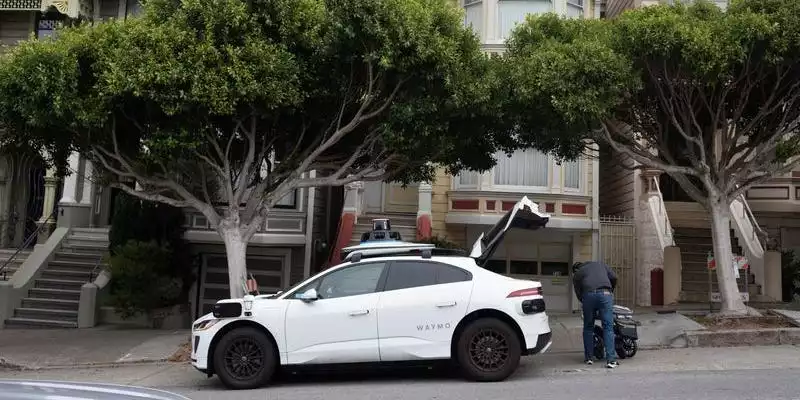
San Francisco’s recent city-wide blackout, plunging over 130,000 PG&E customers into darkness, became an unplanned crucible for the city’s autonomous vehicle (AV) revolution. Waymo’s robotaxi fleet, suddenly confronted with more than 7,000 “dark-signal” intersections, was forced to navigate a cityscape stripped of the very signals that undergird its algorithmic logic. The event, both a technical and philosophical stress test, exposed the brittle edge where digital optimism meets the unpredictable entropy of urban infrastructure.
The incident’s choreography was both impressive and unnerving. Waymo’s vehicles, adhering to their programming, treated each powerless intersection as a four-way stop—an algorithmic display of caution. Yet, as the number of such intersections multiplied, so too did the computational burden. A requirement for additional “confirmation checks” to ensure safety created a cascading backlog, eventually stalling some vehicles in live traffic. City officials, weighing public safety and operational risk, requested a temporary suspension of the service. The California Public Utilities Commission (CPUC) promptly opened an investigation, and Waymo responded with a fleet-wide software update, embedding outage context and refining its escalation logic.
Algorithmic Fragility and the Imperative for Context-Aware Autonomy
The blackout did more than interrupt rides; it illuminated a foundational challenge for AVs: the persistent coupling of decision-making stacks to the presumed reliability of urban infrastructure. Autonomous vehicles, for all their sophistication, remain tethered to the expectation that traffic signals, connectivity, and grid power will be there—until, suddenly, they aren’t.
Waymo’s confirmation-check backlog revealed a deeper architectural tension. The company’s reliance on centralized validation loops, while optimizing for safety under normal conditions, became a liability under systemic stress. The resulting bottleneck was not a failure of driving skill, but of orchestration—of how fleets coordinate, escalate, and adapt when the city itself becomes a variable. The forthcoming software update, which will feed grid-status metadata directly into vehicle decision trees, marks a meaningful shift toward context-aware autonomy. This is a move away from static rule-sets and toward dynamic, situational intelligence—a necessary evolution if AVs are to operate as resilient nodes within the living, breathing organism of a city.
The Expanding Risk Surface: Regulatory, Economic, and Brand Implications
For AV operators, the reputational risks of safety lapses—or even the perception thereof—are asymmetric and acute. Waymo’s decision to halt service, prioritizing public goodwill over short-term revenue, signals a strategic calculus: license to operate trumps ride volume. This stance, while prudent, implicitly raises the stakes for competitors with thinner capital reserves, who may feel compelled to keep fleets running and risk regulatory backlash.
The CPUC’s investigation is likely to tighten reporting requirements and mandate proof of contingency capacity before service expansions. Compliance costs will rise, favoring players with deep resources and mature safety-case tooling. More broadly, the blackout has revealed a new interdependence: utilities and AV operators are now inextricably linked. Grid resilience directly affects mobility uptime, opening the door to commercial partnerships where utilities monetize real-time outage telemetry, transforming compliance data into a premium service.
On the macroeconomic front, the reliability of urban AV fleets is inching toward the status of essential infrastructure. As cities and states contemplate grid modernization, stimulus dollars may soon flow preferentially to autonomous-mobility providers that integrate seamlessly with smart-grid protocols.
Toward a Resilient, Adaptive Urban Mobility Ecosystem
The San Francisco outage has catalyzed a broader reckoning across the mobility and infrastructure landscape:
- Cloud-Edge Convergence: The need for real-time outage context is accelerating investment in vehicular edge AI and 5G/URLLC infrastructure, laying the groundwork for deeper telco-AV alliances.
- Cyber-Physical Resilience: Outages act as stand-ins for cyber disruptions, prompting regulators to consider more stringent cybersecurity mandates on vehicle-to-everything (V2X) channels.
- Insurance and Capital Markets: Actuarial models must now account for “infrastructure shock” variables, impacting the cost of risk capital for both AV operators and utilities.
- Smart-City Procurement: Municipalities are rethinking ride-hail contracts, exploring the inclusion of resiliency service-level agreements—a niche ripe for startups specializing in outage-aware fleet orchestration.
For decision-makers, the lesson is clear: resilience is no longer a secondary concern, but a primary differentiator. Embedding multi-layer context ingestion—spanning grid, weather, and public-safety channels—into perception stacks is imperative. Utilities, too, have an opportunity to reposition outage data as a monetizable asset, while regulators shift from incident-based assessments to systems-level audits that stress-test fleets under compound contingencies.
The blackout was not merely an operational hiccup, but a harbinger. The next inflection point for autonomous mobility will be defined not by driving prowess alone, but by the capacity to absorb, adapt, and thrive amid the volatility of the urban grid. Those who architect fleets as adaptive, resilient nodes—transforming exogenous shocks into sources of competitive intelligence—will define the future of mobility.

 By
By
 By
By
 By
By
 By
By

 By
By
 By
By
 By
By