
Mars Autonomy: Perseverance’s Record Drive and the Dawn of Edge Intelligence
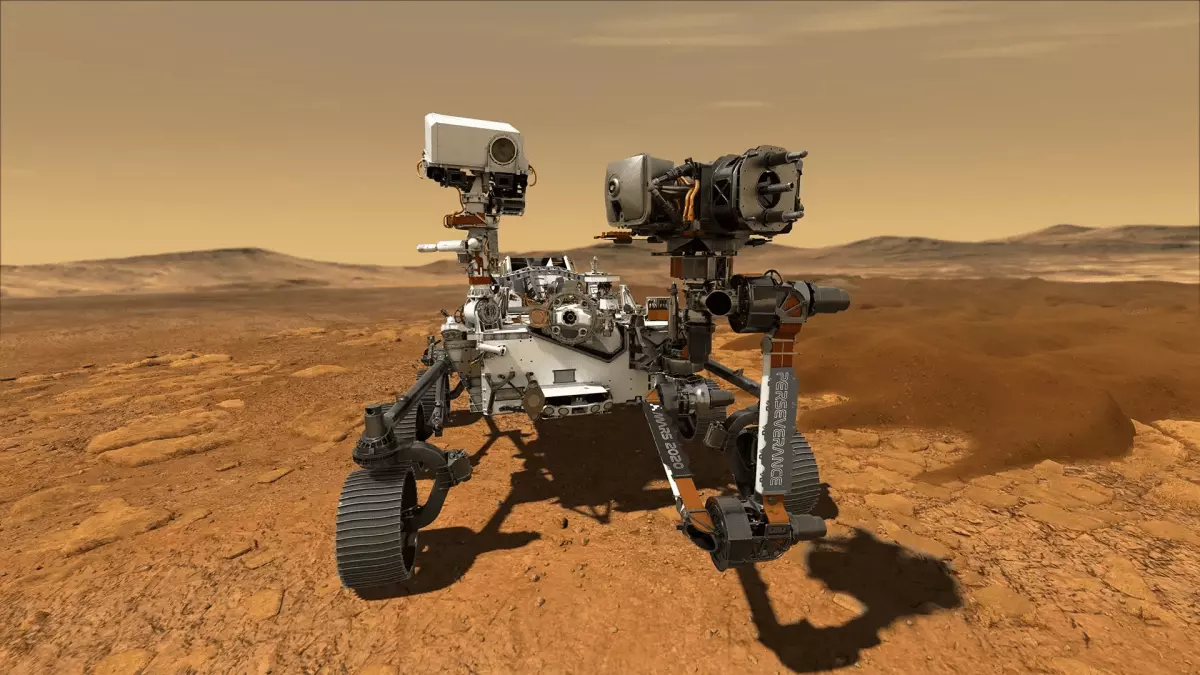
NASA’s Perseverance rover, with its recent 1,350.7-foot sprint across the Martian surface, has not merely set a distance record—it has redefined the very architecture of exploration. This feat, achieved in just over four hours, signals the arrival of a new era: one where machines act with intelligence and independence, far from the reassuring reach of human hands. The implications ripple outward, touching not only the future of planetary science but also the fabric of terrestrial industry, global supply chains, and the strategic calculus of spacefaring nations.
Edge AI at the Interplanetary Frontier
Perseverance’s Enhanced Autonomous Navigation (ENav) system is a marvel of edge-based artificial intelligence, operating in an environment where the delay between command and response can stretch to 22 minutes. Unlike traditional “ground-in-the-loop” control, ENav fuses stereo vision, hazard mapping, and machine-learning-driven path planning, all on radiation-hardened processors. This is autonomy at its most distilled: the rover acts not on moment-to-moment instructions, but on broad objectives, navigating a world of uncertainty with every wheel rotation.
- Software-Defined Flexibility: Since its landing, Perseverance has received a series of software updates that have incrementally unlocked greater speed and more sophisticated obstacle avoidance. This approach—treating the rover as a software-first asset—mirrors a shift seen across both space and terrestrial robotics, where modular autonomy stacks can be rapidly adapted and redeployed.
- Data Efficiency: By capturing and analyzing imagery every few feet, the rover distills vast quantities of raw data into pre-filtered, actionable insights. This selective edge analytics approach not only conserves precious Deep Space Network bandwidth but also echoes trends in enterprise IT, where edge computing is deployed to reduce cloud infrastructure costs.
Economic and Industrial Reverberations
The technological DNA of Perseverance’s achievement is already propagating into sectors far removed from the red dust of Mars.
- Dual-Use Spillovers: The radiation-tolerant AI accelerators and stereo machine-vision algorithms honed on Mars have immediate applications in hazardous terrestrial industries—mining, energy, defense—where remote operations are the norm. Analysts forecast a burgeoning market for space-qualified sensor fusion hardware, potentially reaching $2 billion annually by 2030.
- Mission Economics Reimagined: Autonomy is not just a technical upgrade; it is a revolution in cost structure. By slashing the labor hours required for mission operations, NASA is setting a precedent for leaner, faster-iteration planetary missions. As private actors such as Intuitive Machines and Astrolab enter the fray, this model of software-driven exploration will likely become the industry standard.
- Cislunar Logistics Ecosystem: The very autonomy stacks guiding Perseverance are being adapted for lunar rovers destined for the Artemis program. Standardizing these systems de-risks supplier investments, nurturing a robust commercial ecosystem poised to support both governmental and private ventures in the cislunar economy.
Strategic Implications for Global Space Power
At a deeper level, Perseverance’s autonomous capabilities are reshaping the strategic landscape of space exploration and beyond.
- Bandwidth Sovereignty: By reducing reliance on Earth-based guidance, NASA frees up Deep Space Network capacity—a resource as valuable in the geopolitics of space as any mineral or launch window. Mastery of autonomous navigation becomes a form of soft power, enabling nations to scale their exploration assets without a proportional increase in ground infrastructure.
- AI Governance and Certification: Perseverance serves as a living laboratory for certifying safety-critical AI in contexts where human override is impossible. Regulatory bodies worldwide are scrutinizing its telemetry, seeking precedents to inform the certification of autonomous vehicles and vessels on Earth.
- Blueprint for Human–Robot Teaming: The record-setting drive validates a robotics-first approach to exploration: intelligent machines can pre-survey terrain, cache resources, and construct infrastructure ahead of human arrival. This strategy lowers risk and cost for future crewed missions, reshaping contract opportunities across habitat, power, and mobility sectors.
Strategic Pathways for Industry Leaders
For decision-makers, the lessons of Perseverance are both urgent and actionable:
- Invest in Robust Autonomy: Direct R&D toward radiation-hardened AI ASICs and modular autonomy frameworks, positioning for leadership in both space and terrestrial automation.
- Forge Strategic Alliances: Engage with NASA’s collaborative ecosystems to accelerate technology readiness and derisk future lunar or Martian contracts.
- Shape Regulatory Standards: Participate in the formation of off-world AI safety standards, ensuring compliance and competitive differentiation as regulatory regimes mature.
- Model Next-Generation Operations: Incorporate autonomous logistics into scenario planning, recognizing that such systems can reduce surface operations costs by up to 40% compared to legacy teleoperation.
The quarter-mile sprint of Perseverance is more than a triumph of engineering; it is a harbinger of autonomy’s transition from Martian novelty to strategic necessity. As the boundaries between planetary science, industrial automation, and global strategy blur, those who anticipate and adapt to this new reality—whether at NASA, in the halls of Fabled Sky Research, or across the world’s innovation corridors—will define the next era of exploration and enterprise.

 By
By
 By
By

 By
By
 By
By

 By
By