
Reimagining the Rhine: Mannheim’s Coal Plant Transforms into a Beacon of Electrified Heat
In the industrial heart of Mannheim, where the Rhine’s broad shoulders have long borne the weight of German heavy industry, a retired coal-fired power station is poised for a radical rebirth. By 2027, this site will host one of the world’s largest river-sourced heat-pump installations—a €215 million venture that will channel the river’s latent warmth to heat some 40,000 homes. The project, led by MVV Environment, is emblematic of Europe’s accelerating shift from fossil-fueled legacy to a future defined by electrified, networked heat.
Industrial-Scale Innovation: Harnessing the Rhine’s Thermal Pulse
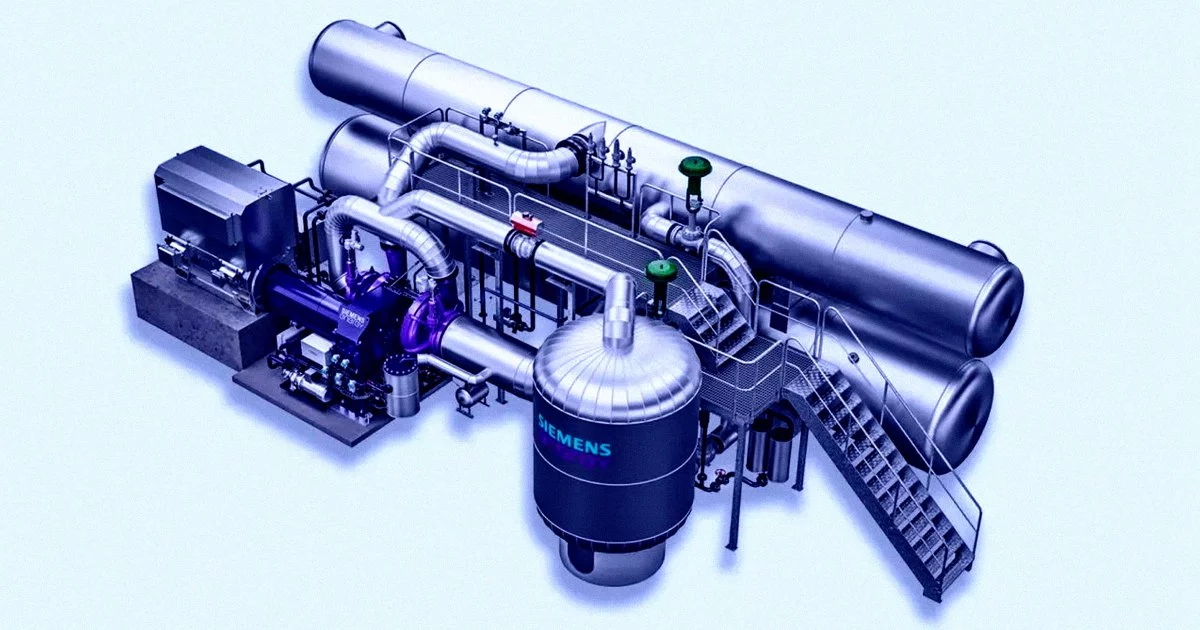
The Rhine, flowing at a steady 6–25°C throughout the year, offers a thermal resource whose reliability outstrips fickle air temperatures. By tapping into this aquatic artery, Mannheim’s new heat-pump system will achieve a coefficient of performance (COP) that air-source units can rarely match—especially during the biting continental winters. The technology at the heart of this transformation is itself a story of industrial convergence: centrifugal and screw compressors, once the domain of offshore gas rigs, are being repurposed for climate resilience. This transfer not only accelerates deployment but also preserves high-skilled jobs in European manufacturing, which might otherwise wither as hydrocarbon markets recede.
The infrastructure’s integration is equally elegant. The dormant coal plant’s electrical interconnections, switchyards, and—most critically—its direct links to Mannheim’s 20-bar district-heating ring, are being reimagined for a decarbonized era. Advanced digital twins and AI-driven load forecasting will orchestrate the balancing act of variable-temperature supply, optimizing performance as electricity prices and demand fluctuate. The result is a system that is as much a feat of digital engineering as of mechanical prowess.
The Economics of Electrified Heat: Capital, Carbon, and Competitive Edge
The economics of mega-scale heat pumps are not for the faint of heart. Upfront capital expenditures hover around €3,000–€4,000 per connected home, notably higher than the cost of new gas-fired alternatives. However, the calculus shifts when factoring in the EU’s carbon price—now consistently above €80 per tonne of CO₂—and the low marginal cost of operation. Strategic access to concessionary finance, courtesy of the EU Innovation Fund and KfW’s “Bundesförderung effiziente Wärmenetze,” further tips the scales, reducing the cost of capital by up to 250 basis points compared to private-equity-funded gas assets.
But the value proposition extends beyond mere economics. In a world rattled by post-2022 gas-market volatility, the strategic premium on domestically sourced, non-combustion heat has never been higher. Each 100 MW-thermal cluster of river-sourced heat pumps stands to displace more than 22 million cubic meters of Russian gas annually—a statistic that resonates deeply with the EU’s REPowerEU ambitions.
This transformation is also catalyzing a broader industrial policy shift. Equipment manufacturers—spanning MAN Energy Solutions to Siemens Energy—now eye a European market for large-scale heat pumps and related technologies that could exceed €70 billion by 2030. The implications for supply-chain reshoring, cross-sector M&A, and workforce development are profound.
Beyond Mannheim: Systemic Ripples and Strategic Imperatives
The innovations unfolding in Mannheim are already radiating outward, suggesting a new playbook for utilities, investors, and policymakers:
- Portfolio Rebalancing: Utilities saddled with stranded coal assets are urged to model conversions into water-source heat hubs, leveraging existing transmission rights and infrastructure. Early adopters stand to secure scarce OEM production slots and skilled labor.
- Financing Innovation: The emergence of “thermal transition bonds”—green-bond variants securitized by long-term municipal heat-supply agreements—offers investors low-volatility returns while shielding cities from inflationary heat costs.
- Regulatory Momentum: Upcoming EU Ecodesign revisions may soon require district-heating compatibility in new urban developments, expanding the customer base and raising the stakes for standards-setting engagement.
- Competitive Realignment: Oil-field service giants, with deep expertise in fluid handling and compression, are pivoting aggressively into this space. Incumbent HVAC firms face an imperative to accelerate M&A or risk obsolescence.
The sectoral convergence is striking. Data centers, with their voracious cooling needs, could co-locate along rivers, integrating heat-recovery systems that monetize waste heat and double thermal output. Municipal climate-adaptation budgets, already earmarked for riverbank redevelopment, now have a compelling case for embedding submerged heat-exchangers—cutting installation costs by up to 35%. Even industrial clusters—breweries, paper mills, pharmaceutical plants—are eyeing the district network for carbon-free process steam, aligning with the Science Based Targets initiative.
Charting a Course for Global Replicability
What unfolds in Mannheim is not an isolated experiment, but a bellwether for cities worldwide. River-adjacent metros from the Mississippi to the Han and Yangtze possess similar thermal profiles and legacy infrastructure. As performance data emerges, the blueprint will inform project bankability in North America and Asia, particularly where policy levers like the U.S. Inflation Reduction Act or Japanese GX subsidies are in play.
For decision-makers, the actionable path is clear:
- Launch feasibility studies for river-adjacent brownfield sites with existing heat or steam networks.
- Build cross-functional teams spanning energy, water, and urban development to streamline permitting.
- Secure compressor OEM capacity before supply constraints bite.
- Integrate heat-pump scenarios into corporate risk models, hedging against carbon-price shocks and gas disruptions.
In this evolving landscape, Mannheim’s river-sourced heat-pump project stands as a harbinger of structural change—one that redefines the role of water-sourced thermal energy in Europe’s decarbonization journey. The boards and executives who grasp these dynamics early will unlock not just cost-competitive, policy-aligned growth, but also a resilient future, insulated from the vagaries of fossil-based heat.


 By
By

 By
By
 By
By

 By
By
 By
By