
A High-Stakes Contest Over AI Governance: Federal Pre-emption and the New Regulatory Chessboard
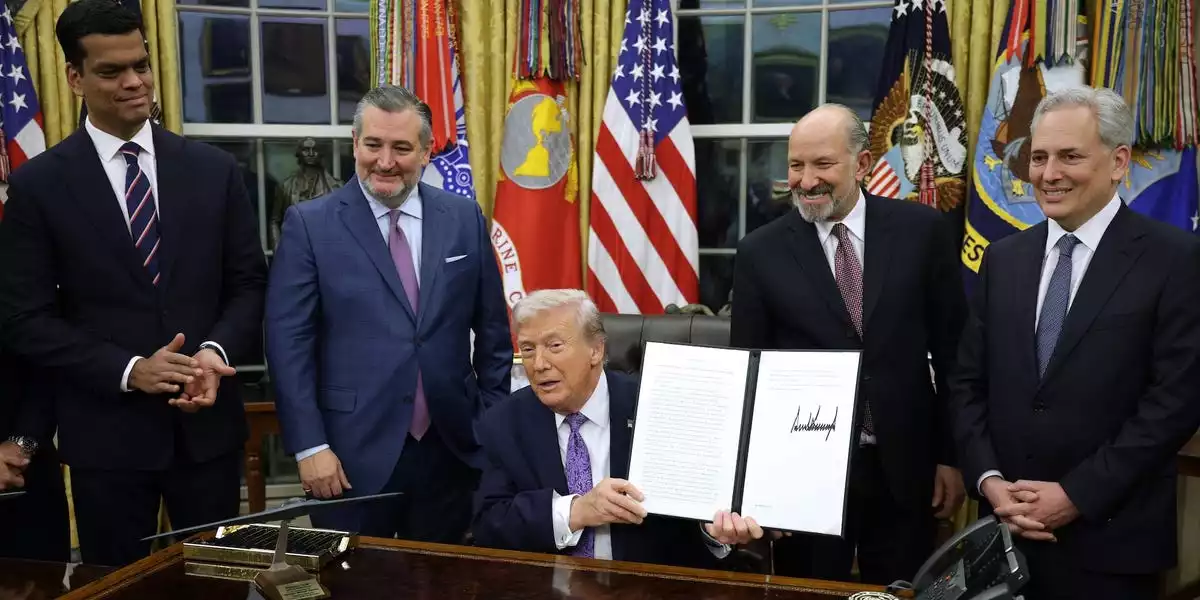
The December executive order from President Trump, instructing the Department of Justice to challenge state-level AI regulations and threatening to withhold federal funds from non-compliant states, has detonated a fault line at the intersection of technology, economics, and American federalism. The White House frames this as a necessary maneuver to keep pace with China, positing that only a unified regulatory front can unlock the velocity needed for AI innovation at scale. Yet, the backlash from within the president’s own party—ranging from Governor DeSantis to Senator Hawley—signals a profound rift, one that transcends mere policy and cuts to the core of how the United States governs its most transformative technologies.
The Technological Tension: Speed, Standards, and Systemic Risk
At the heart of the debate is a tension familiar to anyone who has watched the evolution of digital infrastructure: the need for speed versus the value of diversity. AI models, by their nature, defy borders—deploying, updating, and learning across states in real time. Fragmented state regulations threaten to introduce friction, forcing companies to build compliance checkpoints into their ModelOps pipelines and slowing the very innovation the U.S. seeks to accelerate.
A single federal framework, proponents argue, would:
- Accelerate standards formation, creating unified benchmarks for safety, auditing, and data handling.
- Lower compliance costs for multistate rollouts, especially for hyperscale operators.
- Reduce transaction costs by avoiding the patchwork effect seen in state privacy laws.
Yet, there is a countervailing risk. States have historically served as regulatory laboratories, surfacing early warnings—whether in model bias, facial recognition errors, or autonomous vehicle mishaps—that a monolithic system might overlook. The loss of these “regulatory sandboxes” could mean that systemic risks remain hidden until they metastasize.
Economic Realignments: Winners, Losers, and the Geography of Innovation
The economic implications are equally profound. A harmonized federal regime would favor those with the resources to shape and absorb the new rules—primarily the hyperscalers, whose lobbying budgets and compliance teams can amortize the costs across vast operations. For startups, especially those leveraging “regulatory arbitrage” by setting up shop in lenient states, the loss of differentiation could be existential.
Key economic dynamics include:
- Compliance cost curves flattening for large players, while startups lose a key lever.
- Capital allocation potentially increasing as regulatory uncertainty drops—though intra-party dissent may still spook investors.
- Talent and site selection recalibrating, as states lose their ability to court AI clusters with bespoke incentives, pushing talent toward established tech hubs or federal procurement centers.
This realignment could stifle the emergence of regional AI ecosystems, consolidating power in a handful of legacy centers and undermining the geographic diversity that has long fueled American innovation.
Geopolitical and Strategic Undercurrents: Federalism, Resilience, and Global Positioning
The executive order is not just a domestic policy play—it’s a strategic signal to allies and adversaries alike. Echoing the industrial-policy ambitions of the CHIPS Act and the National AI Initiative, the move is meant to project unity and resolve. Yet, internal discord—laid bare by the GOP’s split—undercuts the U.S. negotiating position in international standards bodies, where a cacophony of domestic voices can be leveraged by rivals like China.
There is also a subtle but critical dimension of cyber-resilience at play. Distributing regulatory authority, like distributing nodes in a network, creates redundancy and adaptability. Centralization, while efficient, can create single points of failure—an uncomfortable prospect in an era of adversarial AI attacks and rapidly evolving threats.
For business leaders, the lesson is clear: AI policy is now a live variable, not a fixed backdrop. The regulatory environment is in flux, and enterprises must build flexibility into their compliance architectures, risk management strategies, and talent pipelines.
Navigating the New AI Policy Terrain: Strategic Imperatives for Leaders
In this climate, forward-thinking organizations are already scenario-planning for divergent futures:
- Modular compliance architectures that can toggle between federal and state requirements.
- Cross-sector consortia that engage both federal and state stakeholders, shaping the evolution of standards from the ground up.
- Supply chain readiness, ensuring that vendors and partners can meet emerging federal “AI assurance” mandates.
- Insurance and risk-transfer strategies that account for AI-specific liabilities in a shifting regulatory landscape.
- Talent strategies that anticipate the gravitational pull of federal procurement centers and adapt site selection accordingly.
Fabled Sky Research, among others, has quietly begun mapping these scenarios, recognizing that regulatory agility will increasingly define competitive advantage.
As the executive order moves from policy proposal to political litmus test, one truth emerges: the winners in this new era of AI governance will not be those with the most sophisticated models, but those who can navigate the shifting terrain of law, politics, and public trust with equal dexterity. For the C-suite, regulatory turbulence is no longer a downstream risk—it is a core design parameter, demanding attention at the highest levels of strategic planning.

 By
By
 By
By
 By
By

 By
By
 By
By

 By
By