

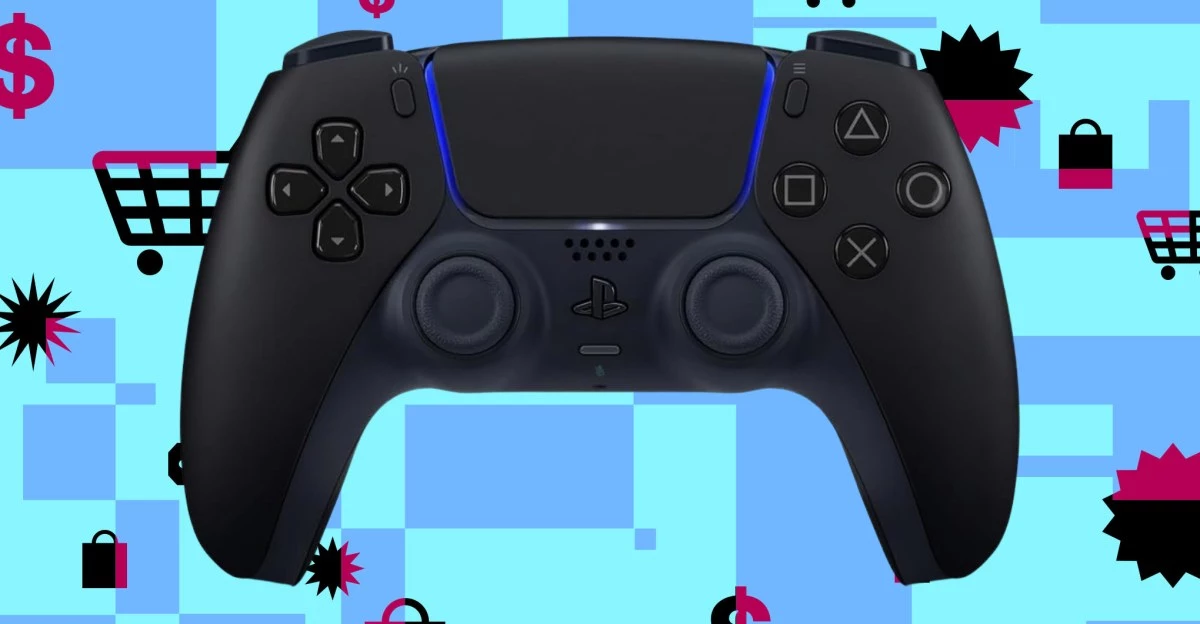

PlayStation’s Holiday Gambit: Redefining Value and Experience in the Console Ecosystem
As the holiday season descends, Sony has fired the opening salvo in the annual console wars, unveiling a sweeping price promotion on PlayStation 5 hardware and, most notably, its DualSense Wireless Controller. The $54.99 price tag—matching its historical low—spans Amazon, Best Buy, Target, and Sony’s own storefronts, and runs until December 18. This is not a routine discount, but a meticulously orchestrated campaign designed to accelerate fourth-quarter sales, expand the PlayStation 5’s accessory ecosystem, and anchor the brand in consumers’ minds before Black Friday’s competitive crossfire erupts.
The Experiential Moat: Haptics as a Platform Differentiator
Sony’s hardware strategy has long revolved around experiential innovation, and the DualSense controller stands as its most tactile expression. While competitors continue to rely on conventional rumble technology, the DualSense’s haptic feedback and adaptive triggers offer a level of immersion that transforms gameplay from mere interaction to sensation. By lowering the entry point to $54.99, Sony is not just courting holiday shoppers—it is inviting developers to imagine new gameplay paradigms that leverage these features, effectively nudging the ecosystem toward a deeper software-hardware symbiosis.
Key technological vectors at play include:
- Haptic Feedback & Adaptive Triggers: These features are not mere novelties; they are foundational to Sony’s claim of a superior, more immersive gaming experience.
- Cross-Device Compatibility: With USB-C charging, Bluetooth support for PC and Mac, and onboard audio, the DualSense quietly extends Sony’s reach into the broader PC gaming and creator markets. This subtle convergence lays the groundwork for future cloud and Remote Play initiatives, knitting together hardware, software, and services into a seamless whole.
The result is a controller that is as much a harbinger of Sony’s ambitions in cross-platform gaming as it is a tool for play.
Economic Calculus and Strategic Timing: The Anatomy of a Holiday Push
The $20 markdown on a $75 average unit retail price is more than a festive gesture. It is a calculated bet on elasticity—an expectation that lower prices will unlock higher volumes, particularly among multi-controller households and gift buyers. With global PS5 supply now normalized, accessories like the DualSense become high-margin levers, driving not just direct sales but also multiplayer engagement, downloadable content (DLC) consumption, and, crucially, PlayStation Plus subscriptions.
Sony’s timing is equally strategic. By launching its sale a week ahead of Black Friday, the company sets the reference price for premium controllers below $55, preempting rival offers and seizing early share-of-wallet. This move also dovetails with industry murmurs of a PS5 Slim and possible PRO variant, enabling Sony to clear inventory and prepare the channel for new SKUs—without the need to discount the console itself.
- Retailer Alignment: Coordinated pricing across major retailers curbs grey-market arbitrage and signals Sony’s ability to enforce pricing discipline, a testament to its channel leverage.
- Inventory Dynamics: High-velocity accessory sales improve retailer metrics, incentivizing greater shelf space for PlayStation products in the year ahead.
Industry Reverberations: Supply Chains, Haptics, and the Peripherals Arms Race
Sony’s aggressive pricing is enabled, in part, by easing component costs and a stabilizing supply chain—an early sign that the turbulence of recent years may be abating. But the implications extend beyond the balance sheet. The renewed focus on immersive input technology is reshaping the competitive landscape, with Meta’s Touch Pro, Apple’s Vision Pro, and Sony’s own PS VR2 Sense controllers signaling a new standard for tactile feedback in interactive devices.
This “peripherals arms race” is already sparking M&A activity in the haptics and middleware space, as platform holders seek to secure their experiential edge. For competitors, particularly Microsoft, the pressure mounts to accelerate their own haptic-enabled controller roadmaps or risk falling behind as advanced tactile feedback becomes the new baseline.
For decision-makers across gaming, retail, and investment, Sony’s campaign is a signal flare. Platform strategists should anticipate a more aggressive cadence of controller-centric innovation, while developers are incentivized to integrate bespoke haptic features to capture marketing and placement advantages. Retailers, meanwhile, must recalibrate holiday inventory strategies, and investors will be watching post-holiday attach-rate data for clues to Sony’s broader network-effects thesis.
Sony’s holiday maneuver is not merely a price cut—it is a strategic catalyst, deepening platform lock-in, amplifying developer engagement, and reinforcing PlayStation’s premium positioning at a critical juncture for the industry. The message is clear: in the battle for the living room, experience is the new currency, and Sony intends to set the exchange rate.

 By
By
 By
By
 By
By
 By
By


 By
By
 By
By


 By
By








