
Power, Persona, and the High-Stakes Chessboard of AI Governance
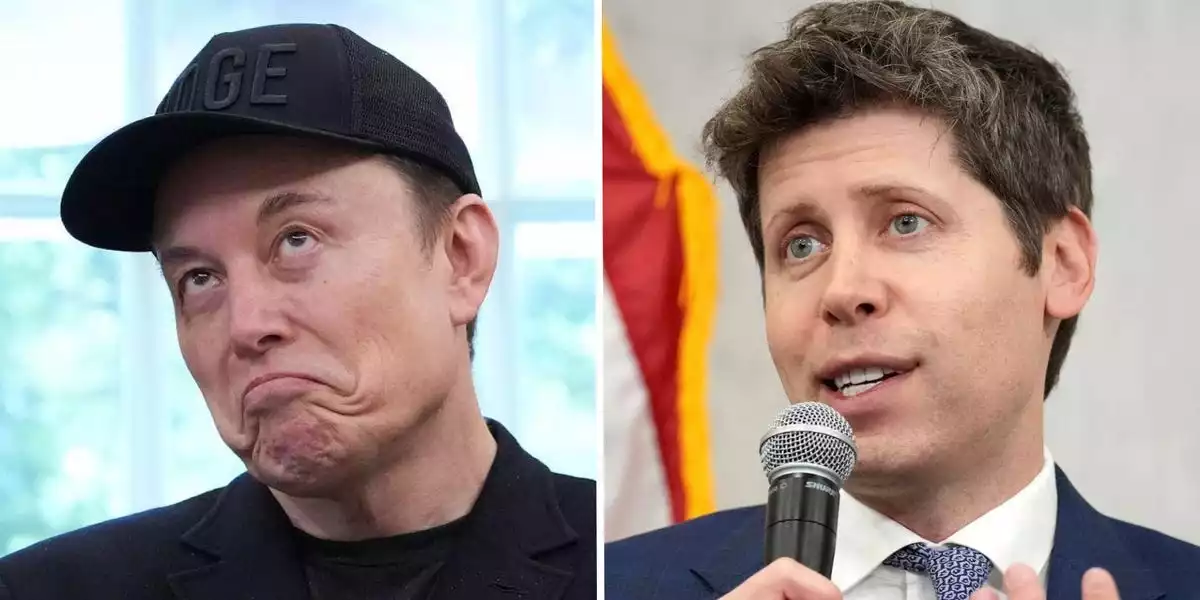
The recent revelation that Sam Altman, CEO of OpenAI, orchestrated a public compliment to Elon Musk in early 2023—less a gesture of admiration than a calculated act of reputational diplomacy—offers a rare, unvarnished glimpse into the interpersonal theater shaping the generative AI revolution. In a private exchange with Shivon Zilis, a trusted Musk confidante, Altman’s maneuver was exposed as a preemptive strike against Musk’s mounting criticism and legal saber-rattling. This episode, emerging amid a feverish phase of AI commercialization and regulatory soul-searching, is more than Silicon Valley intrigue; it is a microcosm of the sector’s unresolved questions about power, accountability, and the very soul of artificial intelligence.
Governance Ambiguity: The Unseen Risk in AI’s Ascent
At its core, the Altman-Musk exchange lays bare a critical vulnerability: the ambiguity of governance in AI’s most influential labs. The fact that OpenAI’s existential risks may be less technical or regulatory than procedural—rooted in the informal, founder-centric power structures that have long characterized tech’s upper echelons—should give pause to investors and policymakers alike. In bypassing formal board channels for private diplomacy, Altman underscored a reality regulators are only beginning to grasp: that the fate of technologies with civilization-scale impact often hinges on the whims and relationships of a handful of individuals.
This dynamic is not unique to OpenAI. Across the frontier of AI research, the tension between institutional process and charismatic leadership is playing out in real time. As lawmakers in the U.S. and EU contemplate “public-interest” mandates for AI, the sector’s reliance on personal relationships and reputational capital is being scrutinized as both a source of agility and a potential vector for instability.
Reputational Capital and the Battle for AI’s Moral High Ground
In the generative AI economy, reputational currency is more than vanity—it is tactical capital. Altman’s outreach to Musk was, in effect, an attempt to shore up OpenAI’s social license to operate by neutralizing a rival who retains enormous influence over the “AI for humanity” narrative. The stakes are high: reputational shocks can raise the cost of capital, deter top-tier talent, and erode the trust of regulators and enterprise partners.
Musk, for his part, has leveraged this moment to sharpen the contrast between OpenAI’s “safety-first” closed-weight approach and xAI’s open-source ethos. By framing OpenAI as having strayed from its founding mission, Musk positions xAI as a corrective—a move that resonates with those in the research community and beyond who see openness as both a moral and practical imperative. This schism is not merely rhetorical; it is reshaping the competitive landscape, with talent, capital, and even compute resources aligning along ideological lines.
- Alignment and Openness: The divide between closed and open AI labs is hardening, with implications for access to model weights, downstream innovation, and even national security policy.
- Compute Scarcity: Musk’s influence over key compute pipelines—from Tesla’s Dojo to potential NVIDIA allocations—adds a layer of geopolitical complexity. The failure of détente may accelerate bidding wars for scarce resources, raising barriers for new entrants.
Strategic Signals: What Executives and Policymakers Must Watch
Beneath the surface of this high-profile feud, deeper currents are shaping the future of AI:
- Talent Migration: Senior researchers increasingly follow moral narratives as much as compensation. The Altman-Musk rift could catalyze a bifurcation of talent into “open-science” and “safety-controlled” camps, influencing where breakthroughs occur.
- Supply-Chain Diplomacy: Musk’s reach into EV battery metals and satellite connectivity gives him leverage that could spill into cloud-compute negotiations, potentially affecting the reliability of AI services in contested regions.
- Regulatory Theater: Lawmakers are seizing on these personal conflicts as justification for oversight, accelerating statutory guardrails that may inadvertently entrench incumbents and stifle competition.
For decision-makers, the takeaways are clear:
- Evaluate Governance Resilience: Beyond cap tables and technical milestones, scrutinize partners’ conflict management and governance structures.
- Diversify Compute Exposure: Spread GPU procurement across multiple providers and consider emerging ASIC alternatives to hedge against supply volatility.
- Anticipate Regulatory Shifts: Prepare for mandates around open-weight models and fiduciary disclosures, as the Altman-Musk saga hastens legislative action.
What may appear as interpersonal drama is, in truth, a signal flare for deeper structural realignments in AI governance, capital flows, and competitive strategy. Those who can read these signals—interpreting the interplay of personality, power, and institutional fragility—will be best positioned to secure talent, compute, and regulatory goodwill as the generative AI economy enters its next, more contested phase.

 By
By
 By
By
 By
By

 By
By
 By
By

 By
By