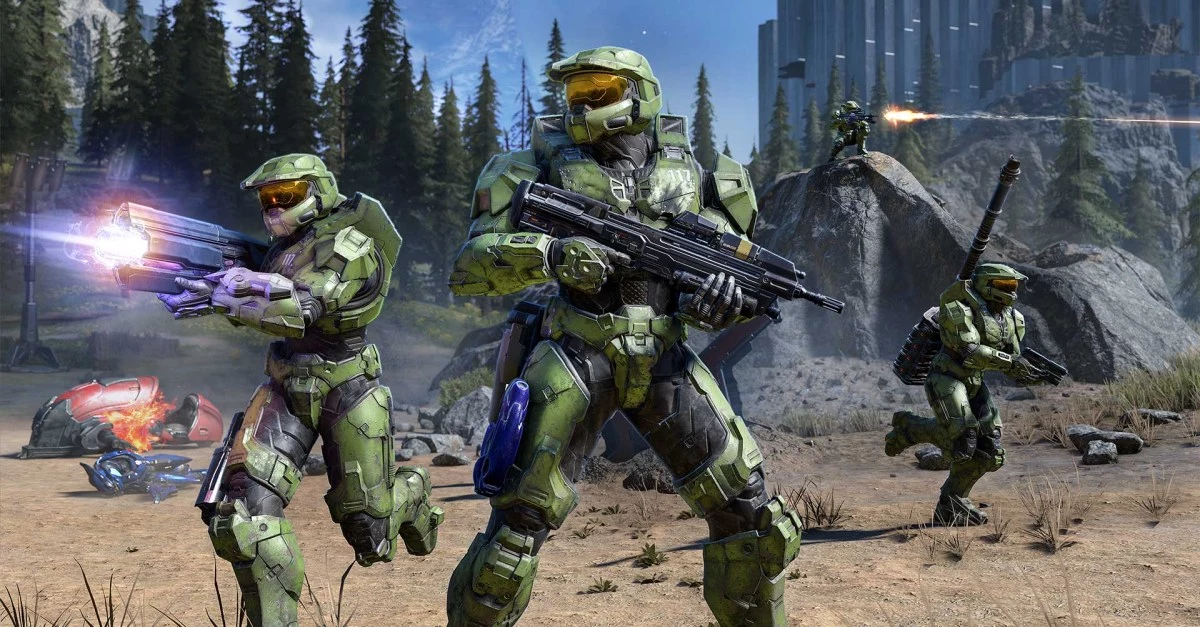

The End of an Era: Halo Infinite’s Final Bow and the Dawn of Cross-Platform Ambition
When Microsoft’s 343 Industries announced “Operation: Infinite” as the last major content update for Halo Infinite, it marked more than just the conclusion of a game’s development cycle. It signaled a tectonic shift in the strategy of one of gaming’s most recognizable franchises—a pivot away from hardware exclusivity toward a future where intellectual property, not platform, reigns supreme.
The Live-Service Gamble and Its Limits
Halo Infinite launched in 2021 as Microsoft’s boldest foray into the live-service arena, promising a decade-long, ever-evolving multiplayer experience. The vision was clear: position Halo as a perennial, free-to-play juggernaut, echoing the successes of Fortnite and Destiny. Yet, less than three years later, the experiment is winding down, with Infinite entering maintenance mode and its development resources redeployed.
The reversal underscores the precarious economics of live-service models. Sustained engagement is the lifeblood of such platforms, and when momentum falters, the business case can evaporate swiftly. Infinite’s custom Slipspace engine, while ambitious, proved cumbersome and costly to iterate. Feature velocity lagged behind industry expectations, and the technical debt mounted. The decision to sunset major updates is as much a technological admission as a financial one: the tools and infrastructure underpinning Infinite were ill-suited to the rapid, cross-platform iteration now demanded by the market.
Recasting Halo: From Console Anchor to Trans-Platform Powerhouse
The next chapter, “Halo: Campaign Evolved,” is slated for a 2026 release on both Xbox and PlayStation—a first in the franchise’s storied 22-year history. This move is emblematic of Microsoft’s evolving philosophy. Where once Halo was the ultimate Xbox differentiator, it is now being repositioned as a revenue engine, unbound by hardware loyalties.
This is not an isolated case. Recent multiplatform releases like Minecraft Legends and Hi-Fi Rush, alongside anticipated Activision Blizzard titles, reflect a broader shift within Microsoft Gaming. The calculus is straightforward: the PlayStation 5’s installed base exceeds 50 million units, presenting a lucrative audience for $70 premium releases and ongoing microtransactions. The lure of incremental software margins now outweighs the traditional logic of exclusivity.
Behind the scenes, this transition is enabled by a likely migration to industry-standard engines—Unreal Engine 5 is widely rumored—allowing for more agile development and simultaneous deployment across platforms. The wind-down of Infinite also liberates live-ops expertise and cloud infrastructure, assets that can be redeployed within Microsoft’s Game Pass ecosystem, bolstering analytics and cross-title engagement.
Industry Reverberations: The New Rules of Platform Competition
Microsoft’s strategy is not unfolding in a vacuum. The industry at large is recalibrating its approach to both live-service ambitions and platform exclusivity:
- Platform Agnosticism: Sony, too, is exporting its crown jewels to PC, with titles like The Last of Us and Horizon. The era of the walled garden is giving way to a marketplace where content universality trumps hardware lock-in.
- Live-Service Retrenchment: EA’s tempered ambitions for Battlefield 2042 and Ubisoft’s delays for Division Heartland echo Microsoft’s own move. Publishers are rediscovering the value of high-fidelity, finite campaigns—experiences that can be expanded if, and only if, audience appetite persists.
For competitors, the implications are profound. Sony must now contend with the erosion of hardware-led differentiation as Microsoft’s IP lands on PlayStation. Meanwhile, the likes of Epic and Valve stand to benefit as more AAA content flows into their ecosystems, accelerating the dissolution of first-party silos.
The Road Ahead: Metrics, Monetization, and Market Dynamics
As Microsoft reallocates capital and talent, the focus shifts from monthly active users in a single title to aggregate engagement across the portfolio. Expect to see more cross-platform remasters, day-one Game Pass launches, and a reimagining of subscription tiers to capture both nostalgia and new demographics.
Key signals will shape the next phase:
- Engine Transition: Confirmation of a move to Unreal Engine 5 would cement Microsoft’s embrace of industry-standard tooling.
- Legacy IP Expansion: Announcements of additional classics—perhaps a Gears of War Collection—on PlayStation would further validate the multiplatform thesis.
- Game Pass Evolution: Adjustments in tiering or pricing, timed to major launches, could redefine the economics of subscription gaming.
The retirement of Halo Infinite’s live-service ambitions is not a retreat but a recalibration. Microsoft is trading the volatility of a single flagship for the durable, cross-platform monetization of its most iconic properties. In a market defined by ballooning development costs and plateauing hardware sales, the winners will be those who can transcend platform boundaries and monetize universality. The future of gaming belongs not to the console, but to the content that commands loyalty wherever it is played.

 By
By

 By
By
 By
By
 By
By


 By
By