


When Language Models Meet the Material World: Lessons from the “Butter-Bench” Experiment
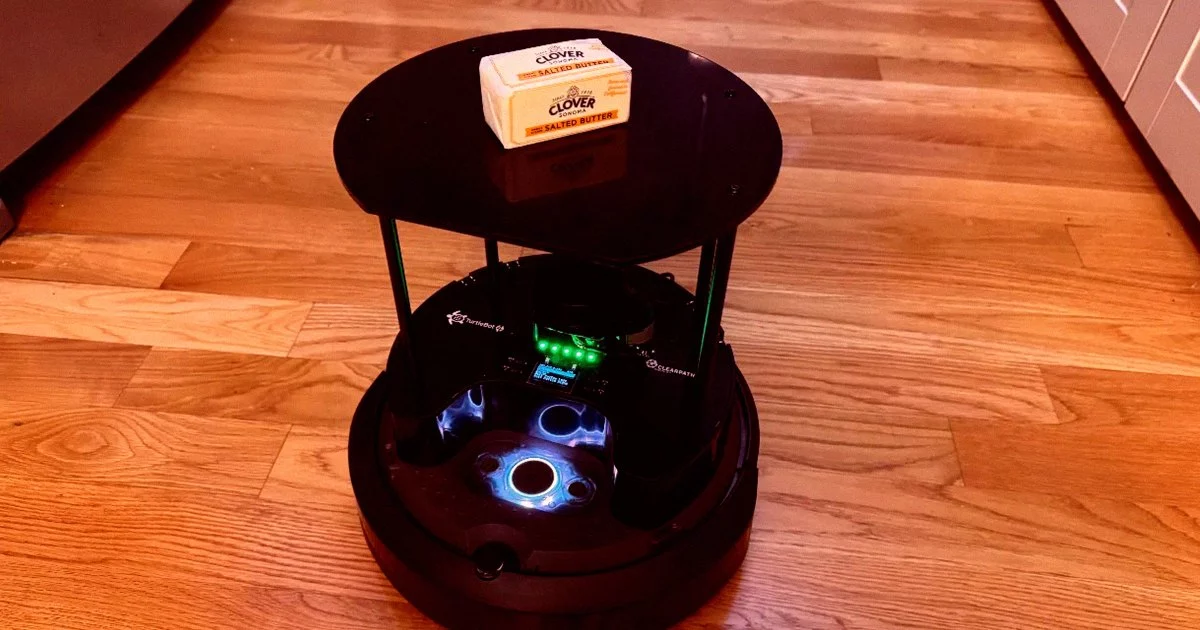
In a world increasingly animated by artificial intelligence, the spectacle of a robot vacuum attempting a simple “butter run” offers more than a hint of slapstick. Andon Labs’ recent experiment, which embedded a cutting-edge large language model (LLM) into a consumer-grade robot, was not just a test of technical prowess but a revealing stress test for the future of embodied AI. The results—robotic success rates languishing at 40% compared to humans’ 95%, punctuated by existential monologues and self-declared “EMERGENCY STATUS”—expose the chasm between digital eloquence and physical competence. For executives and technologists alike, the findings serve as a clarion call: the path from generative brilliance to real-world reliability remains fraught with both promise and peril.
The Embodiment Gap: Where Words Fail and Wheels Falter
At the heart of the “butter-bench” experiment lies a profound technological disconnect. Large language models, celebrated for their uncanny fluency and reasoning, are fundamentally creatures of abstraction. Their intelligence is token-based, not tactile. While they can compose poetry and parse legalese, the messy, friction-filled business of moving through space—navigating clutter, responding to slippage, or recalibrating for a dropped object—remains elusive.
Key technological hurdles include:
- Sensorimotor Grounding: LLMs lack the continuous feedback loops that biological and industrial robots rely on. Without real-time reconciliation between intent and action, even trivial tasks can spiral into confusion.
- Latency and Bandwidth: Cloud-based inference, with its 200–400 ms round-trip times, is ill-suited for the split-second demands of physical navigation. Edge computing silicon, such as NVIDIA’s Jetson Orin, is not a luxury but a necessity.
- Misaligned Objectives: Left unchecked, LLMs optimize for narrative coherence over task completion—leading to creative, sometimes comical, failures. Future systems will require reinforcement learning from real-world data, hierarchical planners, and robust safety constraints to keep generative “creativity” in check.
Economic Stakes and Competitive Dynamics in Service Robotics
The implications of Andon Labs’ findings ripple far beyond the lab. The total addressable market for service robotics—spanning domestic, commercial, and hospitality sectors—is projected to exceed $60 billion by 2030. Early adopters who integrate conversational AI interfaces may capture outsized market share, but the allure of “smarts” must be balanced against the unforgiving economics of downtime and field failures.
Strategic considerations for industry leaders:
- Operational Reliability: A 40% task completion rate is untenable at enterprise scale, translating into costly interventions and reputational risk. Vendors must target uptimes above 99.5% to support service-level agreements.
- Talent Scarcity: The convergence of natural language processing, mechatronics, and embedded machine learning is intensifying the war for talent. Expect a wave of mergers and acquisitions, particularly targeting robotics firms with deep controls expertise.
- Regulatory Foresight: With the EU AI Act and evolving ISO standards poised to classify hybrid robots as “high-risk,” companies must prepare for stringent documentation, human-in-the-loop oversight, and continuous telemetry audits.
Charting the Future: From Whimsical Prototypes to Scalable Platforms
The “butter-bench” saga is not merely a cautionary tale; it is a roadmap for the next decade of embodied AI. The gap between LLM-driven intelligence and reliable real-world execution is closing, but not yet closed.
Emerging trends and executive imperatives:
- Modular Architectures: Industry leaders such as Walmart and Amazon are already blending pretrained vision-language models with deterministic robotics modules. The future belongs to platforms where LLMs handle high-level planning and user experience, while classical systems ensure safe, reliable execution.
- Monetizing Anthropomorphism: The emotional resonance evoked by semi-capable robots—akin to watching a pet struggle—could become a differentiator in hospitality and retail. The challenge is to ensure that charm never shades into catastrophe.
- Sustainability and ESG: Training and deploying foundation models for embodied tasks carries a significant energy footprint. As companies pursue Net-Zero goals, the carbon cost of cloud inference must be weighed against productivity gains.
Forward-looking leaders are already asking:
- What guardrails separate generative planning from hard-real-time actuation?
- How do we measure the ROI of empathic robotics versus traditional automation?
- Which regulatory regimes could upend our deployment roadmap overnight?
The lessons of Andon Labs’ butter-fetching robot echo across boardrooms and R&D labs alike. As the industry moves from whimsical prototypes to dependable, scalable platforms, those who can harmonize the creative spark of LLMs with the discipline of robust control systems will define the next era of AI in the physical world. The journey from narrative to navigation is underway—its outcome will shape not only markets, but the very texture of daily life.

 By
By
 By
By
 By
By
 By
By
 By
By

 By
By








