

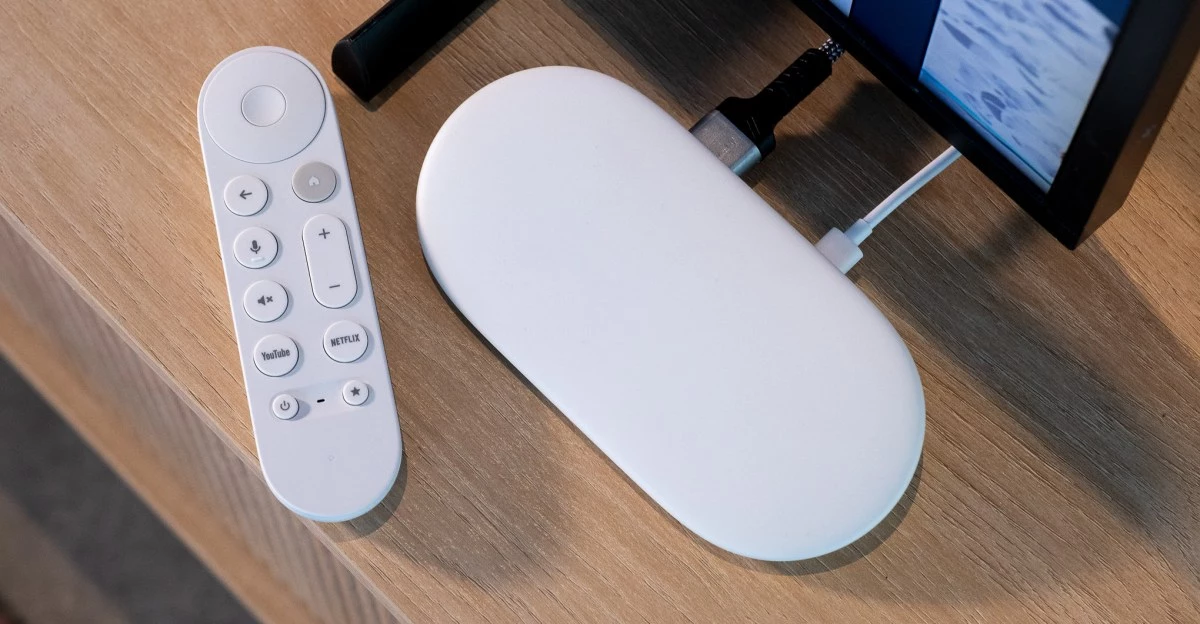

Google’s 4K TV Streamer: The Living Room as Strategic Battleground
The living room, once the domain of passive entertainment, is rapidly becoming a high-stakes theater for tech giants vying to define the future of connected living. Google’s latest move—a historic price drop to $74.99 for its 4K TV Streamer—signals not just a holiday promotion, but a calculated campaign to entrench itself at the heart of the digital home. This device, marketed as a simple media stick, is in fact a Trojan horse for Google’s broader ambitions in ambient computing and smart-home dominance.
Beyond Streaming: A Hub for the Ambient Home
While the 4K TV Streamer boasts all the trappings of a premium AV device—HDR10+, Dolby Vision, Dolby Atmos, and a hardware uplift that doubles RAM and quadruples storage from previous iterations—the true innovation lies beneath the surface. With native support for Matter and Thread, the streamer transforms any television into a fully functional Google Home hub. This is not merely an incremental update; it’s a reimagining of the living room’s role in the connected ecosystem.
Key technical enhancements include:
- Built-in Ethernet: Ensures reliable, congestion-free performance, crucial for dense IoT environments and regions with inconsistent broadband.
- Remote-finding and customizable buttons: Subtle but sticky features that deepen user engagement and reduce churn.
- Matter and Thread radios: These standards-agnostic protocols lower barriers for consumers and partners alike, but also introduce new challenges around brand loyalty and data sovereignty.
The inclusion of these features positions the streamer as an “edge node” in Google’s ambient-computing lattice, quietly gathering data, facilitating control, and reinforcing Google’s search and voice-centric data model.
Economics of Subsidy and the Battle for Ecosystem Control
Aggressive pricing is not an act of charity; it’s a classic playbook move. At $74.99, the streamer likely operates at razor-thin or negative margins, especially when factoring in bill of materials and channel costs. The real profit engine is elsewhere:
- Incremental Google TV advertising inventory
- Play Store app fees
- Voice-commerce and behavioral data monetization
This mirrors the strategy of rivals like Amazon’s Fire TV, but with the added force of Google’s search advertising prowess. The competitive landscape sharpens further when considering Apple’s $129–$149 Apple TV and Amazon’s $139 Fire TV Cube, both of which now look expensive by comparison. For consumers postponing full TV upgrades due to economic headwinds, a sub-$80 device that retrofits existing sets is an irresistible proposition.
Yet, hardware sales are only part of the equation. Omdia forecasts streamer unit sales to grow at a modest 3% CAGR through 2026, underscoring that the real contest is for ecosystem monetization and user engagement, not just device volume.
Regulatory, Privacy, and Strategic Crossroads
The convergence of streaming and smart-home functionality introduces a host of non-obvious dynamics:
- Regulatory compliance: The EU’s 2023 standby-power guidelines favor low-wattage hubs. Embedding a smart-home controller within a TV dongle is an elegant hedge against future energy mandates.
- Privacy optics: Matter’s local-first architecture offers a counterpoint to Google’s cloud-centric analytics. How Google balances local control with its appetite for behavioral data will be closely watched by regulators and partners.
- Cross-domain stickiness: As Android Automotive gains momentum, the prospect of a unified Google Assistant profile across car, TV, and home hints at seamless hand-off experiences—and a level of account stickiness that could rival Apple’s ecosystem gravity.
For executives, the implications are profound. Chief Product Officers must treat low-cost, multipurpose devices as beachheads for broader ecosystem capture, while media and content leaders should negotiate not just for carriage, but for metadata visibility within Google’s curated discovery layers. IoT vendors face a certification sprint to ensure compatibility, and investors would be wise to monitor post-holiday attachment rates as a bellwether for Google’s ability to translate hardware penetration into advertising and smart-home revenue.
The discounted Google 4K TV Streamer is more than a seasonal stocking stuffer—it’s a strategic node in the evolving lattice of ambient computing. Those who grasp the layered implications, from ad monetization to IoT standardization, will be best positioned to navigate the next wave of connected-living convergence.

 By
By
 By
By

 By
By
 By
By
 By
By

 By
By







