
The Anatomy of a Shutdown: National Parks as a Mirror for Modern Risk
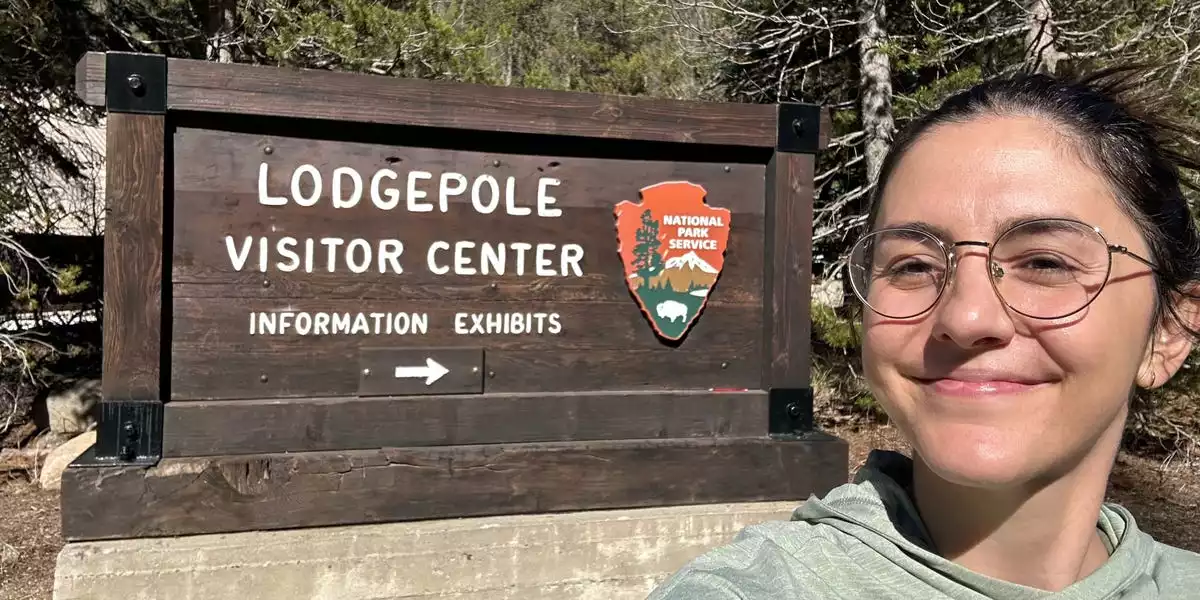
A recent partial federal shutdown cast Sequoia and Kings Canyon National Parks into an unusual twilight—officially open, yet stripped of the government-run scaffolding that gives order and context to the wilderness. Visitor centers, fee booths, and ranger stations stood silent, while only the most essential infrastructure persisted, kept alive by concessionaires or the remnants of pre-funded contracts. Despite the absence of rangers and interpretive programs, the parks’ trails and vistas drew steady foot traffic, underscoring a profound truth: the public’s hunger for authentic natural experience is inelastic, even as the supporting edifice proves fragile.
This episode exposes a triptych of forces shaping the future of public lands: the surge in digital self-reliance, the precariousness of local economies yoked to federal stability, and the mounting operational risk to ecosystems when stewardship is decoupled from presence.
Economic and Operational Fault Lines: When Nature Meets Volatility
The shutdown’s economic undercurrents ripple far beyond the park gates. Gateway communities—those towns whose economies rise and fall with the tides of visitation—enjoyed a temporary reprieve as visitor numbers held steady. Yet, this continuity is deceptive. Research shows that repeat visitation and average guest spend are tightly linked to the very amenities and interpretive programming that vanish during shutdowns. The result is a slow erosion of long-term economic resilience, masked by short-term occupancy rates.
Concessionaires, thrust into the role of de facto operators, kept food, retail, and limited maintenance afloat. This mirrors a broader federal trend: in moments of governmental discontinuity, private actors step in to bridge the gap, whether in air traffic control or vaccine distribution. Yet, the absence of fee collection during shutdowns halts the flow of revenue earmarked for deferred maintenance—feeding a backlog that already exceeds $22 billion across the National Park System.
The regional economic multiplier is striking: every dollar spent within park boundaries generates roughly $1.60 in surrounding counties. Shutdowns, therefore, propagate indirect shocks to lodging, hospitality, and supply chains—tightening labor markets precisely when margins are thinnest.
Technology at the Edge: Digital Self-Reliance and Conservation’s New Frontiers
The shutdown’s most telling innovation may be the public’s pivot to digital self-reliance. With ranger stations dark, visitors turned to downloaded maps and offline guides—a quiet validation of edge-device resilience in low-connectivity environments. This trend bolsters investment theses in mesh networking, LEO satellite broadband, and content caching, not only for tourism but for disaster response and remote logistics.
Yet, the absence of on-site rangers also exposes a new frontier for AI-driven stewardship. Imagine solar-powered virtual ranger kiosks, blending edge AI, natural-language models, and computer vision to provide real-time safety alerts and interpretive content. Remote monitoring technologies—sensor arrays, camera traps, drone overflights—already trialed in wildfire detection, could become low-cost force multipliers, maintaining a watchful eye without trampling the wilderness ethic, provided privacy and soundscape standards are respected.
Rethinking Risk and Resilience: Strategic Imperatives for the Experiential Economy
The volatility of federal appropriations is no longer a background risk; it is now a core metric for enterprises with assets adjacent to public lands. Energy, broadband, and carbon-credit ventures must now model Congressional gridlock alongside extreme weather and cyberattacks. For ESG-driven investors, repeated shutdowns are governance red flags, eroding the biodiversity assets that underpin both recreation and natural-capital accounting frameworks.
The ability of concessionaires to maintain operations during shutdowns may accelerate a migration toward outcome-based public-private partnerships, tying payments to visitor satisfaction, ecological integrity, and digital service uptime. This is not merely a stopgap—it is a blueprint for a more resilient, adaptive stewardship model.
The resonance extends well beyond the parks. In hospitality and traveltech, the shutdown is a proof point for location-agnostic, offline-first app architecture—paralleling challenges in emerging-market tourism and Arctic maritime routes. For insurers, the prospect of parametric products triggered by federal shutdowns offers a new layer of financial resilience. Climate analytics, too, must adjust wildfire risk models to account for periods when park staff are absent and mitigation efforts stall.
Transforming Disruption into Opportunity: A Blueprint for Stakeholders
The lessons of this episode are clear, and the path forward is actionable:
- Diversify the Information Stack: Rapid deployment of offline-capable guides, enriched with GIS data and AI chat, will win loyalty and yield valuable behavioral data.
- Build Redundant Stewardship Layers: Drones and IoT sensors can detect unauthorized activity or environmental stress, co-financed by public innovation funds and private capex.
- Hedge Against Policy Shocks: Gateway businesses should explore contingent credit and parametric insurance tied to park closures, leveraging collective bargaining to lower costs.
- Tokenize Maintenance: Blockchain-verified “Adopt-a-Trail” contracts can unlock transparent, continuous micro-funding, decoupled from federal appropriations.
- Recalibrate ESG Narratives: Asset managers must treat shutdowns as material governance events, adjusting stewardship strategies to safeguard natural-capital dependencies.
In the crucible of federal dysfunction, the experiential economy is discovering new reserves of resilience and innovation. The challenge now is to convert episodic disruption into lasting infrastructure, smarter service models, and a more sophisticated approach to risk—ensuring that the wild places at the heart of the American imagination remain both accessible and protected, no matter the political weather.

 By
By
 By
By
 By
By
 By
By
 By
By