
A New Era of Parental Oversight: Meta’s Calculated Bet on AI Safety
Meta’s latest announcement—tiered parental controls for Instagram’s AI chatbots—signals a decisive shift in how tech giants approach youth safety in the age of generative AI. Arriving in early 2024 for English-speaking families in the US, UK, Canada, and Australia, this feature is more than a patch; it is an architectural reimagining of digital guardianship, engineered in direct response to mounting regulatory scrutiny and societal concern over minors’ online welfare.
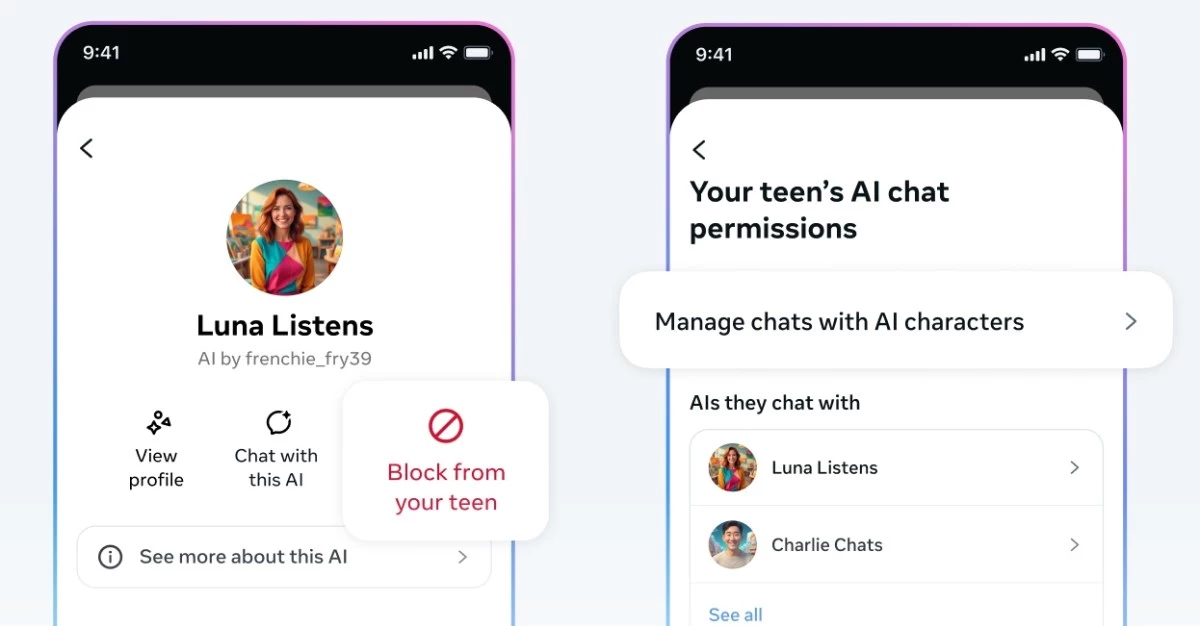
At its core, the new system empowers parents with granular authority: the ability to block AI assistants entirely, restrict access to specific AI “characters,” or permit usage under a watchful, if abstracted, eye. The dashboard’s high-level summaries of conversation themes—deliberately designed to preserve message privacy—invite parents into the digital lives of their teens without crossing the line into surveillance. This is a delicate dance: fostering trust, not eroding it.
Engineering Trust: The Technical and Strategic Blueprint
Meta’s approach represents a fundamental evolution in AI governance. Where traditional content moderation has been reactive—flagging and removing harmful material after the fact—this model is preemptive, embedding age-based policy enforcement directly into the conversational logic of AI. The implications are profound:
- Context-Sensitive AI Governance: Moderation becomes an ex-ante design principle, a baseline expectation as generative AI permeates youth-centric platforms.
- Dual-Objective Safety Models: The AI must walk a tightrope, balancing robust safety filters with enough pedagogical utility to remain engaging and informative for teens.
- Privacy-Preserving Summarization: The challenge of providing parents with actionable insights—without exposing personal details—demands sophisticated summarization algorithms, pushing the boundaries of privacy-preserving AI.
This is not merely a compliance exercise. By centralizing oversight tooling, Meta is constructing a trust infrastructure that could soon span its entire ecosystem—Facebook, WhatsApp, and beyond. Such infrastructure preempts external audits and positions Meta to set industry standards, subtly shifting the competitive landscape.
Regulatory Winds and Economic Stakes
The timing is no accident. Meta’s advertising-driven business model is acutely sensitive to reputational risk, especially as lawmakers in the EU, UK, and US contemplate sweeping child safety legislation. The specter of multi-billion-dollar fines and advertiser flight looms large. But regulatory compliance is not just about risk mitigation—it is fast becoming a competitive differentiator.
- Early Institutionalization: By moving first, Meta can absorb the cost of compliance at scale, raising the bar for smaller rivals and potentially reshaping the economics of entry.
- Blueprint for Monetization: Today’s safety features could underpin tomorrow’s premium guardianship tiers, educational partnerships, or bundled “safe AI” packages—echoing monetization strategies seen in Apple’s Screen Time and Snapchat’s parental insights.
The interplay between data minimization and insight is especially notable. Even as Meta abstracts conversation data to protect privacy, the aggregated summaries feed its pattern-recognition engines, reinforcing its data advantage while presenting a privacy-forward face to the world.
Industry Ripple Effects and Strategic Takeaways
Meta’s move is a harbinger for the broader industry. As AI assistants become fixtures in education, gaming, and even smart-home devices, the expectation of robust, configurable parental controls will become table stakes. This shift is already catalyzing new markets:
- Plug-and-Play Safety Modules: Startups specializing in modular parental safety tools are likely to attract venture capital and enterprise partnerships.
- Third-Party Attestation: Independent validation of youth-safety benchmarks—akin to SOC-2 in cloud security—will emerge as a new form of trust currency.
- Behavioral Moderation: The focus is expanding from content removal to shaping the very nature of AI-user interactions, a trend that will inform forthcoming international guidelines on AI risk management.
For decision-makers, the message is clear. Building parental controls and age-aware guardrails at the foundational API layer, rather than as afterthoughts, is now a strategic imperative. Educational publishers, telecom operators, and institutional buyers will increasingly demand “safe AI” integrations, creating new partnership opportunities and revenue channels.
The rise of “AI policy engineers”—professionals who translate legal mandates into model constraints—underscores the growing complexity and interdisciplinary nature of this challenge. As regulatory requirements fragment across jurisdictions, platforms will need agile, configurable compliance architectures to maintain global reach without fracturing their code bases.
Meta’s parental controls initiative is not simply a technical upgrade or a regulatory box-check. It is a calculated investment in reputational capital and compliance scalability—a recognition that, in the next wave of consumer AI adoption, trust is the ultimate differentiator. Those who treat responsible AI as a core product feature, and find ways to monetize the resulting trust, will shape the future contours of the digital landscape.

 By
By
 By
By
 By
By




 By
By