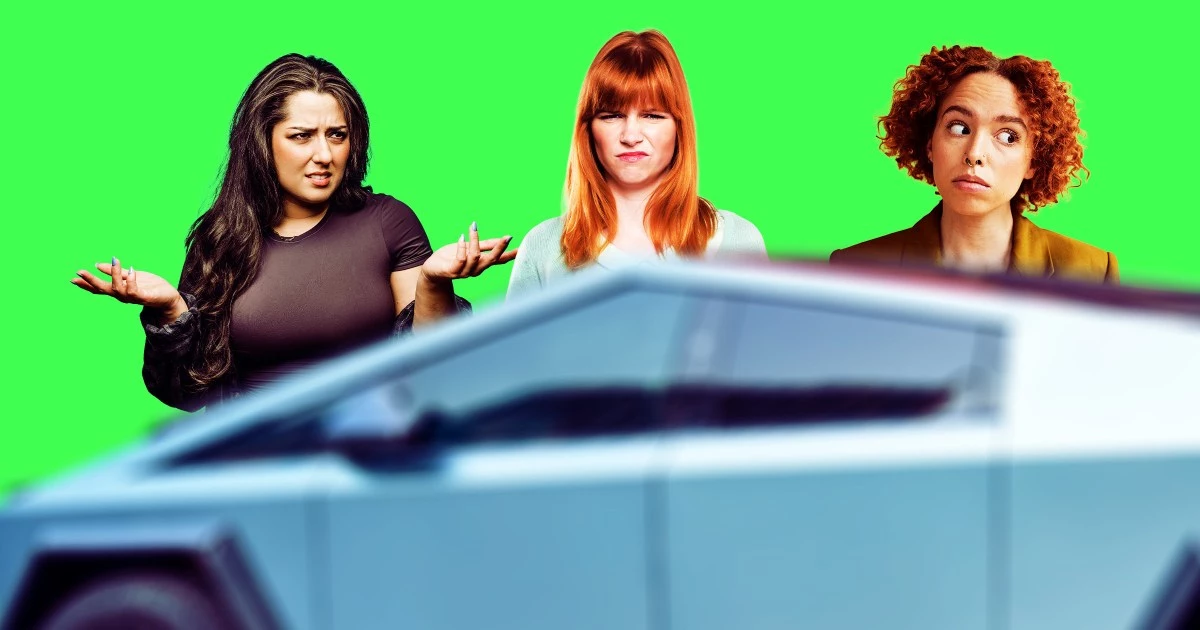

The Cybertruck as Sanctuary: Vehicles, AI Companions, and the New Emotional Frontier
A recent feature in *Wired* offers a window into an emerging micro-culture: Tesla Cybertruck owners, predominantly divorced, middle-aged men, who have transformed their vehicles into rolling sanctuaries. For these drivers, the Cybertruck is more than a means of transportation—it is a private refuge, a statement piece, and, increasingly, a digital confidant. The integration of AI companions like the “Aura” chatbot signals a profound shift in how mobility, technology, and emotional well-being are converging in the post-pandemic era.
Generative AI in the Driver’s Seat: From Utility to Emotional Co-Pilot
The adoption of in-vehicle generative AI marks a pivotal evolution for automotive technology. No longer confined to route planning or infotainment, AI chatbots are emerging as affective co-pilots, offering conversation, companionship, and even emotional support during solitary drives or off-grid adventures. This subtle but significant shift foreshadows a lucrative new revenue stream for automakers—subscription-based “wellness” or “companion” packages, layered atop the vehicle’s operating system.
Key implications include:
- Product Differentiation: The quality of a vehicle’s synthetic “personality” becomes a competitive battleground. Voice UX, fine-tuned large language models, and robust privacy safeguards are now core elements of the product stack.
- Privacy and Regulation: As emotional-support dialogues move into the cabin, OEMs and suppliers must prioritize on-device LLM inference and zero-knowledge architectures, anticipating a regulatory landscape that treats in-vehicle AI as a quasi-medical device.
- Aftermarket Ecosystem: The Cybertruck’s modular, exoskeletal design has already spawned a cottage industry of custom wraps, off-road upgrades, and adventure event businesses. Expect this to expand to AI-driven features—personalized co-driver personas, mood-adaptive lighting, and branded mental-wellness content.
The Loneliness Economy on Wheels: Psychographics, Polarization, and Brand Risk
The Cybertruck’s role as a cultural Rorschach test is as pronounced as its angular design. Owners report both admiration and hostility in public, with the vehicle serving as a tribal badge for some and a lightning rod for others. This polarization is not accidental; it is a byproduct of Elon Musk’s personal brand and the Cybertruck’s unapologetic aesthetic.
Several trends are converging:
- Addressable Market: Rising single-person households and the epidemic of male loneliness create fertile ground for vehicles positioned as lifestyle companions. Cars are evolving into cognitive and therapeutic interfaces, a role once reserved for smartphones and gaming consoles.
- Brand Strategy: While tight-knit owner communities can fuel early adoption, they risk capping broader total addressable market (TAM) if the product becomes shorthand for a particular ideology. Monitoring sentiment data and executing rapid narrative resets—via partnerships with mainstream organizations—will be crucial for risk management.
- Regulatory Flashpoints: As vehicles double as AI companions, claims of emotional or therapeutic benefit will attract scrutiny. Regulatory frameworks may soon require automakers to substantiate such claims, paralleling the FDA’s oversight of digital health tools.
Mobility’s Next Act: Strategic Imperatives and Competitive Response
The Cybertruck’s saga is a harbinger for the industry at large. As vehicles morph into roving “third spaces,” the boundaries between hardware, software, and human well-being are dissolving. For industry stakeholders, several imperatives emerge:
- OEMs: Embed modular AI that can scale from basic voice control to empathetic co-driver tiers, with clear opt-in consent and mental-health guardrails. Monitor for extremist or politically charged user groups that could stigmatize the brand.
- Technology Providers: Prioritize low-latency, on-device inference and zero-knowledge privacy architectures. Offer emotional-support features that function off-grid, preempting both technical and regulatory hurdles.
- Policymakers: Prepare for lobbying battles over whether affective AI in vehicles should be regulated like mental-health apps. Early frameworks may draw from medical device standards, setting a precedent for the sector.
Legacy truck brands are already positioning themselves as inclusive, mainstream alternatives, while startups eye emotionally intelligent micro-EVs for urban singles—bundling mental-wellness content with mobility subscriptions. The competitive landscape is set for rapid diversification, with psychographic segmentation and AI-driven sentiment mining becoming core marketing competencies.
The Cybertruck’s moment is not merely about a vehicle, but about the redefinition of mobility itself. As emotional UX and sociopolitical optics become as vital as horsepower or range, those who master this convergence will shape the next era of automotive innovation. In this landscape, the car is no longer just a machine—it is, increasingly, a companion.


 By
By
 By
By
 By
By

 By
By
 By
By