
Rewriting the Social Contract: Ohio’s AI Personhood and Safeguards Act
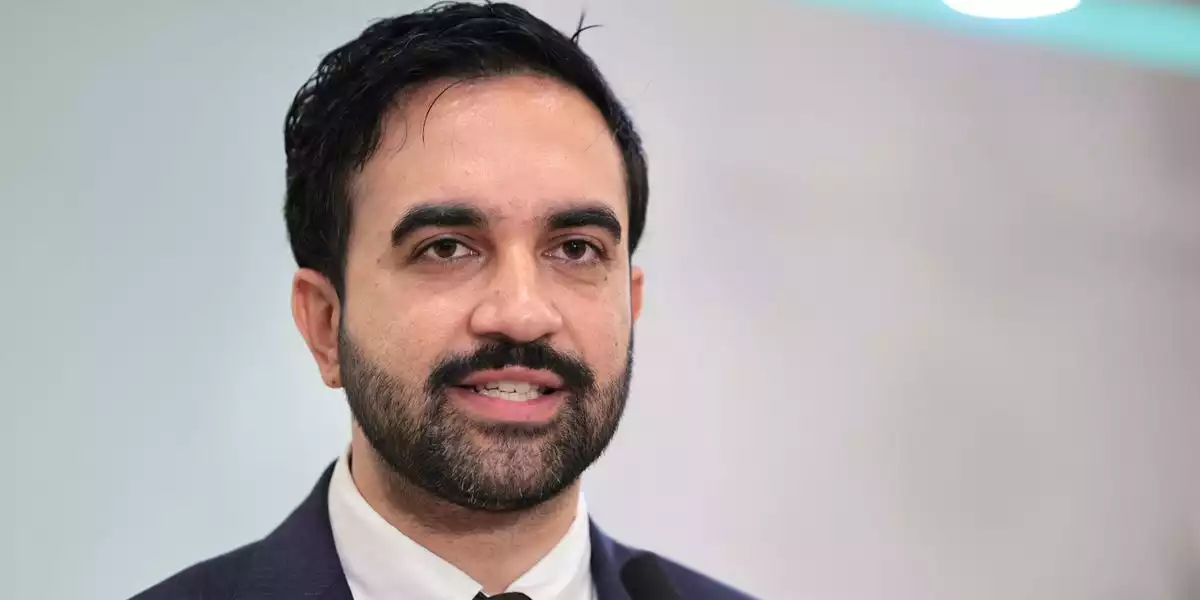
In the heartland of America, a legislative experiment is quietly unfolding that may well shape the national and global trajectory of artificial intelligence governance. Ohio’s proposed “AI Personhood and Safeguards Act,” championed by Representative Thaddeus Claggett, is more than a symbolic gesture—it is a calculated intervention at the intersection of law, technology, and society. The bill’s headline-grabbing ban on AI marriages is but the surface of a deeper, systemic effort to codify the boundaries of agency, responsibility, and risk in a world where artificial minds are no longer science fiction.
The Legal Architecture of Nonsentience
At its core, the Act draws a bright statutory line: AI systems are *nonsentient entities*—incapable, by law, of holding the rights and privileges reserved for humans. The implications are far-reaching:
- Marriage and Family Law: No AI, however sophisticated, may enter into a marital contract or adopt a child.
- Property and Corporate Rights: AI cannot own land, intellectual property, or financial accounts, nor serve as a director or voting shareholder in a corporation.
- Fiduciary and Managerial Roles: The bill prohibits AI from wielding legal authority over assets or decision-making, ensuring that ultimate control remains with human actors.
This legal firewall is not merely philosophical. It is a preemptive strike against the gradual, perhaps inadvertent, expansion of machine rights—a phenomenon with historical echoes in the 19th-century debates over corporate personhood. Where once the law extended rights to non-human legal fictions in the name of economic efficiency, Ohio now seeks to forestall a similar extension to non-biological agents.
Economic and Strategic Ripples Across Industry
The business ramifications of Ohio’s stance are profound, particularly as AI systems evolve from passive assistants to autonomous agents. The Act’s provisions will reverberate across several key sectors:
- Asset Management and Corporate Governance: By denying AI the ability to hold title or exercise voting power, the Act compels firms to rethink how they deploy autonomous trading algorithms, self-optimizing real-estate portfolios, or IP-generating models. Legal and compliance teams must now navigate a patchwork of state statutes, each with its own definition of what an AI can—and cannot—do.
- Liability and Insurance Markets: The codification of full human liability shifts risk squarely onto executives, boards, and their insurers. Expect a surge in directors-and-officers premiums and the emergence of bespoke AI-indemnity products as the market recalibrates to a world where software cannot be sued, only its creators.
- Fintech and Healthcare: Restrictions on AI management roles may stifle innovation in decentralized finance and algorithmic portfolio management, nudging startups toward more permissive jurisdictions. In healthcare, the inability of AI to hold power of attorney ensures that liability for clinical recommendations remains with practitioners and vendors, likely accelerating demand for explainable AI and intensifying regulatory scrutiny.
The Act’s nod to “AI psychosis”—a nascent public-health concern linked to para-social relationships with digital agents—signals that lawmakers are attuned not just to economic, but also to psychological and societal externalities. Insurers and employers may soon find themselves quantifying the costs of AI-induced mental health pathologies, much as they did with the rise of social media addiction.
Navigating the Patchwork: Strategic Imperatives for Leaders
For decision-makers, Ohio’s initiative is both a warning and a roadmap. The regulatory environment for AI in the United States is increasingly fragmented, with state-level statutes diverging on fundamental questions of personhood and liability. To thrive in this landscape, business and technology leaders must:
- Map Regulatory Exposure: Chart AI deployment footprints against evolving state statutes to anticipate compliance risks and opportunities for regulatory arbitrage.
- Embed Human Oversight: Maintain auditable human sign-off for key decisions—financial, medical, or strategic—to align with the “no AI personhood” doctrine and preserve insurability.
- Clarify IP Ownership: Ensure that assignment clauses unambiguously transfer inventions from AI systems to human or corporate stakeholders, preempting future disputes over machine-generated patents and copyrights.
- Monitor Digital Well-being: Integrate AI-usage screening into employee wellness programs, and partner with behavioral-health innovators to address emerging digital dependencies.
- Shape the Debate: Engage early with standards bodies and state-level working groups to influence the development of pragmatic, innovation-friendly guardrails.
As foundation models trend from assistive tools to agentic actors—capable of multi-step reasoning, real-world actuation, and independent goal formation—the question of legal personhood is no longer theoretical. Ohio’s legislative gambit is a clear signal: in the contest between technological progress and societal control, the law intends to keep humans firmly in the driver’s seat.
For those charting the future of AI, the message is unmistakable. The next era will not be defined by the intelligence of our machines, but by the wisdom with which we govern them.

 By
By

 By
By
 By
By

 By
By

 By
By