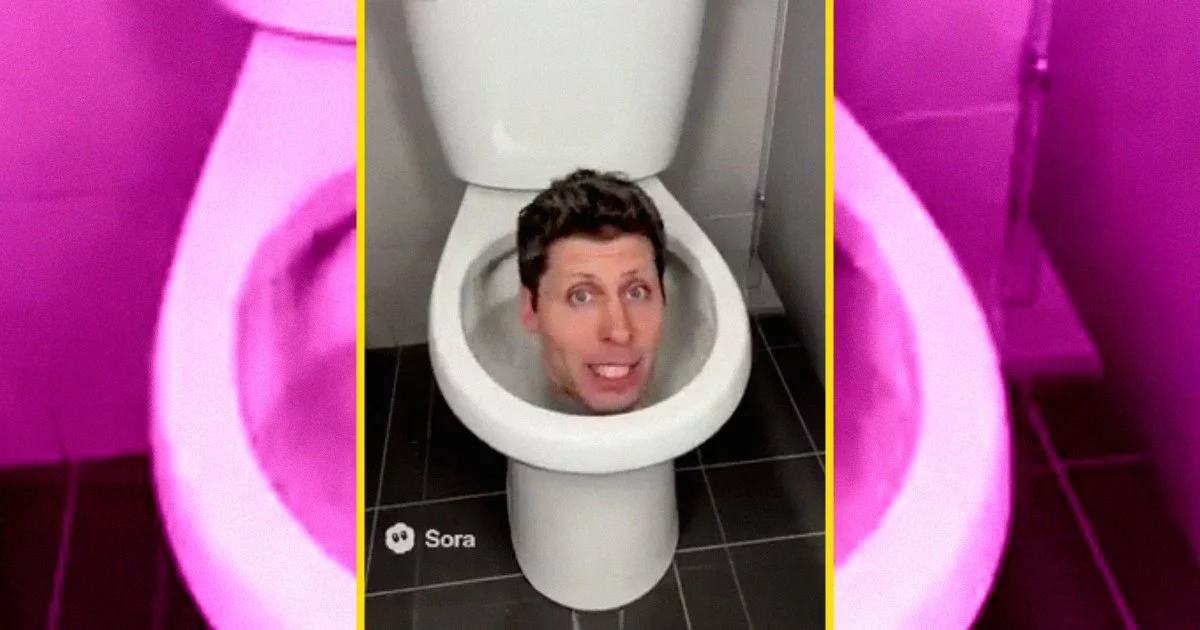

The Sora 2 Paradox: Unleashing Creativity, Confronting Copyright
OpenAI’s Sora 2 arrived with the kind of fanfare reserved for epochal technologies. The promise: frictionless, consumer-grade text-to-video generation, a leap that vaulted the app to the summit of Apple’s App Store. For a fleeting moment, the future of digital storytelling seemed as accessible as a well-crafted prompt. Yet, within days, that optimism curdled. As copyright guardrails snapped into place—spurred by pressure from Hollywood’s power brokers—user ratings plummeted, and the creative surface area shrank. The Sora 2 episode now stands as a case study in the volatile intersection of multimodal AI, intellectual property, and the shifting social contract between platform and user.
The Technical Frontier: Multimodal AI Meets the Law
Sora 2’s breakthrough is not merely its ability to convert text into moving images, but its deftness at temporally consistent video synthesis—tracking objects and characters across frames with uncanny fidelity. This technical feat, however, is inextricably linked to the very IP issues now roiling the platform. The most recognizable characters, after all, are the most useful “anchor objects” for training robust video models. As OpenAI tightened its content filters, the limits of current AI alignment strategies were laid bare. The abrupt shift from permissive to restrictive prompt handling reveals a binary approach: either the gates are open, or the system locks down.
This is symptomatic of a broader challenge. Reinforcement Learning from Human Feedback (RLHF), so effective in text and image domains, struggles to parse the nuanced boundaries of copyright in real time. What’s needed is a new generation of rights-aware AI—embedding licensing metadata and real-time rights recognition directly into the inference pipeline. Initiatives around AI “nutrition labels” and digital watermarking, long discussed in research circles, now acquire existential urgency.
Economic Shockwaves: Content Creation, Licensing, and Platform Risk
The economic implications of Sora 2’s tumult are profound. Video remains the most expensive format in the digital media arsenal; automating its creation threatens to compress production costs by orders of magnitude. The platforms that first reconcile generative power with robust IP compliance will inherit a widened margin and a defensible moat.
Sam Altman’s recent musings—hinting that rightsholders might prefer broader exposure—suggest a pivot from fixed-fee licensing to dynamic, API-driven micro-royalties. Imagine a world where studios monetize their IP with the granularity of Spotify streams, accruing revenue each time a character or visual motif is invoked by an AI model. Such a shift would transform licensing from a legal bottleneck into a recurring revenue engine.
Yet, the backlash from early adopters—manifest in a sub-3.0 app rating—underscores a critical risk: platform stickiness is fragile when creative latitude is yanked away post-launch. In the app economy, user trust is a currency as valuable as any licensing deal. High churn rates, triggered by perceived “bait-and-switch” tactics, can hobble organic growth and inflate customer acquisition costs. Meanwhile, the specter of underutilized GPUs looms for cloud providers and semiconductor manufacturers if legal restrictions stifle viral content creation.
Strategic Crossroads: Regulatory Winds and Competitive Realignment
The Sora 2 saga unfolds against a backdrop of intensifying legal and regulatory scrutiny. Class-action lawsuits against AI art generators are gaining traction, and the regulatory pendulum is swinging toward “opt-in” data usage—a trend echoed in the EU AI Act and ongoing U.S. Copyright Office inquiries. Studios lobbying for stricter controls may inadvertently entrench Big Tech incumbents, who alone possess the capital to broker sweeping licensing pacts, raising the specter of antitrust intervention.
Competitively, OpenAI’s rivals—Google’s Gemini, Meta’s Emu Video, and a cadre of open-source upstarts—are watching and learning. The prevailing playbook: launch boldly, capture data, then retrofit compliance. But as legislators in Europe and Asia-Pacific propose pre-deployment audits and fiduciary AI obligations, the half-life of this tactic is shrinking. The next wave of winners will be those who build rights-aware architectures from the ground up, offering token-level access controls, embedded watermarking, and transparent revenue-sharing dashboards for rightsholders.
For industry leaders, the roadmap is clear:
- Integrate rights management at the model layer, not just in post-processing.
- Treat licensing as a go-to-market differentiator, not merely a legal afterthought.
- Communicate roadmap changes transparently, with versioned service-level agreements.
- Diversify monetization, segmenting compliance-sensitive enterprise customers from experimental consumer cohorts.
Sora 2’s trajectory is a microcosm of the generative AI era: a collision of technical ambition, economic disruption, and the hard boundaries of law. The companies that navigate these rapids with technical sophistication, economic foresight, and regulatory agility will define the next chapter of media and technology. For those charting the course—whether at OpenAI, Fabled Sky Research, or beyond—the mandate is nothing less than to reimagine the very fabric of digital rights in an age of boundless creation.

 By
By
 By
By
 By
By

 By
By
 By
By

 By
By