
The Human Bottleneck at the Heart of America’s Skies
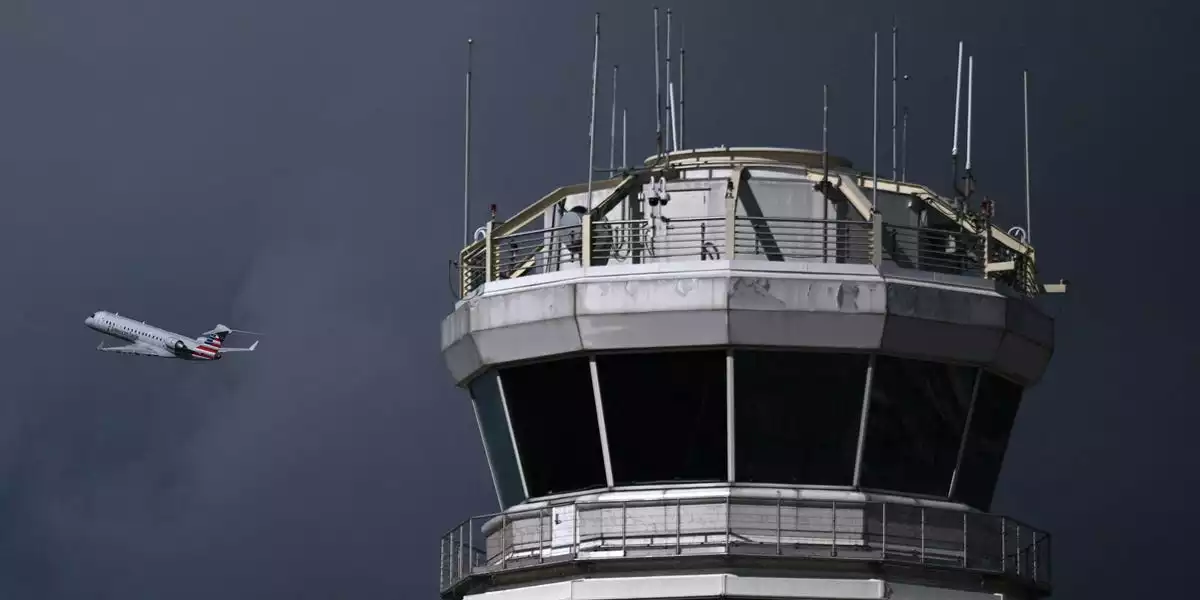
The air above America is thick with more than just the contrails of delayed jets. At Reagan National Airport—and across the nation’s aviation arteries—a crisis has quietly metastasized, revealing the fragile sinews that bind the U.S. airspace. The catalyst: a federal government shutdown that has transformed a chronic shortfall in air-traffic-control staffing into a full-blown operational emergency. Where once only 5% of delays were attributed to personnel shortages, that figure now soars to 53%. The numbers are staggering, but the stories behind them—controllers working 10-hour shifts, six days a week; towers left dark for hours—speak to a deeper, systemic imbalance.
When Technology Meets Its Human Limits
For decades, the Federal Aviation Administration has invested in technological marvels—NextGen airspace redesigns, ADS-B surveillance, and data-link clearances—that have rendered the skies safer and more efficient. Yet, as this crisis demonstrates, the most advanced systems remain inextricably dependent on human operators. Hardware redundancy is robust; human redundancy is not. Certification for new controllers is a multi-year odyssey, and the pipeline offers little elasticity in moments of acute stress.
The operational consequences are immediate and severe. Rolling ground stops ripple from Newark to Nashville, with delays stretching from 30 minutes to over two hours. In the absence of adequate staffing, pilots revert to manual workarounds, stripping away layers of automation and exposing the system to heightened risk. The hidden cyber-risk surface expands: fewer certified eyes on radar screens mean more opportunities for both honest mistakes and malicious interference. The specter of a single point of human failure—unmitigated by digital safeguards—looms over every takeoff and landing.
Economic Shockwaves and Shifting Industry Terrain
The cost of these disruptions is not merely measured in passenger frustration or missed connections. Each minute of delay at a major hub exacts a toll of $70–$80 in direct airline operating expenses. A typical 31-minute delay translates to $2,200 per narrow-body aircraft turn, a figure that multiplies across hundreds of daily departures. These costs inevitably cascade through yield-management algorithms, reshaping fare structures and, ultimately, the consumer experience.
The supply chain, too, feels the tremors. Pharmaceuticals, electronics, and perishables—cargo that depends on the clockwork precision of belly space—face cascading delivery failures. For shippers of high-value goods, alternatives are scarce and costly: charter flights, regional warehousing, and premium-priced contingencies become the new normal. Investors, ever attuned to operational risk, have begun to price in a 5–7% discount on airline and airport REIT equities, a move compounded by rising fuel costs and a strengthening dollar.
Yet the crisis is also a crucible for transformation. Secondary airports, with their lower air-traffic complexity, suddenly become attractive to point-to-point carriers and cargo integrators. Insurance underwriters, recalibrating risk, may soon demand higher premiums for operations during periods of reduced ATC coverage, shifting public-sector risk onto private actors.
Strategic Inflection Points and the Road Ahead
The current disruption is more than a logistical headache; it is a strategic inflection point for the aviation sector. Persistent uncertainty over federal payroll reliability could drive certified controllers toward private-sector roles—unmanned aerial systems, defense contracting, or even overseas air-navigation service providers—accelerating a brain-drain with long-term consequences. The crisis strengthens the mandate for automation: technologies like controller-pilot data link (CPDLC) and fully digital towers, long relegated to pilot programs, now demand urgent, scaled investment as resilience initiatives.
Forward-thinking boards are already stress-testing their operating models for a protracted shutdown, padding network block times and reevaluating crew-time regulations. Some are exploring public-private partnerships to expand the pipeline of certified controllers, perhaps drawing inspiration from the Civil Reserve Air Fleet model. Others are elevating digital-tower solutions from innovation pilots to core infrastructure, building clear ROI cases around resiliency and reduced labor dependency.
The lesson is clear: America’s aviation system, for all its technological prowess, remains tethered to a constrained and vulnerable human resource pool. Executives and policymakers who seize this moment—not as a temporary anomaly, but as a catalyst for structural modernization—will be best positioned to secure operational continuity, safeguard balance sheets, and capture the emergent advantages of a reliability-driven marketplace. As Fabled Sky Research has noted in recent analyses, the future of aviation will belong to those who can harmonize the best of human expertise with the promise of automation, forging a system as resilient as the nation it serves.

 By
By
 By
By
 By
By
 By
By
 By
By


 By
By