
Persona Isolation Reimagined: Firefox Profiles and the New Privacy Frontier
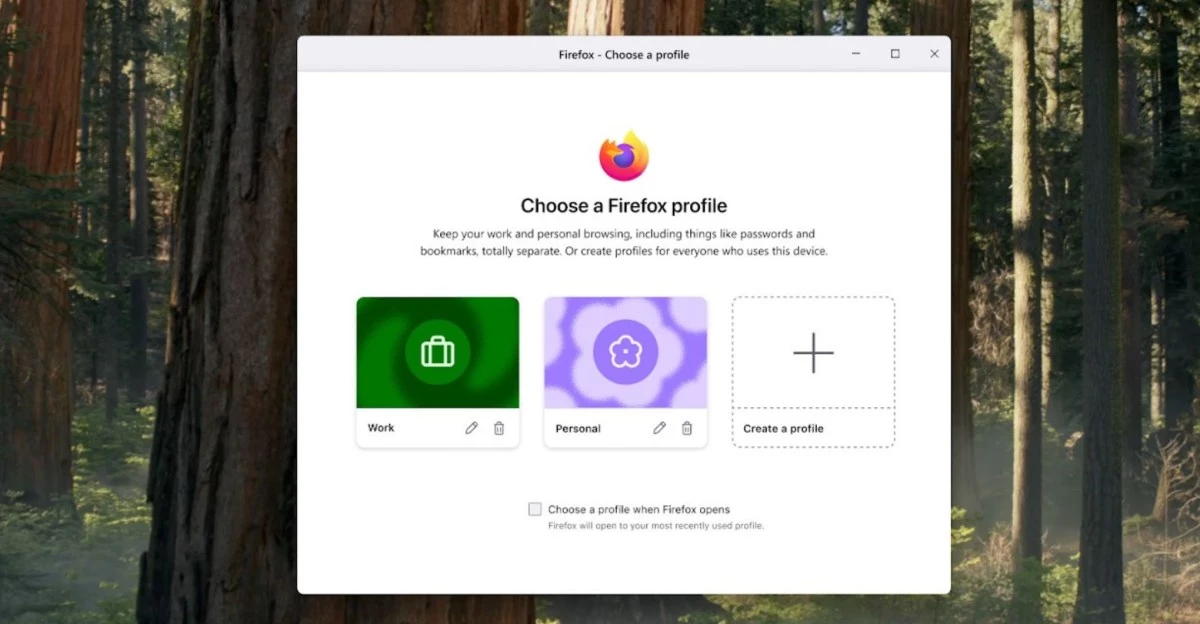
This October, Mozilla will quietly upend a foundational assumption of web browsing. With the rollout of Firefox Profiles, the browser’s familiar tabbed interface will gain an undercurrent of radical compartmentalization: each profile, a self-contained universe, will house its own bookmarks, log-ins, extensions, and browsing history, all walled off from its siblings. What might sound like a modest UX tweak is, in fact, a decisive shift—one that reframes the browser not as a monolithic window onto the web, but as a constellation of discrete, persistent personas.
The Architecture of Digital Selves: From Containers to Complete Segregation
For years, privacy-conscious users relied on “multi-account containers”—a clever but partial solution that isolated cookies and trackers within specific tabs. Firefox Profiles elevates this concept. Now, entire browser instances become sandboxed, each with its own encrypted store of digital artifacts. The implications are profound:
- Local-First Identity Control: Unlike Chrome’s cloud-tethered profiles, Firefox’s approach is resolutely local. No email address, no cloud sync by default—just sovereign, device-bound personas. This “local sovereignty” philosophy sidesteps the risks and dependencies of third-party identity providers.
- Integrated UX, Reduced Risk: By embedding persona switching directly into the browser’s chrome, Mozilla eliminates the need for third-party extensions—a subtle but significant move that reduces both security risks and compliance headaches.
For developers and enterprise architects, the architectural ramifications are equally notable. Parallel sandboxing enables true “clean room” testing environments, invaluable as the industry races to deprecate third-party cookies. The possibility of policy-as-code emerges: IT administrators can now enforce differentiated security postures, such as zero-trust controls or federated identity, at the profile level—without the overhead of virtual machines or complex network segmentation.
Competitive Dynamics: Privacy, Differentiation, and the New Enterprise Edge
The economics of browser development are famously fraught. Mozilla’s revenue remains tethered to its search-engine agreement with Google, even as Chrome dominates market share. Yet, with Profiles, Firefox sharpens its value proposition for a privacy-seeking audience—one that, while smaller, is fiercely loyal and increasingly influential.
- Enterprise Inroads: For regulated sectors—finance, healthcare, legal—where accidental data spillover can be catastrophic, native profile segregation offers a compelling alternative to the status quo of Edge or Chrome. It’s a zero-cost, low-friction way to enforce data boundaries without heavy-handed IT interventions.
- Counter-Positioning: Where Safari’s privacy is locked within the Apple ecosystem and Brave’s innovations skew toward ad-blocking and crypto incentives, Firefox now offers something distinct: privacy without fragmentation, account sprawl, or reliance on add-ons.
This move is not just a defensive play. As contextual computing and AI copilots proliferate, the risk of cross-contamination—of the wrong data leaking into a prompt or workflow—grows. Persona-based boundaries become not just a convenience, but a governance imperative. Regulatory momentum, from the EU’s Digital Markets Act to U.S. state privacy laws, only accelerates the demand for fine-grained, role-separated data controls.
Strategic Implications: AI, Regulation, and the Future of Digital Work
The timing of Firefox Profiles aligns with a broader shift in digital work and AI governance. Hybrid workers, toggling between employer SaaS, side projects, and personal learning, have long struggled with the cognitive and security burdens of context-switching. Profiles offer a frictionless separation mechanism—potentially reducing the need for virtual desktops or complex VPN setups.
For CIOs and CISOs, this presents a strategic opportunity:
- Lightweight Role Separation: Firefox Profiles can supplement or partially replace virtual desktop infrastructure for many use cases. Early pilots could reveal reductions in data intermingling and shadow-IT extension creep.
- Policy Enforcement Hooks: With Mozilla’s open-source ethos, forthcoming APIs may allow for granular, profile-level policy enforcement—certificate pinning, plugin allow-lists, and more—integrated into existing management frameworks.
For marketers and product leaders, the rise of persona isolation signals a coming wave of demand for segmentation across digital products. Attribution models will need to adapt, as cross-context identifiers become less reliable. For investors, the enterprise adoption curve of Profile-driven browsing could spawn new markets in profile management and compliance tooling, while prompting competitive responses from browser incumbents.
The most intriguing question may be how this architecture will intersect with AI. As browser-based AI assistants become commonplace, the ability to guarantee that prompts and outputs remain within the correct persona—never leaking work data into personal contexts, or vice versa—could become a core compliance and trust feature. Fabled Sky Research and others in the AI governance space will be watching closely.
Firefox Profiles is more than a feature; it is a harbinger of a new era in digital sovereignty, privacy, and role-based computing. As the boundaries between work, life, and play blur, the tools we use must evolve to help us draw—and defend—those boundaries with confidence.

 By
By
 By
By
 By
By
 By
By

 By
By

 By
By