
The Lisa Su Playbook: AMD’s Transformation and the High-Stakes Future of Silicon
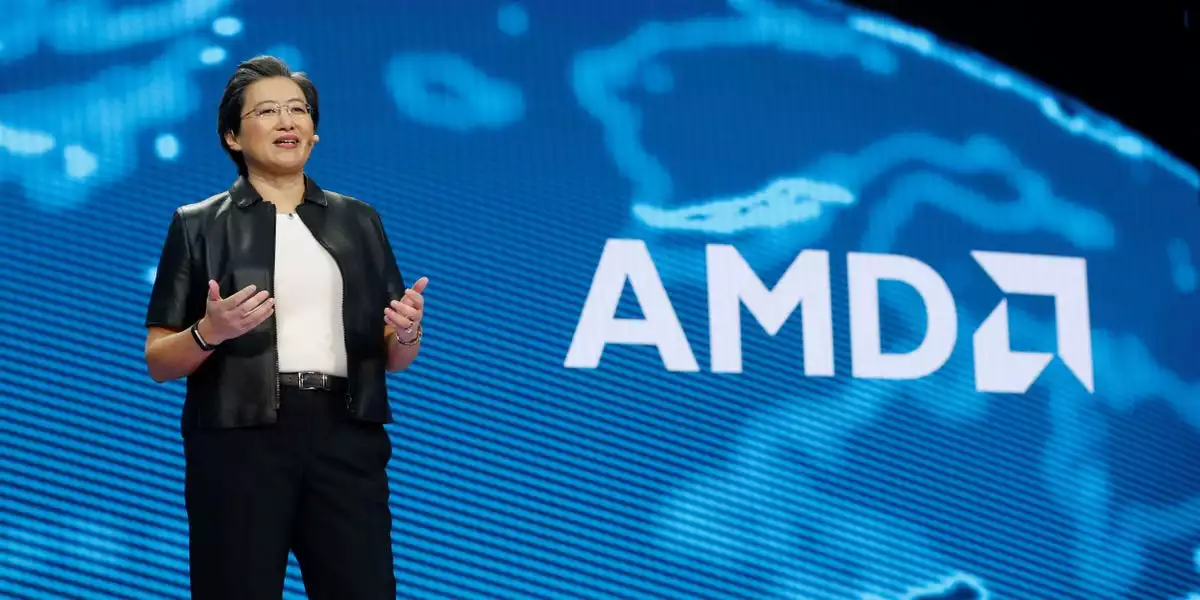
Dr. Lisa Su’s stewardship of AMD is more than a turnaround story—it is a masterclass in modern semiconductor strategy, technical vision, and leadership. Over a dozen years, Su has reimagined AMD from a beleaguered commodity chipmaker into a $270 billion powerhouse, deftly navigating the industry’s tectonic shifts. Her approach, blending architectural innovation with a relentless focus on high-value markets, has not only restored AMD’s relevance but also set new benchmarks for what technical leadership can achieve in the C-suite.
Chiplets, Data Centers, and the New Economics of Silicon
At the heart of AMD’s resurgence lies a radical bet on modular “chiplet” architecture. By decoupling compute and I/O components, AMD sidestepped the yield and cost challenges that plague monolithic designs at the bleeding edge of process nodes. This strategy, initially underappreciated, now resonates profoundly with OEMs and hyperscalers seeking resilience amid geopolitical uncertainty. The ability to multi-source I/O dies on mature nodes, while reserving scarce EUV capacity for compute tiles, has become a quiet but potent lever in the global supply chain.
But the transformation is not just technical; it’s economic. AMD’s deliberate shift from low-margin consumer chips to high-value data center CPUs (notably EPYC) has redefined its addressable market. By elevating average selling prices and targeting workloads—AI, cloud, and HPC—that outpace the PC refresh cycle, AMD has repositioned itself at the epicenter of digital infrastructure. This mirrors a broader industry migration: semiconductors are no longer sold by the unit, but by the value they deliver to specific workloads, a dynamic that increasingly rewards those who control software ecosystems and developer mindshare.
Navigating a Shifting Competitive and Geopolitical Terrain
Yet, AMD’s ascent faces formidable headwinds. The emergent partnership between Intel and Nvidia, once fierce rivals, signals a new era of vertically integrated AI systems. Intel’s foundry ambitions, paired with Nvidia’s CUDA software lock-in, threaten to marginalize merchant silicon providers unless they can rapidly evolve their own software stacks. For AMD, the challenge is twofold: scaling supply chain operations to match Intel’s reach, while closing the gap in AI software and developer tools.
Simultaneously, hyperscale cloud providers—armed with custom silicon like AWS Graviton and Google TPU—are compressing margins just as AMD achieves scale in the server market. These adjacent threats underscore the need for relentless innovation, not just in hardware, but across the entire compute stack.
Geopolitics adds another layer of complexity. U.S.–China export controls have already shaved hundreds of millions from AMD’s revenue projections, with the risk that a quarter of future global datacenter demand may remain out of reach. Meanwhile, the capital intensity of leading-edge nodes—TSMC’s 2nm fabs now demand $25 billion investments—raises existential questions about long-term supply agreements and the ability to compete with deep-pocketed rivals like Apple and Nvidia.
Strategic Levers and Imperatives for Industry Leaders
For decision-makers, the AMD playbook offers critical lessons and actionable imperatives:
- Procurement and Pricing: Expect a bifurcated regime, with premium pricing on AI-optimized EPYC variants and aggressive discounts on legacy desktop SKUs. Budget strategies must adapt accordingly.
- Ecosystem Alliances: The Intel–Nvidia axis is consolidating power around closed AI platforms. Enterprises and ISVs should consider partnering with AMD on open frameworks to avoid lock-in and foster strategic flexibility.
- M&A and Software Investments: Watch for AMD to pursue acquisitions in network-on-chip IP or AI orchestration software—moves essential to bridging the CUDA gap and enhancing platform stickiness.
- Supply Chain Resilience: Given the volatility of export controls, diversification of node sourcing and onshore advanced packaging are prudent hedges against geopolitical shocks.
- Boardroom Technical Fluency: The era of the “business-only” CEO is fading. Su’s example highlights the premium markets now place on deep engineering competence at the highest levels of governance.
Beyond these tactical moves, there are subtler, non-obvious vectors shaping the next phase. Heterogeneous compute architectures, enabled by chiplets, promise significant reductions in data center power consumption—an ESG lever as cloud operators face tightening emissions targets. Talent pipelines, such as those Su has cultivated through academic partnerships, are becoming as critical as EUV tools in a market where human capital is the ultimate bottleneck. And the integration of adaptive SoCs, following the Xilinx acquisition, positions AMD to capture “AI at the edge” opportunities in 5G and industrial IoT—domains where the traditional Nvidia advantage is less pronounced.
The semiconductor industry is entering a new epoch, one defined as much by software ecosystems, global politics, and capital allocation as by transistor counts. AMD’s journey under Dr. Lisa Su offers a blueprint for navigating this complexity—a testament to the power of architectural vision, market discipline, and technical leadership in rewriting the rules of the game. As the landscape realigns around AI-centric, heterogeneous compute, those who internalize these lessons will be best positioned to seize outsized value in the cycles ahead.

 By
By
 By
By

 By
By
 By
By
 By
By