
The Magic 8 Pro: A Catalyst for Edge AI and the Reimagined Smartphone Experience
In a market often accused of incrementalism, Honor’s unveiling of the Magic 8 Pro marks a pronounced inflection point—one where hardware, silicon, and software coalesce to redefine the smartphone’s role as both a personal assistant and creative studio. The device’s debut is not merely a showcase of technical bravado; it is a harbinger for the next era of mobile intelligence, where the boundary between user and device blurs under the auspices of edge-first AI and tactile interaction.
Engineering Intelligence: The AI Button and Snapdragon 8 Elite Gen 5
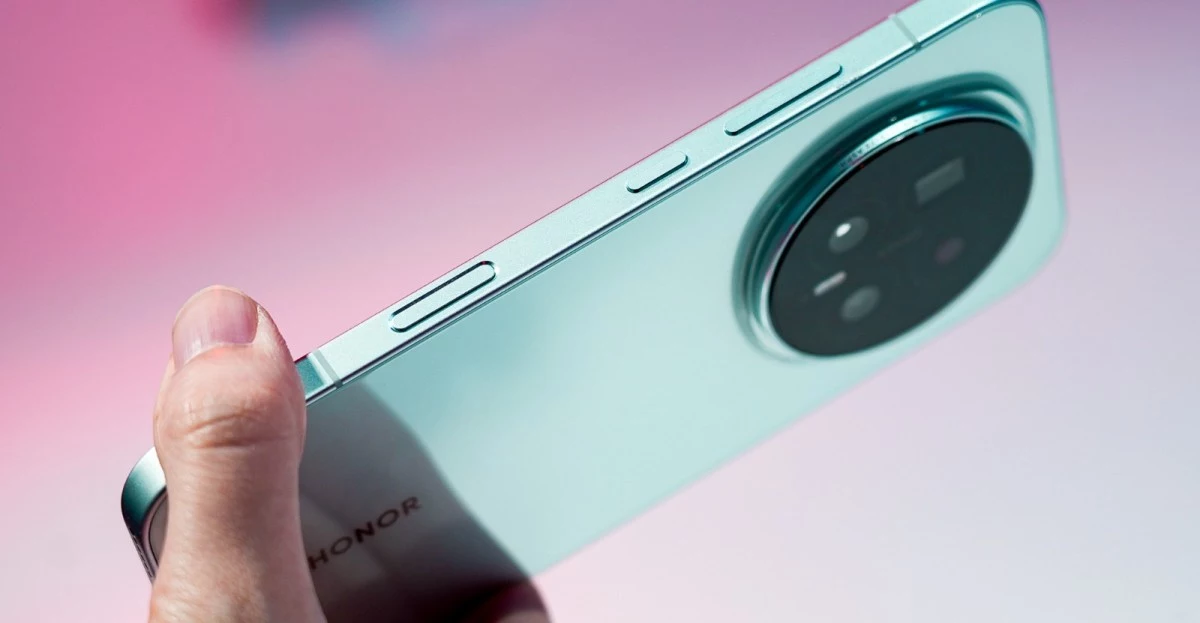
The Magic 8 Pro’s most arresting physical feature is a seemingly simple addition: a dedicated, side-mounted AI button. This is more than a nod to Apple’s Action Button—it is a deliberate architectural statement. By elevating AI from a passive, background process to a first-class user interface element, Honor signals a paradigm shift: intelligence is no longer summoned by voice alone, but by touch, context, and intent. This hardware trigger is the vanguard of a new human-machine interface (HMI) model, where context-aware large language models (LLMs) run locally, preserving privacy and responsiveness, and only escalate complex queries to the cloud.
Underpinning this leap is Qualcomm’s Snapdragon 8 Elite Gen 5, a system-on-chip that embodies the intensifying arms race in mobile silicon. Leveraging a 4 nm process and dual NPU clusters, the chip reportedly doubles TOPS-per-watt efficiency over its predecessor, closing the energy gap with Apple’s A-series and outpacing MediaTek’s Dimensity 9300 in sustained AI throughput. For Honor, this silicon not only delivers raw speed but also unlocks the flexibility to deploy region-specific foundation models—Baidu’s Ernie in China, open-weight Llama derivatives in Europe—tailoring intelligence to local expectations and regulatory climates.
Imaging Innovation: Computational Optics and Generative Media
Where many flagships tout megapixels, the Magic 8 Pro’s imaging stack tells a deeper story. The shift to an 85 mm-equivalent periscope lens, paired with a 200 MP sensor, is not mere specsmanship. It is a calculated move to dominate long-range portraiture and hybrid-zoom photography—domains where computational optics can outpace traditional hardware. If Honor’s multi-frame AI super-resolution is as robust as early samples suggest, the company stands poised to challenge Samsung’s S-Ultra series, carving out a defensible niche in a commoditized landscape.
Yet, the imaging ambitions do not end at capture. The introduction of the “Magic Color” AI restyling tool offers a tantalizing glimpse into Honor’s broader generative-media strategy. This feature, which enables on-device creative transformations, hints at a future where the smartphone is not just a camera, but a fully equipped content studio. In an era dominated by short-form video and social storytelling, such tools could become powerful levers for brand loyalty and monetization—think watermark-free exports, cloud render credits, and subscription-based creative suites.
Market Dynamics: Premium Positioning and Strategic Alliances
Honor’s decision to price the Magic 8 Pro above €1,000 is a bold assertion of its intent to compete head-to-head with Apple and Samsung. This move comes at a time when global handset volumes are contracting, yet average selling prices are rising as consumers demand more from their devices and hold onto them longer. By embracing the premium tier, Honor distances itself from the margin pressures of the low-end market, while exposing itself to the complexities of global channel management and foreign-exchange risk.
The company’s symbiotic relationship with Qualcomm is especially noteworthy. As U.S. export controls limit Huawei’s access to advanced silicon, Qualcomm finds itself with surplus flagship capacity. Honor, in turn, absorbs this output, gaining access to a GMS-certified technology stack that is palatable to Western carriers and enterprise buyers. This partnership not only strengthens Honor’s competitive hand but also provides Qualcomm with volume leverage against Apple’s proprietary silicon and Samsung’s bifurcated Exynos strategy.
The Road Ahead: Edge AI, UX Renaissance, and Competitive Flux
The Magic 8 Pro is more than a product launch; it is a signal of tectonic shifts in the mobile landscape. As edge-first AI becomes the new battleground, procurement teams and enterprise buyers will need to scrutinize NPU roadmaps as closely as traditional CPU and GPU metrics. The resurgence of physical affordances—like the AI button—suggests a renaissance in hardware design, where tactile shortcuts become as integral as software features.
Meanwhile, the convergence of generative media tools and advanced imaging pipelines is poised to reshape the creator economy, offering new monetization models for both OEMs and their ecosystem partners. For industry watchers, the Magic 8 Pro stands as an early case study in how AI-centric hardware choices are redefining not just competitive dynamics, but the very expectations users bring to their most personal devices.

 By
By

 By
By

 By
By
 By
By

 By
By