
Cellular Subterfuge: The Anatomy of a Shadow Network in New York
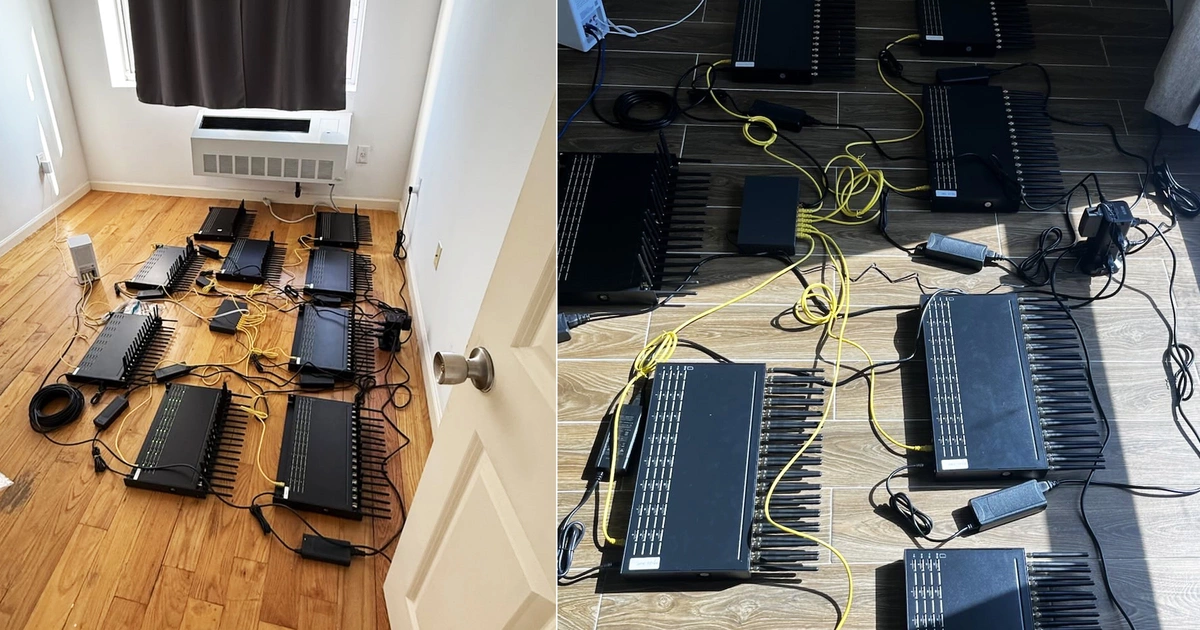
In the shadowed corridors of New York’s telecom underbelly, the recent U.S. Secret Service raid has exposed a clandestine operation whose scale and sophistication read like the stuff of espionage fiction. Yet the reality is chillingly tangible: five safe houses encircling Manhattan, a cache of 100,000 SIM cards, 300 SIM servers, and an arsenal that included not just firearms and narcotics, but a private cellular infrastructure capable of unleashing 30 million encrypted SMS messages per minute. The implications ripple far beyond the city’s boundaries, raising urgent questions about the security and resilience of the networks that underpin modern life.
The New Face of Cellular Disruption: Modular, Encrypted, and Elusive
The technical architecture uncovered in this operation signals a paradigm shift in the threat landscape. At its core, the deployment of software-defined radios (SDRs) at scale enabled the creation of a modular, cloud-like radio network. This infrastructure could spin up “ghost” base stations on demand—a tactic once reserved for nation-state actors wielding IMSI-catchers, now democratized at commercial-off-the-shelf prices.
Key elements of this system included:
- Edge-based encryption: By encrypting communications locally, operators sidestepped traditional telecom cores, granting themselves unprecedented spectrum autonomy and complicating lawful intercept efforts.
- Programmable SMS botnets: Weaponizing SMS—often overlooked in enterprise security—allowed the perpetrators to execute volumetric attacks in the signaling plane, overwhelming both commercial and public-safety networks.
- Physical proximity strategy: The geographic distribution of nodes around Manhattan enabled low-latency triangulation, jamming, and spoofing, effectively creating a cellular “doughnut” that could manipulate or degrade service at will.
This convergence of cloud-native techniques and physical tradecraft compresses the cost and complexity curve for large-scale disruption, placing once-exotic capabilities within reach of criminal syndicates, hybrid terror groups, or even enterprising state proxies.
Economic Shockwaves and Strategic Recalibrations
The fallout from this operation extends deep into the economic and strategic fabric of the telecommunications sector. The sheer volume of seized SIM cards underscores a supply-chain vulnerability: legitimate gray-market SIM wholesalers can unwittingly supply the raw materials for sophisticated criminal infrastructure. The likely regulatory response—stricter Know-Your-Customer (KYC) requirements and increased compliance costs—will reverberate through MVNOs and carriers alike.
For enterprises and insurers, the incident is a wake-up call. Traditional business-interruption models, focused on internet-protocol outages, are ill-equipped to price the risk of SMS or cellular-layer disruptions. As actuarial tables are updated, expect insurance premiums to rise and coverage terms to tighten. Municipalities, too, will be compelled to reallocate public safety budgets toward cellular-layer anomaly detection and private-LTE redundancy, accelerating the adoption of advanced 5G network-slice monitoring.
Boardrooms with an eye on ESG metrics must now contend with a new dimension of “social harm.” The ability to weaponize mass SMS campaigns for swatting or to orchestrate synthetic identity fraud exposes a latent vulnerability that transcends technical risk, touching on community impact and corporate governance.
A New Era of Telecom Risk: Executive Priorities and Industry Evolution
For technology leaders and executives, the lessons are as urgent as they are complex. The perimeter has shifted: cellular infrastructure can no longer be treated as a trusted utility. Instead, a zero-trust mindset must extend to carrier signaling, with organizations implementing SIM-bound attestation, network-slice segmentation, and fallback channels such as CBRS or satellite.
The virtualization of 5G core functions onto hyperscaler infrastructure introduces new risks, as rogue deployments could masquerade within compromised cloud workloads. Cross-domain anomaly correlation—bridging IT and radio environments—should become standard operating procedure.
The policy landscape is poised for transformation. The scale and ambition of this network will likely catalyze bipartisan support for a national SIM registry, akin to firearm serial numbers. Companies with significant IoT or MVNO exposure would be wise to engage proactively in shaping these standards, lest innovation be stifled by overzealous regulation.
Strategically, the incident signals a surge in demand for niche vendors specializing in RF threat intelligence, eSIM lifecycle management, and AI-driven spectrum analytics. Early partnerships and acquisitions in these domains could secure vital competitive advantages as the industry recalibrates.
The Contest for the Airwaves: Navigating an Uncertain Frontier
The New York SIM-server takedown marks a watershed moment in the evolution of telecom security. It is a vivid demonstration of how accessible hardware and cloud-native architectures can replicate, at scale, the capabilities once monopolized by intelligence agencies. As satellite-to-phone services proliferate and the boundaries between cyber and physical domains blur, the airwaves themselves have become a contested arena—one where disruption is cheap, attribution is murky, and the stakes are nothing less than the resilience of modern society.
For those charged with safeguarding operations, brand equity, and shareholder value, the imperative is clear: reimagine risk, invest in layered defenses, and recognize that the invisible infrastructure of cellular connectivity is now both a lifeline and a potential vector for existential threat. In this new era, vigilance is not just prudent—it is indispensable.

 By
By
 By
By
 By
By
 By
By

 By
By

 By
By