
Navigating The Witcher’s Endgame: Strategic Realignment in Streaming’s New Era
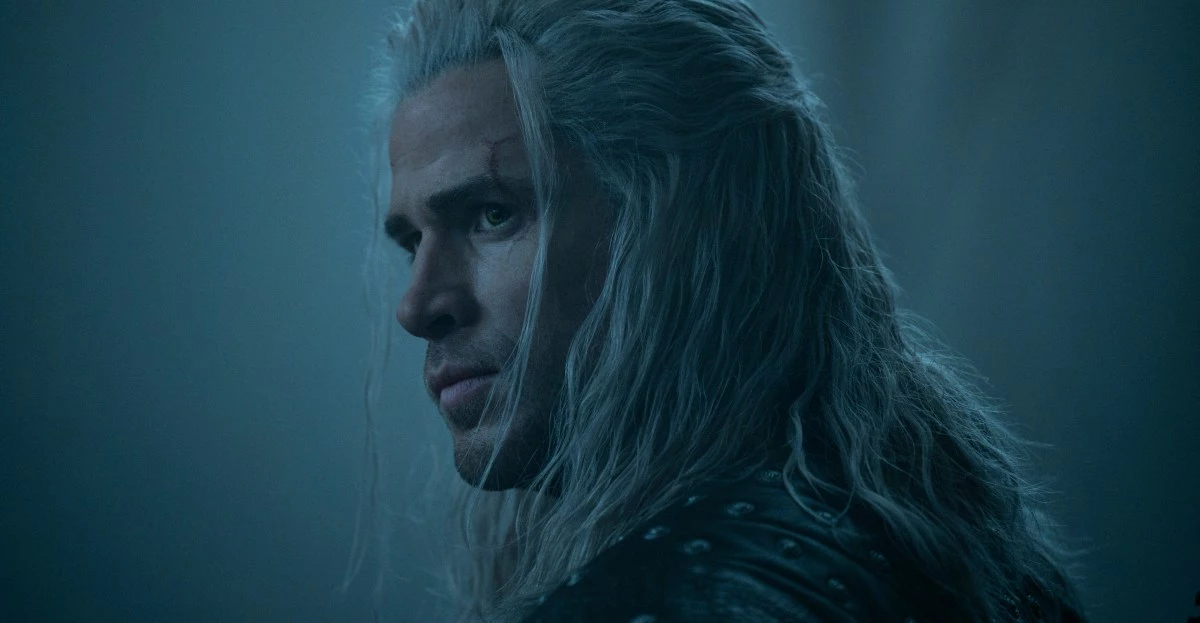
The world of high fantasy television is entering a consequential chapter as Netflix’s “The Witcher” franchise approaches its denouement. With Season 4 slated for an October 30 premiere—ushering in Liam Hemsworth as Geralt of Rivia, following Henry Cavill’s much-lamented departure—the streaming giant signals not just a narrative transition, but a recalibration of its approach to intellectual property in a capital-disciplined landscape. The decision to conclude the series with Season 5, while simultaneously accelerating ancillary content and cross-media partnerships, reveals much about the evolving economics and creative calculus of prestige streaming.
Franchise Contraction and the New Economics of Streaming
Netflix’s announcement of a definitive endpoint for “The Witcher” is less a retreat than a measured act of financial stewardship. The era of unchecked content proliferation—where sprawling, open-ended franchises were greenlit in pursuit of subscriber dominance—has given way to a focus on margin optimization and investor confidence. By capping the series at five seasons, Netflix reduces its long-tail production liabilities and enables more predictable amortization, a move that resonates with stakeholders wary of the “content bloat” that has plagued many streaming portfolios.
This strategic contraction is not merely defensive. It is accompanied by a deliberate expansion of lower-cost, high-leverage spinoffs: an animated feature, a Michelle Yeoh–led live-action prequel, and, crucially, a deepening partnership with CD Projekt Red as the Witcher IV video game pivots to a Ciri-centric narrative. Such moves allow Netflix to extend the franchise lifecycle while maintaining balance-sheet discipline—a balancing act that will likely become a template for other IP-rich platforms.
Key strategic levers at play:
- Finite storytelling arc: Reduces risk of creative fatigue and amortization uncertainty.
- Spinoff acceleration: Diversifies creative risk and taps into new audience segments with lower upfront costs.
- Transmedia synergy: Aligns content drops with external tentpoles (e.g., Witcher IV), maximizing cross-promotional flywheels.
Talent Transition: Navigating Fan Sentiment and IP Risk
The recasting of Geralt—one of genre television’s most iconic roles—has placed the franchise under a microscope. Fan sentiment remains volatile, with social media and forums oscillating between cautious optimism and outright skepticism regarding Hemsworth’s ability to inhabit the White Wolf’s battered armor. Yet, Netflix’s approach is anything but haphazard.
- Contractual flexibility: Hemsworth’s likely lower per-episode rate, in the wake of industry-wide wage resets, offers cost containment amid a period of fiscal tightening.
- Lore-driven narrative cover: The Witcher’s mythos, rich with magical mutations and transformations, provides an in-universe rationale for Geralt’s altered visage, softening the cognitive dissonance that might otherwise alienate diehard fans.
- Data-driven adaptation: Netflix’s granular viewership analytics allow for rapid A/B testing of trailers and marketing copy, enabling agile course correction ahead of the premiere.
Should Hemsworth’s reception falter, Netflix retains the agility to pivot—accelerating animated sequels or interactive specials to sustain engagement, a scenario planning approach that underscores the platform’s commitment to fandom retention over rigid adherence to live-action continuity.
Cross-Media Orchestration: The Game-to-Screen Feedback Loop
Perhaps the most forward-looking dimension of Netflix’s Witcher strategy is its embrace of transmedia storytelling. The concurrent development of CD Projekt Red’s Witcher IV—centered on Ciri—mirrors the show’s narrative arc, creating a reciprocal funnel between game and series. Expect to see:
- Co-developed digital events: Netflix QR unlocks for in-game cosmetics, leveraging watch-time data for targeted upsell.
- Reusable localization assets: The Witcher’s extensive subtitle and dubbing pipelines (270+ language variants) lower marginal costs for future genre launches, especially in international markets where fantasy IPs over-index in popularity.
- Risk diversification through content portfolio: Animated films and live-action prequels allow for tonal experimentation without diluting the flagship, echoing—but not mimicking—the Disney Star Wars model.
Technological innovation further undergirds this strategy. Virtual production techniques, such as volume-stage LED backdrops and procedural environments, compress location costs and mitigate geopolitical insurance premiums. Meanwhile, generative AI tools—now operating within newly negotiated union guardrails—streamline post-production and free resources for the premium practical effects that distinguish high-fantasy visual storytelling.
The competitive landscape is no less dynamic. With Amazon’s “Rings of Power” and HBO’s “House of the Dragon” returning in adjacent windows, Netflix’s October drop is a calculated bid to front-load audience engagement ahead of a congested Q4 for genre television.
The Witcher as Industry Bellwether
The Witcher’s final chapters are more than a test of Hemsworth’s mettle or a referendum on the franchise’s creative direction. They are a microcosm of streaming’s post-peak era—where fiscal discipline, technological ingenuity, and cross-media orchestration are no longer optional, but existential imperatives. For studios, investors, and fans alike, the outcome will offer a blueprint for navigating the next act of premium franchise storytelling, where the magic lies as much in the margins as in the myth.


 By
By

 By
By
 By
By

 By
By