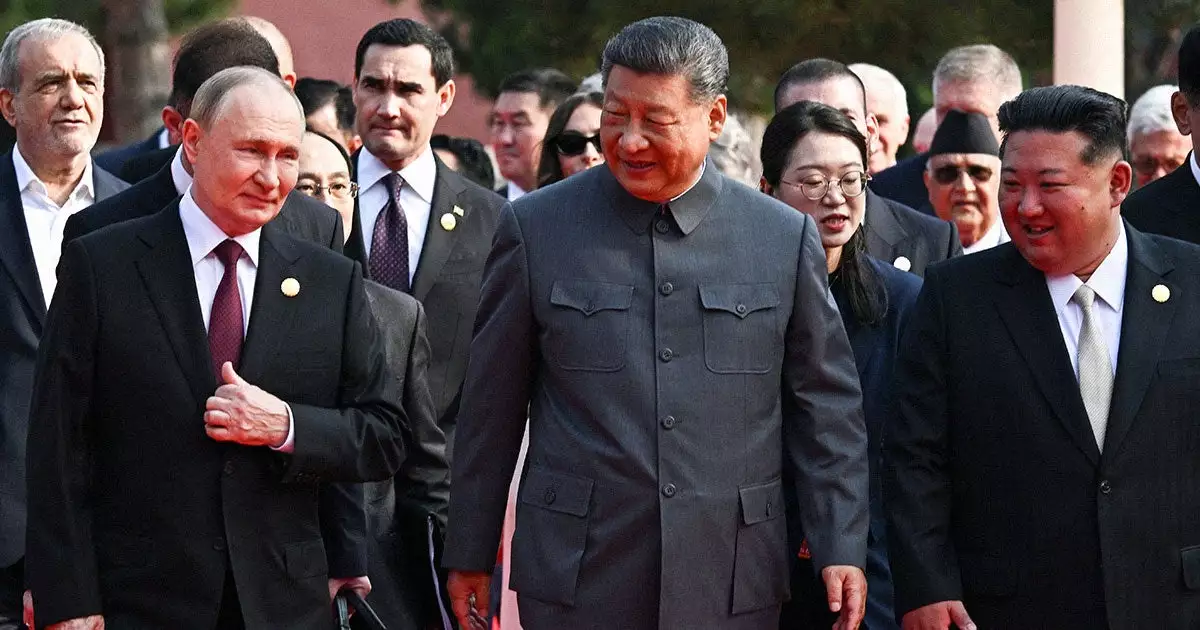

Power, Demography, and the Pursuit of Immortality: The Putin–Xi Longevity Conversation
In the gilded shadows of Beijing’s WWII Victory parade, an unguarded exchange between Vladimir Putin and Xi Jinping surfaced, casting a sharp light on the ambitions and anxieties shaping the world’s most populous and geopolitically assertive regimes. Their conversation, inadvertently recorded and swiftly dissected by analysts worldwide, did not dwell on the usual choreography of alliances or trade. Instead, it veered into the audacious: organ-based life extension and the tantalizing prospect of human immortality. Xi, with characteristic confidence, floated the notion of 150-year lifespans by century’s end; Putin, ever the strategist, framed longevity not as a luxury, but as a policy imperative.
This was no idle musing. It was a signal—one that reverberates through the corridors of global biotech, national security, and the boardrooms of multinational corporations.
The Biotechnological Arms Race: Organ Shortages and Platform Breakthroughs
The context for this exchange is a world at an inflection point in regenerative medicine. The global demand for organ transplants outpaces supply by a staggering 5:1 ratio, a gap that has triggered a migration of capital and talent toward scalable, platform-based solutions. The landscape is defined by:
- Gene-edited porcine organs (xenotransplantation): Once the stuff of science fiction, now a near-term commercial reality.
- 3-D bioprinting and iPSC organoids: Promising bespoke tissues and organs, customized for individual patients.
- CRISPR-assisted immune suppression: Reducing rejection rates, redefining transplant viability.
AI and machine learning have accelerated this revolution, predicting protein folding, antigen responses, and graft viability with a precision that shifts the bottleneck from wet-lab experimentation to the governance of data itself. Yet, the same gene-editing toolkits that promise medical miracles also carry profound dual-use risks—ushering biotechnology into the realm of national security, where sovereign control of biological intellectual property becomes as fiercely contested as semiconductor supply chains.
Demographic Decline and the Economics of Longevity
Behind the scientific bravado lies a stark demographic calculus. China is on track to lose nearly half its population by 2100, with its working-age cohort already shrinking. Russia faces a 6.4% population drop by 2050, and its male life expectancy languishes below 67. For both regimes, the fiscal and geopolitical consequences are acute:
- Shrinking workforces threaten pension systems and GDP growth.
- Longevity technology is increasingly viewed as a lever to keep human capital productive, staving off the economic drag of aging populations.
- A combined addressable market of 1.5 billion people could drive scale economics in longevity solutions, mirroring the rapid cost declines seen in solar panels and EV batteries.
For global investors and corporations, the implications are profound. If credible life-extension timelines move from speculative to probable, actuarial models will be upended, pension funds repriced, and capital flows redirected. The prospect of a 10- to 15-year median life-extension within the next two decades is no longer the stuff of science fiction, but a scenario that demands strategic planning.
Geopolitics, Ethics, and the New Frontiers of Competition
As longevity science migrates from the laboratory to the center of statecraft, the lines between civilian and military R&D blur. Sovereign control of bio-intellectual property is tightening, with export controls and “bio-firewalls” reminiscent of the semiconductor wars. Demonstrable gains in national life expectancy could bolster regime legitimacy and influence global health norms, while advances in regenerative medicine promise to enhance military readiness—extending the resilience and recovery of warfighters.
Yet, the ethical terrain is treacherous. The sourcing of organs, the use of gene-edited tissues, and the specter of “longevity tourism” all carry reputational and regulatory risks. Nations that secure vast genomic and clinical datasets will command algorithmic advantages, while restrictive regimes may inadvertently drive affluent citizens to seek treatments abroad, spawning gray markets and new forms of inequality.
For executives, the questions are urgent and complex:
- Are workforce and insurance assumptions robust to radical shifts in life expectancy?
- How secure is access to critical bio-inputs in a world of geopolitical decoupling?
- Can public positions on organ sourcing withstand activist and regulatory scrutiny?
Navigating the Age of Engineered Longevity
The Putin–Xi dialogue, sensational as it may seem, is a harbinger of a new era—one in which longevity is not merely a medical or scientific endeavor, but a systemic variable reshaping labor markets, fiscal regimes, and global power balances. For corporations, investors, and policymakers, the opportunity—and the risk—lies not only in breakthrough intellectual property, but in the ability to navigate the converging axes of biology, geopolitics, and macroeconomics.
As sovereign wealth funds quietly seed late-stage ventures in xenotransplantation and bioprinting, and regulatory sandboxes in Hainan and Skolkovo accelerate clinical timelines, the race is on. The future of longevity will not be decided solely in the lab, but in the interplay of policy, capital, and global strategy—a dynamic that Fabled Sky Research and its peers are watching with keen interest. The stakes, quite literally, are life and death.

 By
By
 By
By
 By
By
 By
By
 By
By

 By
By
 By
By