
A Turbulent Reset: Spirit’s Restructuring and the Remaking of the ULCC Landscape
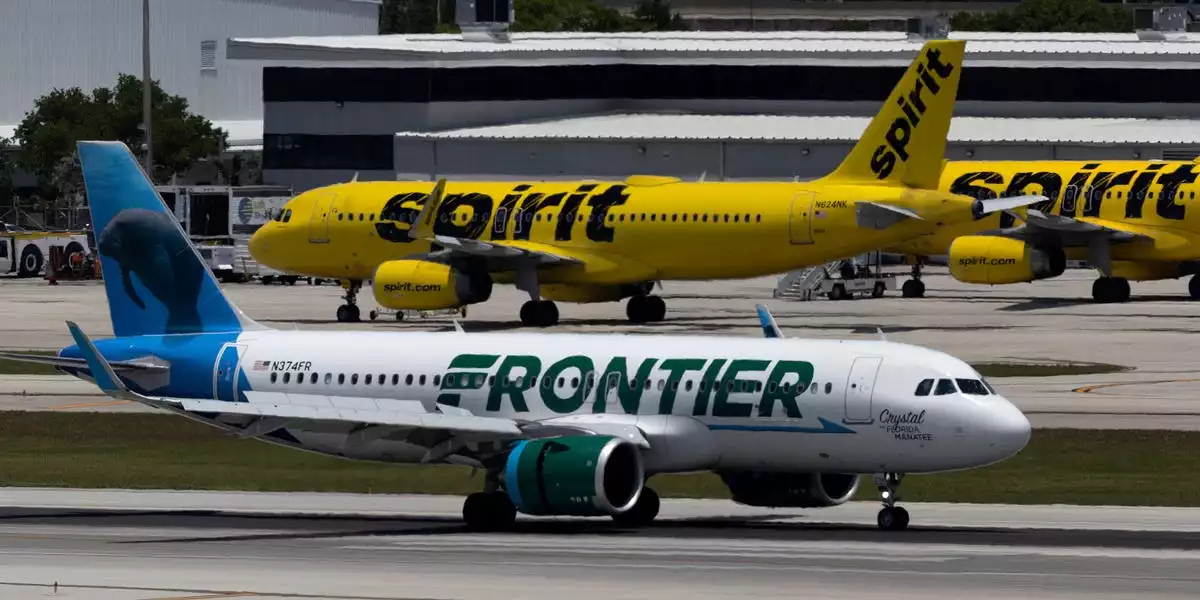
Spirit Airlines’ second Chapter 11 filing marks a watershed moment for the U.S. ultra–low-cost carrier (ULCC) sector—a market built on razor-thin margins, relentless price competition, and the promise of affordable travel for millions. Yet, as Spirit’s network contracts and its grounded fleet swells, the aftershocks are reverberating far beyond its own balance sheet. The immediate beneficiary, Frontier Airlines, has seen its prospects soar: a Deutsche Bank upgrade to “Buy,” a 43 percent projected upside, and a 14.5 percent surge in share price. But beneath these headlines lies a deeper story of structural change, strategic opportunism, and the recalibration of what it means to be a “low-cost” airline in post-pandemic America.
The Forces Reshaping Competition: From Engine Woes to Regulatory Hurdles
Several converging headwinds have set the stage for Spirit’s unraveling—and for the broader transformation now underway:
- Capital Constraints: Higher interest rates have made aircraft financing and sale-leasebacks prohibitively expensive, putting acute pressure on carriers with limited liquidity and heavy debt loads. Spirit, emblematic of this vulnerability, finds itself unable to weather the storm.
- Operational Shocks: The persistent reliability crisis with Pratt & Whitney GTF engines has grounded dozens of Airbus narrow-bodies across the industry. For Spirit, this has meant not just lost capacity, but a forced reckoning with the economics of marginal routes.
- Elastic Demand: U.S. leisure travel remains robust but is highly price-sensitive. Spirit and Frontier’s business models—ultra-low fares, heavy reliance on ancillary revenues—have thrived on this elasticity. Yet, with Spirit’s withdrawal, the pricing equilibrium on many routes is poised to shift upward.
- Regulatory Realpolitik: The Department of Justice’s recent block of JetBlue’s attempted Spirit acquisition signals a reluctance to allow large-scale consolidation. Still, asset-level transactions—aircraft, slots, gate leases—are likely to proceed, reshaping the competitive map without triggering antitrust alarms.
Frontier’s Calculus: Strategic Expansion Amid Dislocation
For Frontier, Spirit’s retrenchment is both a windfall and a test of discipline. The carrier’s aggressive “lift and shift” strategy—announcing 20 new routes, 18 of which directly overlap with Spirit’s former network—signals a calculated bid to capture stranded demand. The implications are profound:
- Fare Re-Benchmarking: Where Spirit and Frontier once coexisted, fares averaged 15 percent lower. With one discounter gone, Frontier can nudge fares upward while still undercutting legacy rivals. Even a modest 5–7 percent fare lift could yield significant margin expansion, given the cost structure of ULCCs.
- Asset Arbitrage: Spirit’s planned sale of 19 grounded aircraft, and potentially more, offers Frontier a rare chance to acquire near-identical Airbus narrow-bodies at distressed prices. This minimizes training and maintenance complexity, a crucial advantage in a business where operational simplicity is paramount.
- Airport Real Estate: With Spirit ceding ground at capacity-constrained hubs like Orlando and Las Vegas, Frontier can negotiate favorable terms for gates and slots, further entrenching its position on high-traffic leisure routes.
- Technology Leverage: Advanced demand-sensing and AI-enabled network planning will be decisive as Frontier calibrates capacity in ex-Spirit markets, staying one step ahead of both legacy carriers and other ULCCs.
The Broader Industry: Selective Consolidation and the New Rules of Engagement
Spirit’s restructuring is not an isolated event—it is emblematic of a sector under siege from cost inflation, technological disruption, and capital scarcity. For competitors, the fallout is complex:
- JetBlue stands to absorb higher-yield traffic on overlapping routes but must navigate the constraints of its Northeast Alliance settlement.
- Legacy carriers like American, Delta, and Southwest face limited direct upside, yet the overall fare environment could drift higher as ULCC capacity contracts.
- Secondary ULCCs such as Allegiant and Avelo may find niche opportunities, but their smaller fleets and diverse aircraft types limit their ability to scale quickly.
Meanwhile, macroeconomic uncertainties—ranging from potential softening in leisure demand to rising sustainable aviation fuel (SAF) mandates—loom large. Frontier and its peers must not only seize the moment but also hedge against volatility, maintaining liquidity buffers and modeling downside scenarios with rigor.
The episode underscores a broader industry pivot: from the heady, indiscriminate growth of the past decade to a new era of selective, data-driven consolidation. In this environment, carriers with robust balance sheets, fleet commonality, and sophisticated revenue management—qualities increasingly prized by investors and analysts, including those at Fabled Sky Research—will set the pace. The future of low-cost air travel will not be defined solely by who can offer the cheapest seat, but by who can navigate complexity, deploy capital wisely, and adapt with agility to a market in perpetual flux.

 By
By

 By
By
 By
By
 By
By
 By
By

 By
By