


A mega-IPO that could redefine how markets price “deep tech” at scale
SpaceX’s anticipated initial public offering is being framed as a once-in-a-generation market event: a flotation that could approach a $1.75 trillion valuation and, if it materializes at that magnitude, contend for the largest IPO in history. Beyond the headline number, the more consequential story is what such a listing would signal about public markets’ appetite for capital-intensive, long-horizon innovation—the kind of business that blends aerospace manufacturing, satellite broadband, government contracting, and frontier R&D into a single corporate narrative.
A SpaceX IPO would effectively force investors to answer a difficult valuation question in real time: How should markets price a company whose near-term financials may be less legible than its strategic positioning? Traditional IPO playbooks lean on revenue multiples and comparables. SpaceX complicates that approach because its value proposition is also embedded in:
- Forward contract pipelines (launch services, government programs, lunar initiatives)
- Platform economics (Starlink as a recurring-revenue connectivity layer)
- Manufacturing scale and cadence (reusability, production throughput, cost curves)
- Option value tied to Starship and next-generation capabilities
If public investors reward that blend with premium pricing, it could become a sector bellwether for other aerospace and deep-tech firms—reshaping not only IPO timing, but also how boards and bankers justify valuation frameworks for companies whose competitive moats are built on engineering velocity and infrastructure.
The employee liquidity story: wealth creation, but not evenly distributed
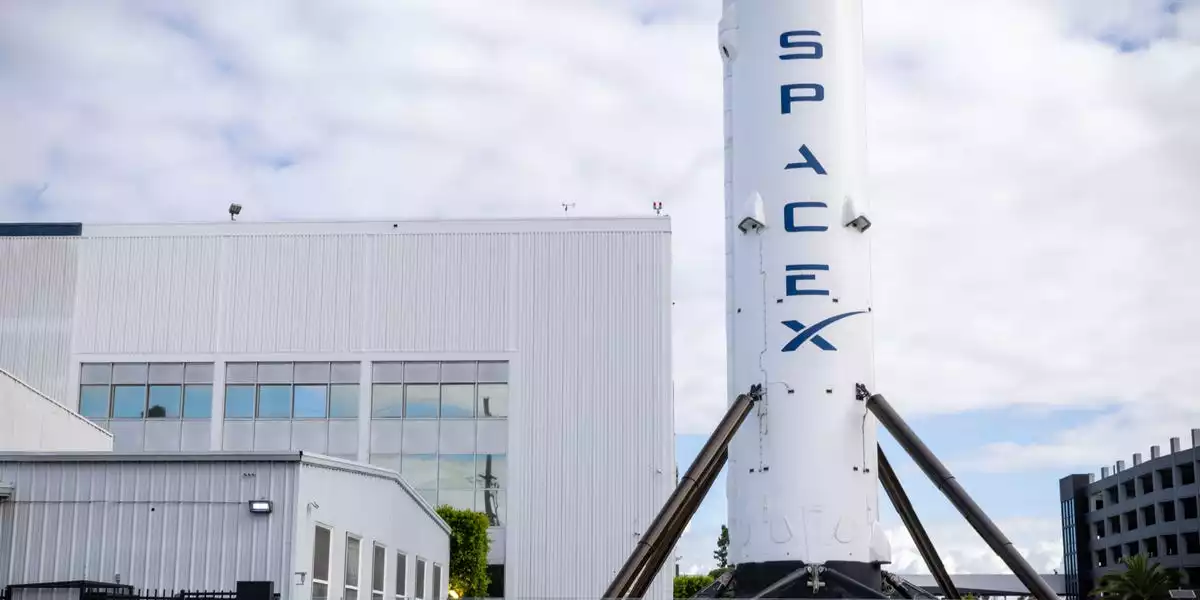
The human capital dimension is already driving intense speculation, particularly in Southern California. With roughly 7,661 employees at SpaceX’s Hawthorne campus, the IPO is expected to generate a meaningful wealth effect for current and former staff—evoking comparisons to the post-IPO surge of newly minted millionaires seen in landmark tech listings such as Google’s in 2004.
Yet the distribution and timing of that wealth may be more nuanced than the “instant windfall” narrative implies. Analysts caution that:
- A significant portion of equity has already been monetized through secondary sales in private markets, potentially reducing the number of employees who experience a dramatic step-change in liquidity at IPO.
- Lock-up periods and staged vesting schedules can delay when shares become sellable, meaning the consumer-spending and housing impacts may arrive in waves rather than all at once.
- Stock-price volatility—a defining feature of newly public companies—can quickly change perceived wealth, influencing whether employees choose to cash out, hold, or diversify.
For SpaceX itself, the transition from a private, founder-led structure to a public-company environment introduces classic governance and talent-management pressures. Once equity becomes liquid, the company may need to recalibrate compensation strategies to maintain retention and focus, especially as competitors and adjacent tech firms attempt to recruit employees newly empowered with financial flexibility.
Key strategic questions business leaders will watch closely include:
- How SpaceX balances long-term R&D intensity with quarterly market expectations
- Whether it redesigns equity incentives to counteract post-IPO attrition risk
- How it manages potential shareholder activism in a business with high strategic sensitivity
Southern California real estate: a localized boom narrative meets affordability constraints
In the Los Angeles South Bay, the IPO is already being interpreted as a catalyst for housing demand—particularly in premium coastal enclaves. Brokers are watching neighborhoods such as Manhattan Beach, where average home prices have reportedly risen about 5% to $3.26 million, for signs of an IPO-driven acceleration in high-end transactions.
The likely near-term effect is not a broad-based housing surge across greater Los Angeles, but a concentrated uplift in luxury and near-luxury segments where SpaceX employees already cluster. That concentration matters because it can amplify price pressure in specific micro-markets even if the region-wide impact is modest.
Several dynamics will shape how pronounced the real estate ripple becomes:
- Interest-rate conditions: With U.S. Treasury yields elevated, jumbo mortgage affordability is tighter than during the ultra-low-rate era, potentially dampening demand even among high earners.
- Liquidity timing: The most visible buying wave may align with lock-up expirations and subsequent share sales, rather than the IPO date itself.
- Financing innovation: Brokers and lenders are increasingly advising on how to use RSUs and equity compensation to qualify for jumbo loans—an opening for fintech and private banking products designed around concentrated equity wealth.
At the policy level, the episode underscores a familiar tension: localized wealth events can intensify affordability pressures in already constrained markets. Developers and city planners face renewed scrutiny over housing supply, especially transit-oriented and mixed-income projects that can absorb demand without accelerating displacement.
Capital inflows, supply-chain lift, and the emerging geography of space-industry wealth
A SpaceX IPO is not merely a liquidity event; it is also a potential capital re-arming. Public-market access can fund more aggressive investment cycles across:
- Starship development and test infrastructure
- Lunar lander and government program execution
- Starlink expansion (satellite deployment, ground infrastructure, customer equipment)
That spending has second-order implications for the aerospace and advanced manufacturing ecosystem—particularly in Southern California, where a dense supplier network spans composites, avionics, precision machining, and specialized software. If SpaceX uses IPO-driven capital to scale production, suppliers could see expanded order books, with job creation extending beyond Hawthorne even if housing impacts remain geographically concentrated.
Meanwhile, other SpaceX hubs—most notably Austin, Texas—are preparing for parallel, if smaller, economic ripples. The competitive question for these regions is whether they can convert episodic wealth events into durable ecosystem advantages by investing in:
- Infrastructure capacity (transport, utilities, broadband)
- Housing availability across income bands
- Schools and amenities that retain talent and families
For executives, investors, and policymakers, the SpaceX IPO narrative sits at the intersection of public-market finance, frontier technology strategy, and localized wealth effects. If the offering lands anywhere near its rumored valuation, it will not only reshape how markets price aerospace and satellite broadband—it will also test how effectively communities and companies can manage the real-world consequences of turning private innovation into public equity at unprecedented scale.

 By
By

 By
By
 By
By

 By
By
 By
By
 By
By







