
The Art of the Display: Acer’s Calculated Leap into Design-Driven Hardware
At IFA 2025, Acer’s unveiling of Amadana-branded PC monitors was more than a product launch—it was a statement of intent. The acquisition of Tokyo’s Amadana, a name synonymous with Japanese minimalism, marks a pivotal moment in the evolution of the PC display market. Acer’s dual-pronged strategy—balancing design-centric lifestyle products in EMEA with bleeding-edge performance hardware in North America—signals a nuanced understanding of both regional tastes and global market currents.
Minimalism Meets Market Segmentation: A Tale of Two Regions
Acer’s portfolio now reads as a study in contrasts, each move meticulously calibrated for its audience:
- EMEA’s Amadana Lineup:
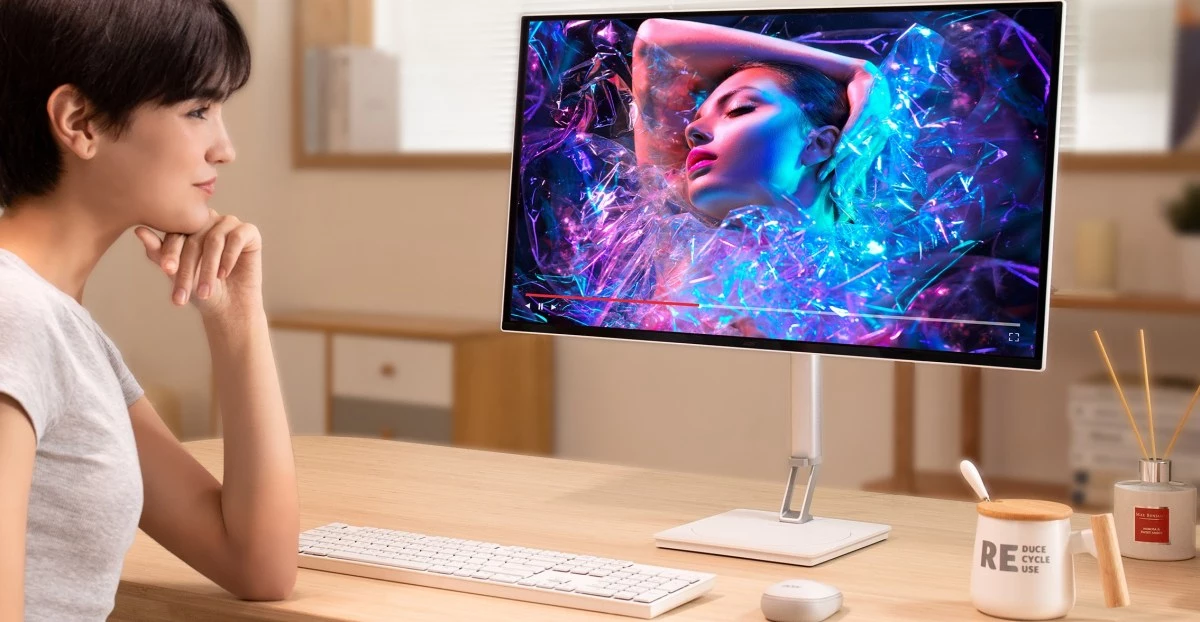
The 27ART0 P1 desktop and 16APM1QJ portable displays, set to retail at €169 and €119, are not chasing the specification arms race. Instead, they embody a philosophy where form is as valued as function. With 250-nit brightness and 144 Hz refresh rates, these IPS panels are tailored for mainstream productivity—not for the pixel-obsessed, but for those who value a workspace that feels curated, intentional, and subtly luxurious. The Amadana aesthetic, with its clean lines and tactile finishes, is designed to resonate in markets where design is not an afterthought but a purchase driver.
- North America’s OLED Flagship:
In stark contrast, the CE270U Z OLED monitor lands in the US at $700, boasting a 26.5-inch 1440p panel, 280 Hz refresh rate, and a dazzling 1000-nit HDR peak. This is a device for the uncompromising—gamers, creators, and professionals who demand the best and are willing to pay for it. The inclusion of dual HDMI 2.1 and DisplayPort 1.4 reflects a keen awareness of the hybrid console/PC ecosystem, while the absence of USB-C on Amadana’s portable panel hints at both cost discipline and a roadmap of iterative enhancements.
Design as Differentiator: Navigating Commoditization and Consumer Desire
The PC monitor market, long a battleground of specs and price, is shifting. Acer’s strategy leverages Amadana’s design pedigree not merely as ornamentation but as a bulwark against the relentless commoditization of display panels. By importing Japanese minimalism, Acer is echoing a broader industry trend—seen in Google’s Nest, Sony’s lifestyle audio, and the rise of brands like Nothing—where the emotional resonance of a product is as important as its technical prowess.
- Mitigating Margin Erosion:
With IPS panel yields high and average selling prices falling, layering on design equity provides a defensible margin. It’s a playbook borrowed from consumer appliances and automotive: think Toyota/Lexus or Whirlpool/KitchenAid, where aspirational sub-brands capture higher price elasticity without cannibalizing the core.
- Supply Chain Strategy:
By restricting OLED to a single, high-profile SKU in North America, Acer hedges against volatile panel costs while testing the appetite for ultra-high-refresh displays. Meanwhile, mature IPS supply chains in China and Taiwan, currently operating below capacity, offer favorable terms for the EMEA lineup.
The Industry Ripple Effect: Competitive Dynamics and Forward Signals
Acer’s moves will not go unnoticed. The fusion of design and technology in a category once defined by utility is likely to provoke swift responses from rivals and ripple through the supply chain.
- Competitive Acceleration:
Expect Lenovo, with its Japanese NEC joint venture, and HP, leveraging the HyperX aesthetic, to double down on design-forward monitor lines. The styling arms race is on, and the winners will be those who can blend authenticity with accessibility.
- Panel Maker Implications:
Acer’s regional OLED launch serves as a real-world demand signal for panel manufacturers. If LG Display’s next-generation fabs hit their cost targets, the trickle of OLED into EMEA could become a flood by 2026.
- Channel Innovation:
Specialty retailers—think Fnac in France or John Lewis in the UK—are poised to become key outlets for Amadana, allowing Acer to sidestep the margin-eroding IT channel and instead offer curated workspace bundles alongside premium laptops.
Strategic Takeaways for the Post-Commodity Era
For enterprise buyers, component suppliers, and investors alike, Acer’s dual-brand monitor strategy offers a template for thriving as PC hardware growth normalizes. The acquisition of Amadana delivers instant design credibility and opens doors to adjacent lifestyle categories, from coffee equipment to wellness devices—each a potential cross-sell to an increasingly experience-driven workforce.
In a market where hardware alone is no longer enough, Acer’s IFA 2025 announcements chart a course toward design-led diversification, regional nuance, and disciplined technology bets. It is a playbook for the mature hardware vendor seeking not just to survive, but to redefine relevance in a world where the screen on your desk is as much a statement as the work you do upon it.

 By
By

 By
By

 By
By
 By
By

 By
By