
When a Medical Emergency Redefines the Flight Path: The Anatomy of Delta 389’s Diversion
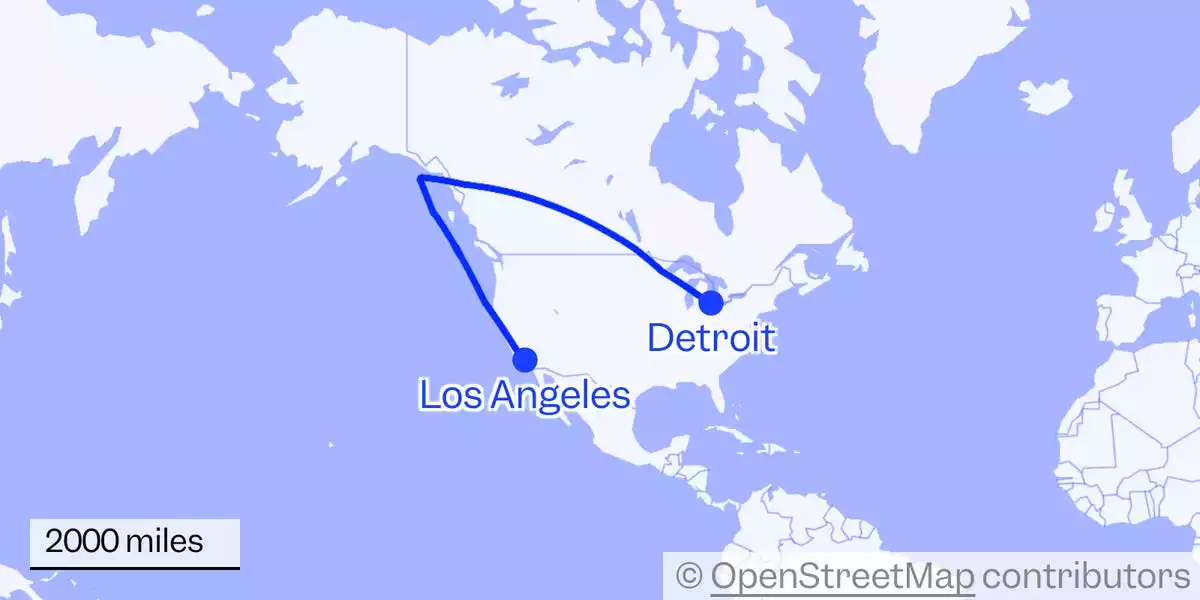
On a routine trans-Pacific crossing, Delta Air Lines Flight 389—a wide-body Airbus A350 ferrying nearly 300 souls from Detroit to Shanghai—was forced into an abrupt detour. The reason: the sudden incapacitation of one pilot. What followed was not merely a logistical reroute but a revealing case study in the evolving priorities and pressures shaping global aviation. The decision to bypass closer alternates like Anchorage or Seattle and instead divert to Delta’s Los Angeles hub, adding 2,000 miles and nine hours to the journey, was less about geography and more about the intricate economics and operational calculus that underpin the modern airline industry.
The Strategic Imperative of Hub-Centric Diversion
Delta’s choice to overfly nearer airports in favor of LAX was a masterclass in network risk management. Mega-hubs like Los Angeles are not just waypoints—they are operational fortresses, equipped with on-call flight crews, deep maintenance resources, and customs pre-clearance for international continuity. For a carrier, the cost of a lengthy detour is often outweighed by the risk of stranding a high-value asset and hundreds of passengers at a non-hub outpost, where crew and support are scarce.
- Hub Economics: The ability to swap out a crew and relaunch a long-haul flight quickly is a form of insurance against cascading network disruptions—especially vital on the tightly regulated U.S.–China corridor, where only about 40 round-trip frequencies per week are authorized. In this context, reliability is currency. A delayed flight may incur penalties and test corporate travel agreements, but a cancellation could jeopardize hard-won route allocations in a post-pandemic landscape.
- Schedule Integrity: The strategic premium on keeping aircraft and passengers moving—despite extraordinary circumstances—reflects a broader industry shift. Airlines are increasingly optimizing for resilience over mere efficiency, recognizing that the costliest disruptions are those that ripple downstream for days.
Automation, Human Redundancy, and the Unresolved Single-Pilot Debate
The incident on Flight 389 surfaces a perennial tension: as cockpit automation reaches new heights, how close is the industry to safely reducing crew headcount? The Airbus A350 is a technological marvel, capable of navigating vast oceanic routes with minimal human input. Yet, as recent European Aviation Safety Agency (EASA) trials of Extended Minimum Crew Operations (eMCO) demonstrate, current systems are designed to augment pilots—not replace them.
- Limits of Automation: While solo-pilot cruise segments with ground-based supervisory support are on the horizon, critical phases—climb, descent, or emergency diversion—still demand the judgment and coordination of two qualified humans. The “Safety Starts With Two” coalition, backed by labor and regulatory stakeholders, is likely to leverage incidents like Delta 389 to reinforce resistance to regulatory change, at least through the rest of the decade.
- Human-Machine Teaming: Airlines are drawn to the promise of lower costs and greater staffing flexibility. Yet, for insurers and regulators, the presence of a second pilot remains synonymous with systemic resilience. The debate is far from settled, and each high-profile event becomes a data point in the ongoing negotiation between technological ambition and operational prudence.
Labor Economics, ESG Pressures, and the Next Frontier in Crew Health
Beneath the surface of this diversion lies a complex interplay between labor dynamics, environmental accountability, and emerging technology. U.S. airlines face a looming pilot shortage, with an estimated 18,000 new hires needed over the next five years as retirements accelerate. The reaffirmation of dual-pilot necessity adds fuel to wage inflation, already up 34% since 2019 at major carriers. At the same time, the calculus for investing in cockpit automation is shifting: the cost of a single diversion is dwarfed by the multibillion-dollar outlay required to certify and implement true single-pilot operations.
- Insurance and Compliance: Diversion frequency is a key metric for underwriters, offering a window into an airline’s safety culture and resilience. While Delta’s smooth handling of the incident may bolster its risk profile, it also sharpens the focus on crew health screening and predictive analytics.
- Environmental Impact: The 2,000-mile detour added an estimated 200 metric tons of CO₂ emissions—an increasingly scrutinized figure as airlines face mounting pressure to meet Scope 1 carbon targets. Forward-thinking carriers are beginning to integrate diversion risk into their ESG disclosures, aligning operational safety with environmental stewardship.
The future, then, is likely to be shaped by a convergence of real-time health monitoring, ground-based “third pilot” platforms, and hub portfolio optimization. As regulatory clocks tick at different speeds on either side of the Atlantic, U.S. carriers that invest now in crew-health technology, resilient hub strategies, and phased cockpit upgrades will preserve their strategic options—without provoking unnecessary labor unrest.
Delta 389’s diversion was not just a flight path correction; it was a microcosm of the multi-dimensional calculus that will define the next era of commercial aviation. The industry’s leaders—airlines, regulators, and innovators alike—must now navigate a landscape where resilience, not just efficiency, is the new gold standard.

 By
By
 By
By
 By
By
 By
By
 By
By


 By
By