
When Jet Fuel Meets Urban Density: The Delta Settlement and the New Geography of Aviation Risk
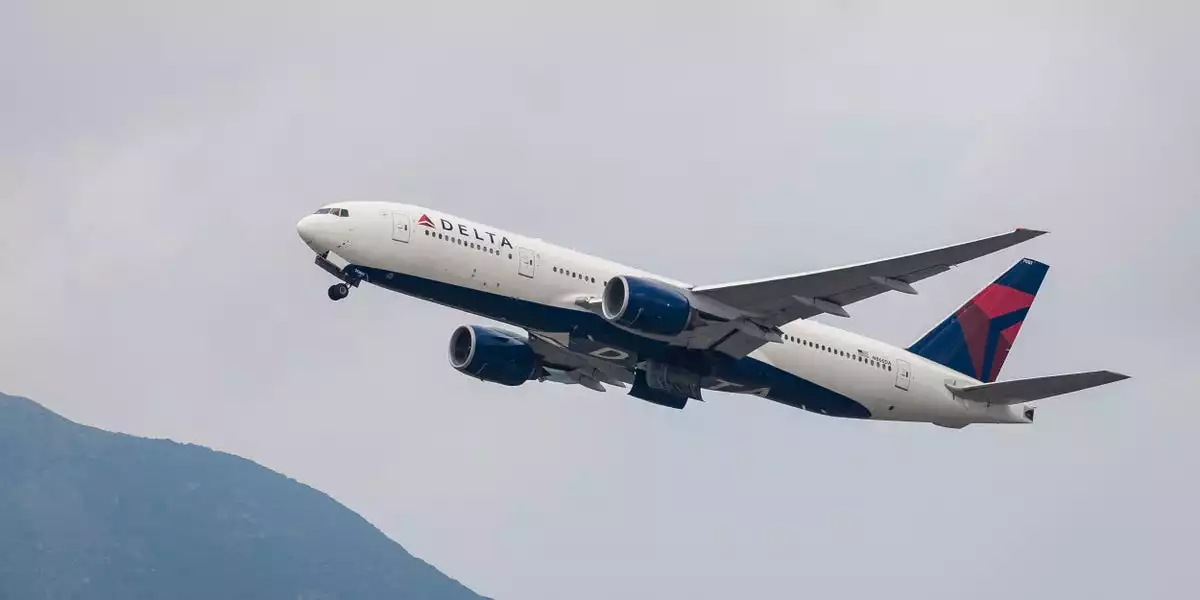
In January 2020, a Delta Air Lines Boeing 777, minutes after takeoff from Los Angeles International Airport, released approximately 15,000 gallons of jet fuel over southeast Los Angeles. The fuel-dump, conducted at a reported altitude of just 2,000 feet, blanketed schoolyards, homes, and businesses—ultimately injuring 67 people and affecting tens of thousands of properties. Now, more than four years later, Delta has agreed to a $78.75 million class-action settlement, a figure that, while significant in aggregate, translates to a modest $889 per property owner and $104 per resident after legal fees. The incident, and the legal reckoning that followed, offers a rare lens into the evolving interplay between aviation operations, urban expansion, and the shifting expectations of regulators, investors, and the public.
Outdated Protocols in a Digitally Connected World
The mechanics of fuel-jettison procedures have changed little since the jet age dawned. Designed as an emergency measure for wide-body aircraft, the protocols specify minimum altitudes and preferred airspace, but remain largely analog in a world now defined by real-time data and geospatial precision. The Delta incident exposed the friction between legacy procedures and the realities of dense, ever-expanding cities. While FAA investigators ultimately deemed the pilots’ actions “appropriate,” plaintiffs argued that the low altitude and lack of advance notification to air traffic control breached established norms.
This disconnect underscores a broader vulnerability: aviation’s operational playbook has not kept pace with the digital instrumentation now standard elsewhere in transportation. Advanced avionics, real-time telemetry, and AI-powered risk engines are not yet universally embedded in fuel-dump logic. The potential for software to geofence “no-dump” zones, model dispersion plumes dynamically, and automate notifications to both controllers and communities is clear—and the business case for such retrofits grows more urgent as urbanization encroaches on airport perimeters.
For technology providers, including those at the forefront of geospatial analytics and avionics, this is a moment of opportunity. The rising cost of litigation and reputational damage—now a line item in investor risk models—makes “precision dump-zone avoidance” and “real-time community impact forecasting” not just technical upgrades, but high-ROI investments for carriers.
Risk, Capital, and the Expanding Definition of ESG
The financial contours of the Delta settlement are instructive. While the per-claimant payouts are modest, the total sum rivals Delta’s typical quarterly legal reserves. For investors and analysts, the episode is a reminder that rare operational events can carry financial consequences on par with labor disputes or fleet maintenance. Insurers and reinsurers are likely to recalibrate premiums for environmental incidents adjacent to major hubs, costs that will inevitably ripple through fare structures and cost-per-available-seat-mile (CASM) calculations.
More subtly, the settlement will reverberate through Delta’s—and its peers’—environmental, social, and governance (ESG) disclosures. What was once a footnote in operational risk now becomes a headline in sustainability reporting, sharpening scrutiny of non-carbon environmental liabilities. The optics of hydrocarbons raining onto a schoolyard, regardless of regulatory exoneration, dramatize aviation’s environmental footprint in a way that carbon accounting alone cannot capture.
Boards and CFOs are thus compelled to treat operational safety, environmental justice, and investor relations as an interconnected continuum. Litigation-reserve stress testing, environmental tort scenario planning, and proactive stakeholder engagement are no longer optional—they are prerequisites for maintaining investment-grade credit and community trust.
The Ripple Effect: Urban Air Mobility and Regulatory Futures
The timing of the Delta controversy is particularly acute as the next wave of aviation—urban air mobility (UAM) and electric vertical takeoff and landing (eVTOL) vehicles—seeks regulatory approval. Community tolerance for aerial externalities, from noise to particulate dispersal, has tightened. Municipal hearings on vertiport siting will almost certainly cite the Delta incident, demanding automated contingency management and real-time public notification as baseline requirements for new entrants.
Meanwhile, the regulatory landscape is shifting. The divergence between FAA findings and civil-court exposure signals that procedural correctness is no longer a shield against community-driven tort actions, especially in an era where smartphone footage can become a persuasive courtroom exhibit. Congressional committees, increasingly attuned to environmental justice, may soon mandate studies or rulemaking that could cascade into new equipage or training costs during the next fleet-refresh cycle.
For decision-makers, the path forward is clear: invest in digital flight-risk layering, integrate environmental scenarios into capital planning, and engage proactively with regulators to help shape standards before mandates are imposed. Those who move first—adopting advanced technology, recalibrating risk analytics, and strengthening community engagement—will not only mitigate future liabilities but also position themselves as leaders in a sector where resilience and reputation are now as valuable as reliability and reach.

 By
By
 By
By
 By
By
 By
By

 By
By

 By
By