
The Silent Revolution in Consumer Tech: Standards, Strategy, and the New Accessory Economy
Amid the summer’s promotional flurry—headlined by Anker’s MagGo 3-in-1 wireless charger, Crunchyroll’s sweeping physical-media discounts, OnePlus’s aggressively priced Buds 4, and Koonie’s battery-powered fan—lies a deeper narrative. These are not mere opportunistic markdowns; they are signals of tectonic shifts in how technology is built, marketed, and monetized. The convergence of next-generation standards, the recalibration of inventory economics, and the subtle expansion of ecosystem lock-in are redrawing the competitive landscape for consumer electronics and media.
Qi2, USB-C, and the Architecture of Mainstream Innovation
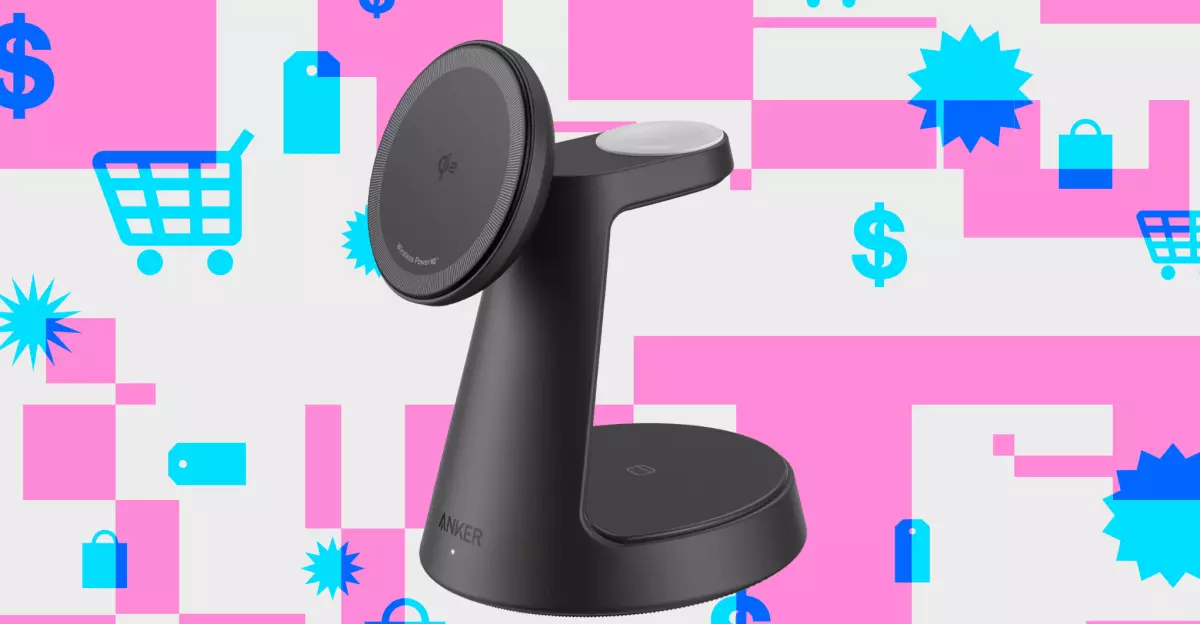
The arrival of Anker’s MagGo—one of the first Qi2-certified wireless chargers to hit the market—marks a pivotal moment. Qi2, an evolution of the open Qi standard, borrows magnetic alignment from Apple’s MagSafe and democratizes it, breaking down the walls of proprietary exclusivity. The inclusion of a 40 W USB-C GaN adapter, bundled by default, is more than a nod to the EU’s common-charger directive; it’s a frictionless on-ramp for consumers who might otherwise hesitate at the threshold of wireless charging.
- 15 W Charging Sweet Spot: The MagGo’s 15 W maximum output is not arbitrary. It threads the needle between fast-charging expectations and the thermal, efficiency, and safety limits that still bedevil higher-wattage induction. This is where interoperability and user experience harmonize.
- Accessory as Ecosystem Anchor: As Qi2 gains traction, accessory makers like Anker are positioned to siphon off revenue streams that once flowed exclusively to phone OEMs, eroding the moat of closed standards.
Meanwhile, OnePlus’s Buds 4 earbuds demonstrate the rapid trickle-down of advanced features—spatial audio, adaptive noise cancellation—into sub-$100 price points. The commoditization of Qualcomm-grade SoCs and MEMS microphones has reached a tipping point, enabling mass-market products that were, until recently, the preserve of flagship devices.
- Edge Intelligence: These earbuds are not just accessories; they are edge devices, leveraging sophisticated DSP and AI-driven audio processing. The implications for user lock-in and cross-device experiences are profound, especially as Android-first brands mimic Apple’s “halo effect” through their own ecosystem plays.
Koonie’s 16,000 mAh fan, doubling as a power bank, signals a broader shift: every portable device is now expected to participate in a personal micro-grid. The “battery-as-platform” philosophy is not just about convenience—it is a response to consumer anxieties around climate, mobility, and grid reliability.
Inventory Monetization and the Art of the Physical Sale
The timing and structure of these promotions reveal a strategic calculus that extends far beyond clearing shelves. Anker’s 30% MagGo discount is engineered to drive volume in a market where smartphone average selling prices have plateaued, and peripherals must shoulder the growth burden.
Crunchyroll’s deep discounts on physical media—some as steep as 50%, with additional member stacking—are a masterclass in inventory monetization. With Sony Pictures Entertainment’s fiscal Q3 on the horizon, the move is as much about warehouse optimization as it is about fan engagement.
- Physical Media as Data Asset: For Crunchyroll, every collector’s edition sold is not just revenue—it is a datapoint. Sell-through rates on Blu-rays and box sets can inform content green-lighting decisions, offering an alternative KPI in an era where streaming metrics are increasingly opaque.
- Fan-Ecosystem Dynamics: High-margin, limited-run physical goods serve as both a hedge against the volatility of digital distribution and a lever for deepening fan loyalty.
Strategic Inflection Points: Standards, Margins, and the Future of Accessories
The industry is entering a phase where standards wars are fought not just in the lab, but in the marketplace. Qi2’s open approach threatens to compress the licensing fees Apple commands for MagSafe, potentially igniting a migration of accessory vendors toward open certification and away from proprietary lock-in.
- Accessory-Led Moats: Early movers in Qi2-certified charging—brands that combine industrial design with frictionless user experience—stand to become the reference points for a new generation of device-agnostic peripherals.
- Margin Pressures and BOM Dynamics: The ability to deliver spatial audio and ANC at low ASPs without sacrificing gross margins will determine which brands can bundle premium experiences and which will be relegated to commodity status.
The resurgence of physical media, the rise of battery-powered micro-mobility accessories, and the growing sophistication of edge-device intelligence all point to a future where hardware is as much about ecosystem and data as it is about silicon and plastic. For decision makers, the lesson is clear: those who align with the new vectors of standards, inventory strategy, and fan engagement will not just survive—they will define the next cycle of consumer technology.

 By
By
 By
By
 By
By

 By
By

 By
By
 By
By